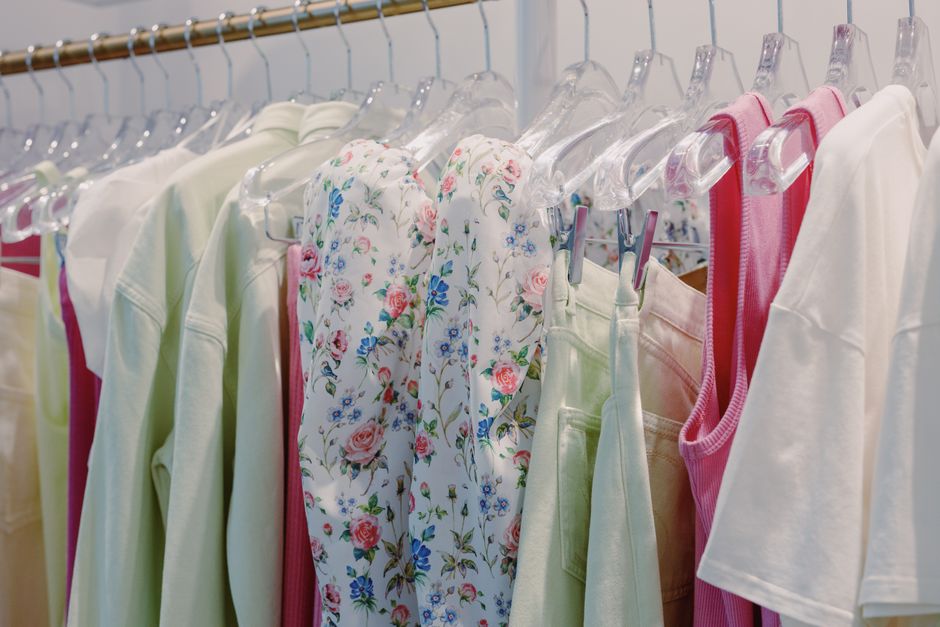
I stood in my closet one Saturday morning, staring at 47 items I’d bought new in the last 12 months. Seven of them still had tags. Three I’d never worn. The total cost? Roughly $1,800. I felt sick. That was the moment I decided to stop buying new clothes entirely. Not reduce. Not try harder. Zero new garments for one year.
This is the story of that year. The wins, the failures, and the specific strategies that made it work.
Why I Quit Buying New Clothes Cold Turkey
Fast fashion is built on a lie. The lie is that you need a new outfit for every occasion, and that $15 polyester dress is a harmless treat. The reality: the average garment is worn only 7 to 10 times before being discarded. Most ends up in landfills in countries like Ghana and Chile, where mountains of unsold clothing pile up on beaches.
But I didn’t start with the environmental argument. I started with my bank account. I was spending roughly $150 a month on clothes I didn’t need. After one year of secondhand-only shopping, that number dropped to $40 a month. And I owned fewer items that I actually wore more often.
The core problem with buying new is that it decouples the purchase from the value. You swipe a card, the package arrives, you wear it once, and the dopamine fades. Secondhand shopping forces you to slow down. You hunt. You wait. You sometimes walk away empty-handed. That friction is the feature, not the bug.
I am not a minimalist. I own 83 items of clothing (I counted). But every piece has a reason for being there. That’s the difference.
How to Actually Find Good Secondhand Clothes (Without Wasting Hours)
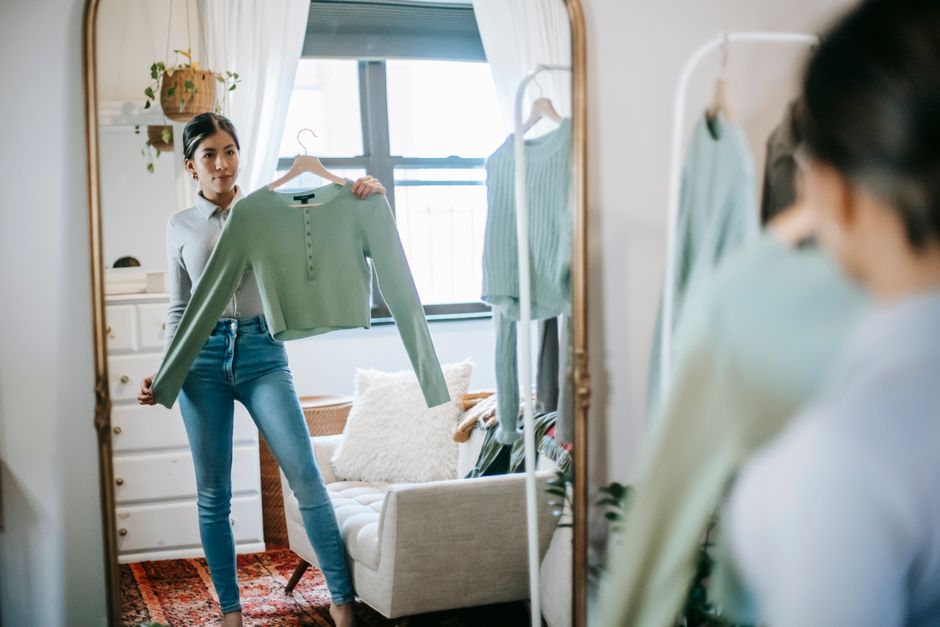
The biggest complaint I hear is that thrifting takes too long. It does—if you don’t have a system. Here’s mine.
Know your measurements, not your size
Vintage sizing is completely different from modern vanity sizing. A 1990s size 8 is roughly a modern size 2. A 1970s size 12 could fit like a modern size 6. So I stopped looking at tags entirely. I carry a small fabric measuring tape in my bag. I know my bust (36 inches), waist (28 inches), and hip (39 inches). If a garment measures within one inch of those numbers, I try it on. This one habit cut my fitting-room time by 60%.
Shop the dead zones
In any thrift store, the best items are in the sections nobody checks. Men’s sweaters (often cashmere, $6–$10). The bedding aisle for vintage silk scarves and linen. The kids’ section for small graphic tees that fit as cropped tops. I found a 1990s Pendleton wool blanket in the home goods aisle for $12. It now lives on my couch as a throw. Dead-zone shopping is the single fastest way to upgrade your thrift game.
Use apps as supplements, not crutches
Depop and Poshmark are useful for specific items you can’t find locally. But they’re not thrifting. They’re reselling. Prices are 3x to 5x what you’d pay in a physical store. I use them only for two things: (1) searching for a specific brand or size I’ve struck out on for three months, and (2) selling items I thrifted and don’t love. The real finds still happen on the rack.
| Channel | Average Price per Item | Time to Find 1 Good Item | Best For |
|---|---|---|---|
| Local thrift store (Goodwill, Savers) | $4–$12 | 20–40 minutes | Basics, sweaters, denim |
| Estate sales | $5–$25 | 1–2 hours (but higher quality) | Designer pieces, vintage leather, wool |
| Depop / Poshmark | $20–$60 | 5–15 minutes (search) | Specific brands, rare sizes |
| Consignment shops (e.g., The RealReal) | $30–$150 | 10–20 minutes | Luxury bags, designer shoes |
The 3 Failures That Almost Made Me Quit
Let me be honest: the first three months were a disaster. Here’s what went wrong.
Failure #1: I bought things just because they were cheap. A $5 sequin top I wore exactly once. A pair of boots that were half a size too small (I told myself they’d stretch—they didn’t). A linen dress with a stain I thought I could remove (I couldn’t). The rule I now follow: would I pay full retail price for this? If the answer is no, I don’t buy it at any price.
Failure #2: I ignored fabric content. I bought a gorgeous 1980s blazer that turned out to be 100% acrylic. It pilled after two washes. Now I check every tag. Natural fibers only—cotton, linen, wool, silk, cashmere, ramie. Synthetics age poorly and trap odor. If the tag is missing and I can’t identify the fiber by touch, I pass.
Failure #3: I didn’t budget for alterations. A thrifted blazer that fits perfectly in the shoulders but is two inches too long in the sleeves is a $15 fix at a tailor. That’s a great deal. But I bought things that needed $60 worth of alterations—shortening the hem, taking in the waist, replacing the lining. Suddenly that $8 blazer cost $68. I now cap alterations at $20 per item. Anything more goes back on the rack.
These three mistakes cost me about $200 before I learned. Don’t repeat them.
When Secondhand Doesn’t Work (and What to Do Instead)
Not everything should be bought used. Here are the categories where I still struggle, and my workarounds.
Underwear and socks
I draw a hard line here. New only. But I buy from brands that use minimal packaging and sustainable materials, like Pact Organic Cotton ($12 per pair, 3-pack) or Patagonia’s Responsibili-Tee line. This is a small compromise that keeps the overall system intact.
White dress shirts
Used white shirts almost always have yellowing under the arms or collar wear that can’t be fully cleaned. I gave up after four failed attempts. Instead, I buy new from Uniqlo’s premium cotton line ($40) and wear them until they show visible wear—about 18 months. Then I recycle them through their in-store program.
Running shoes
Used athletic shoes mold to the previous owner’s foot strike. That can cause injury. I buy new running shoes from Brooks or ASICS ($100–$130) and replace them every 400 miles. For casual sneakers, secondhand is fine. For anything you’ll actually run in, buy new.
The rule of thumb: if it touches your skin for more than 8 hours a day, or if it’s structural to your health (shoes, bras for larger busts), buy new. Everything else is fair game.
What I Actually Wear Now—and What It Cost

Here’s my current weekly rotation, all secondhand, with prices paid:
- Levi’s 501 jeans (1990s, made in USA): $14 at a local thrift. Fits better than any new pair I’ve tried.
- Pendleton wool crewneck sweater (1980s): $9 at an estate sale. No pilling after two years.
- LL Bean duck boots (vintage, made in USA): $22 on Poshmark. Original retail: $129.
- Carhartt canvas chore coat (used, minor fading): $35 at a consignment shop. Will last another decade.
- Silk blouse, no label (hand-rolled hem, likely 1970s): $6. Dry clean only, but worth it.
Total cost for my most-worn 15 items: $212. Estimated retail value if bought new: $1,450. That’s an 85% savings. More importantly, I reach for these pieces every week. Nothing sits unworn.
The secondhand-only wardrobe isn’t for everyone. It takes patience. You will walk out of stores empty-handed. You will sometimes pay for a tailor. But for me, the tradeoff—slower shopping, higher quality, lower cost, and zero guilt—has been worth every single thrift-store trip.
