
You put on three necklaces. Two minutes later, they’ve twisted into a knot at your collarbone. One chain has flipped backward. The pendant is stuck inside another link. You take them all off and wear nothing.
That’s the layering problem nobody talks about. It’s not about owning more necklaces. It’s about length gaps, clasp weight, and metal finish. Get those three things right and the stack stays put for hours.
Here’s the fix, with exact measurements and specific chain types that work.
The Three-Length Formula That Actually Works
Most layering advice says “mix lengths.” That’s useless without numbers. Here’s the formula that prevents tangling.
Your three necklaces need a minimum 2-inch gap between each length. Anything less and the chains rub together, catch on each other, and twist. A 14-inch choker, a 16-inch princess length, and an 18-inch matinee length are only 2 inches apart. That’s borderline. A 14, 17, and 20 stack is safer.
The real trick is the clasp weight. A lightweight chain with a heavy clasp will rotate around your neck until the clasp sits at the front. That’s how knots start. You need counterweight pendants on the two longer chains. A 3-gram pendant on a 17-inch chain keeps it anchored at the front. The clasp stays at the back where it belongs.
For a no-fail starting stack, buy these three exact lengths: 16 inches, 18 inches, and 22 inches. The 22-inch chain should have a small pendant or charm. The 18-inch can be a plain cable chain. The 16-inch can be a choker or a thin box chain. This gives you a 2-inch and a 4-inch gap. Nothing touches.
What to Do If You Only Own Two Necklaces
Use a 16-inch and a 20-inch. The 4-inch gap is the sweet spot. If you only have an 18-inch and a 20-inch, don’t layer them. They will tangle within the hour. Wear them separately.
Chain Styles That Fight Each Other (And Ones That Don’t)
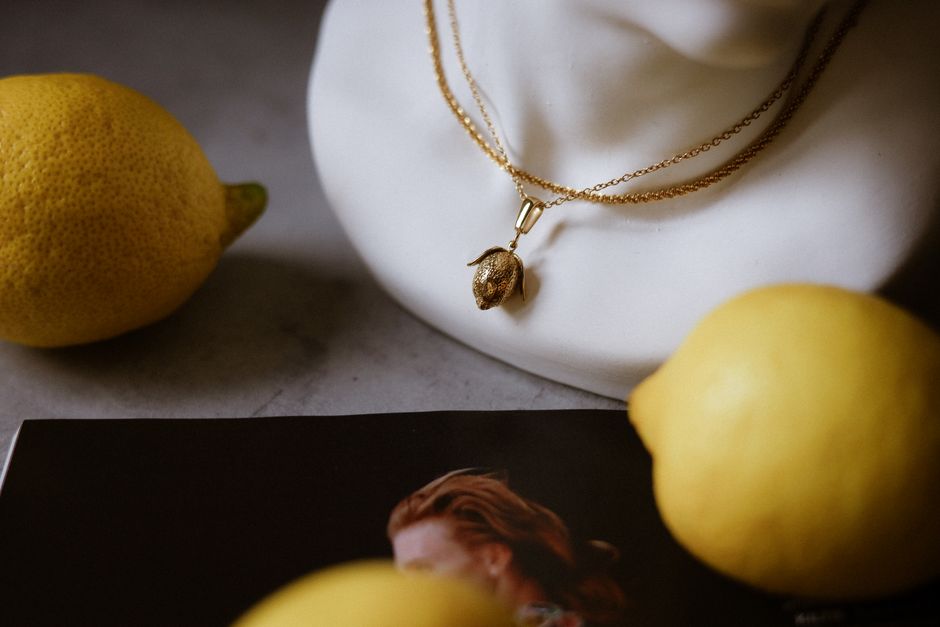
Not all chain styles can be layered. Some are physically incompatible.
A snake chain and a rope chain will catch on each other constantly. The snake chain’s smooth surface slides into the rope chain’s twisted links. A box chain and a cable chain work better together because their link patterns don’t interlock easily.
Here’s the compatibility breakdown:
| Chain Style A | Chain Style B | Layering Verdict |
|---|---|---|
| Box chain | Cable chain | Good — links don’t interlock |
| Rope chain | Snake chain | Bad — snake slides into rope links |
| Curb chain | Figaro chain | Good — both have flat, wide links |
| Herringbone | Anything | Bad — herringbone kinks easily, wear alone |
| Beaded chain | Box chain | Good — beads don’t catch on box links |
Skip herringbone entirely for layering. It kinks permanently when it rubs against another chain. One kink and the necklace is ruined. Wear it solo or not at all.
Metal Mixing: The Rule Nobody States Clearly
Mixing gold and silver is fine. Mixing finishes is not.
A high-polish gold chain next to a high-polish silver chain looks chaotic. The eye doesn’t know where to focus. But a matte gold chain next to a high-polish silver chain works because the contrast is intentional, not accidental.
Here’s the rule: mix metals freely, but keep finish consistent or deliberately contrasted. Two shiny chains in different metals = messy. One matte, one shiny = deliberate. One textured, one smooth = deliberate.
If you’re starting out, buy all your layering chains in the same metal. Gold-filled chains from Mejuri, GLDN, and Local Eclectic all use 14k gold-fill. They won’t tarnish at different rates. Sterling silver from Catbird or Missoma holds up the same way. Once you have a consistent base, add one contrast piece.
Clasp Placement: The Hidden Tangle Cause

Most people never think about where the clasp sits. That’s the mistake.
Every clasp is heavier than the chain links around it. Gravity pulls the clasp to the lowest point on your neck. If your clasp sits at the front, it becomes a hook for every other chain. It catches pendants. It grabs links. It starts tangles.
The fix is simple. After you put on each necklace, rotate it so the clasp sits at the back, just below your hairline. Then add a pendant or charm to the front of each chain. The pendant weight counteracts the clasp weight. The chain stays balanced.
For chains without pendants, use a clasp extender with a small weight on it. A 2-inch extender with a tiny charm changes the balance point. You can find these for under $10 at most jewelry supply shops.
When Layering Necklaces Is a Bad Idea
Don’t layer necklaces with high necklines. A turtleneck or a crew neck that sits above your collarbone will push the chains up. They’ll bunch together and tangle.
Don’t layer necklaces with a statement collar or a heavily embellished top. The fabric already has visual weight. Adding three chains creates noise.
Don’t layer necklaces if you’re wearing a scarf. The scarf fabric catches every chain link. You’ll spend the day untangling.
Layering works best with a V-neck, scoop neck, or open button-down. The chains need room to hang freely against skin or a smooth fabric.
How to Build a Layering Set Without Overspending

You don’t need a $500 set. You need three chains with the right specs.
Start with a 16-inch box chain in 14k gold-fill. Mejuri’s Box Chain Necklace runs about $75. It’s thin enough to sit close to the neck without looking bulky.
Add an 18-inch cable chain. GLDN’s Cable Chain is around $50. It’s plain, so it won’t compete with other pieces.
Finish with a 22-inch curb chain with a small pendant. Local Eclectic has a 22-inch curb chain for about $85. Add a 5mm charm or a small coin pendant. The pendant weight keeps the chain anchored.
Total cost: roughly $210 for a three-piece set that won’t tangle. You can go cheaper with sterling silver from Catbird — their silver chains run $30 to $60 each. Or go vintage. Etsy sellers often list 14k gold-fill chains for under $40.
The One Chain to Avoid
Skip anything labeled “micro” or “nano” chain for layering. These chains are so thin they twist into knots on their own. They also break easily when another chain rubs against them. A 0.8mm chain is too fragile. Stick with 1.2mm or thicker for all layering chains.
The 2-Minute Morning Routine
You started with three tangled necklaces. Here’s the fix in practice.
Put on the longest chain first (22 inches). Rotate the clasp to the back. Add the 18-inch chain. Rotate the clasp to the back. Add the 16-inch choker last. Rotate the clasp to the back. Check that each chain hangs in a separate line — no crossing.
If you see two chains touching, swap one for a different length or a different chain style. The stack should look like three distinct lines against your skin. Not a pile of metal.
That’s the difference between a polished stack and a tangled mess. Two-inch gaps. Counterweight pendants. Compatible chain styles. Clasps at the back. Get those four things right and your necklaces stay exactly where you put them.
