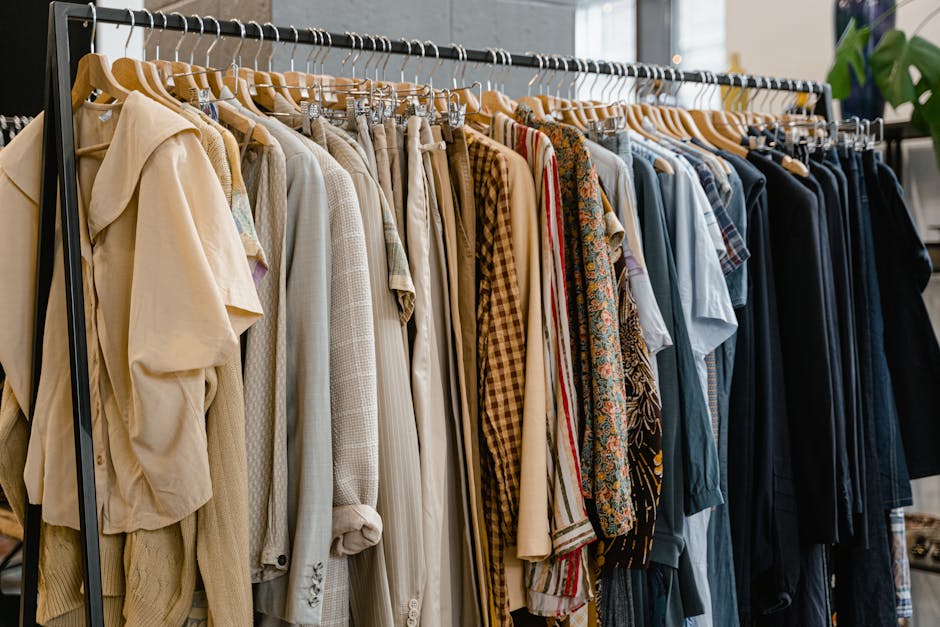
The global secondhand apparel market crossed $177 billion in 2026. That figure did not arrive from a sudden wave of altruism — it reflects a structural shift in how consumers define value, driven by economics, environmental pressure, and a genuine reassessment of what clothing ownership means. Understanding what second hand clothing actually covers is the starting point for navigating that market intelligently.
The Actual Definition — and Why It Is Broader Than You Think
Second hand clothing, at its most literal, means garments previously owned and used by at least one other person before reaching you. That is the core of it. But the term covers an enormous range of conditions, price points, and sourcing channels — treating them as equivalent is the first mistake most buyers make.
A $4 flannel shirt from Goodwill and a $1,200 Chanel blazer from The RealReal are both second hand clothing. So is a Levi’s 501 purchased on Depop for $65 and a dress exchanged between neighbors. The unifying characteristic is prior ownership, not price, condition, or platform.
The term has several synonyms in common use, each carrying different connotations:
- Pre-owned: used in luxury contexts to signal discretion and professional quality grading
- Vintage: typically refers to clothing 20 or more years old, though the definition is contested — some sellers apply it to anything made in the 1990s
- Thrifted: associated with the Goodwill and Salvation Army ecosystem, implying low cost and buyer-led selection
- Resale: the commercial, platform-mediated version — Poshmark, ThredUp, Depop
- Consignment: a specific sales model where the seller receives payment only after the item sells; the store holds inventory and takes a percentage
These distinctions carry pricing implications. Vintage commands premiums that thrifted does not. Pre-owned signals authentication and curation that a donation bin cannot offer. When a listing calls something rare vintage, that is a pricing strategy as much as a descriptor — and knowing the difference protects buyers from paying vintage rates for simply old clothing.
The History Behind the Modern Market
Secondhand clothing is not a 21st-century invention. Victorian London had a thriving trade in used garments — ragpickers collected discarded clothing from wealthy households and moved them down the economic ladder through a multi-tier resale system. During World War II, fabric rationing made clothing exchange common practice across Europe and North America. Swap meets, estate sales, and church rummage sales maintained this ecosystem through the 20th century.
What changed in the last fifteen years is infrastructure. Smartphones, peer-to-peer payment systems, and logistics networks turned local transactions into a global market. Poshmark launched in 2026. ThredUp built its online thrift model around the same period. Depop, also founded in 2026, went from a niche app to an Etsy acquisition target by 2026. The RealReal brought professional luxury authentication online in 2026. The technology arrived before consumer habits fully shifted — but those habits caught up.
What Previously Worn Does and Does Not Mean
Not all secondhand clothing has been worn heavily. Deadstock items — manufactured pieces that were never sold at retail — technically become second hand once ownership transfers, even if they are entirely unused. Sample pieces, store returns, and new with tags (NWT) listings on Poshmark represent new-condition merchandise at below-retail pricing.
This matters because condition varies drastically across the secondhand spectrum. The grading system used on most platforms — NWT, NWOT (new without tags), excellent, good, fair — gives buyers a starting framework. But individual interpretations of those grades vary significantly on peer-to-peer platforms, which is why photographs and direct seller communication remain essential for anything priced over $40.
Thrift, Vintage, Resale, and Luxury Consignment: A Direct Comparison
These four categories operate on different business models, carry different price expectations, and serve different buyer needs. The curation column below is the most important variable — it determines how much selection work you are doing yourself versus paying someone else to do for you.
| Category | Price Range | Curation Level | Authentication | Key Platforms / Stores | Best For |
|---|---|---|---|---|---|
| Thrift | $1–$25 | Low (buyer-led) | None | Goodwill, Salvation Army, local charity shops | Budget buyers, casual finds, fabric sourcing |
| Online Resale | $10–$200 | Medium (seller-set) | Platform-dependent | Poshmark, Depop, ThredUp, eBay | Specific brand searches, mid-tier fashion |
| Vintage | $25–$500+ | High (dealer knowledge) | Seller expertise only | Depop dealers, ASOS Marketplace, vintage boutiques | Era-specific pieces, collectors, unique styling |
| Luxury Consignment | $150–$10,000+ | Very High | Professional staff | The RealReal, Vestiaire Collective, Fashionphile | Authenticated designer pieces, investment buying |
ThredUp occupies an interesting middle position: it runs an online thrift model but applies condition screening before listing anything. Items that do not pass their threshold get recycled or returned. That is why a ThredUp Gap sweater costs $18 while an equivalent Goodwill piece costs $5. You are paying for the filtering — and that premium is often worth it for buyers who want predictability without physically visiting a store.
Vestiaire Collective and The RealReal both operate luxury consignment models, but Vestiaire carries stronger depth in French and Italian brands. For Jacquemus or Isabel Marant, Vestiaire’s European buyer base makes it the better inventory source. For American luxury brands — Coach, Kate Spade, or Tory Burch — Poshmark typically has more listings at lower prices.
The Market Scale Makes One Thing Clear
ThredUp’s 2026 Annual Resale Report projected the global secondhand clothing market will reach $350 billion by 2028, growing three times faster than the overall apparel market. The fashion industry generates 92 million tons of textile waste annually, and the average American discards 81.5 pounds of clothing per year. Extending a garment’s life by just 2.2 years reduces its carbon, water, and waste footprint by an average of 73%, according to WRAP research on clothing longevity. The infrastructure to act on those numbers — for environmental or economic reasons — now exists at scale.
Why Buyers Actually Choose Secondhand Clothing

The sustainability narrative dominates media coverage of secondhand fashion, but it represents only one of several genuine motivations. Most active buyers are driven by a combination of factors:
- Price gap: A Ralph Lauren Oxford shirt retails at $89. The same shirt in excellent condition on Poshmark sells for $15–$35. For buyers who prioritize fabric quality and construction over newness, that gap is the entire argument — no environmental calculus required.
- Uniqueness: A 1995 Levi’s 501 in a specific fade and cut does not exist in any current retail collection. A 1980s Patagonia fleece pullover carries design details discontinued decades ago. Secondhand is often the only access point for specific aesthetics, which is exactly why Depop built an entire platform around this motivation.
- Quality arbitrage: Pre-2000 garments from American and European manufacturers were frequently built to higher construction standards than their current equivalents. A 1985 L.L. Bean chamois cloth shirt — made in the US with heavier fabric weight — often outlasts the modern version. Some buyers specifically target older production runs, particularly in denim, outerwear, and knitwear.
- Brand access: The RealReal and Vestiaire Collective exist because demand for Gucci, Saint Laurent, and Bottega Veneta at 40–60% below retail is substantial. For buyers who view these brands as investments or style anchors, authenticated resale removes the retail price ceiling.
- Environmental position: For buyers who have absorbed the textile waste data, secondhand is the logical behavioral response to fast fashion’s externalities — not a trend, but a consistent purchasing principle.
These motivations are not mutually exclusive. A buyer who shops ThredUp for price also achieves an environmental outcome. But understanding which motivation dominates a given buyer’s decision-making determines which platforms actually serve them — and what they are willing to pay for curation and authentication.
What Goes Wrong When Buying Secondhand
The failure modes in secondhand shopping are specific, predictable, and avoidable. Knowing them before the first purchase prevents the frustration that turns first-time thrifters into people who tried it once and concluded it does not work.
Is condition grading consistent across platforms?
No. Good condition on Poshmark is self-reported by the seller. One seller’s good is another’s fair. Platform condition labels give you a starting point, not a guarantee.
Platforms that apply their own condition grades — ThredUp, The RealReal, Vestiaire Collective — are meaningfully more consistent because grades are assigned by staff rather than sellers. For peer-to-peer platforms (Depop, Poshmark, eBay), request close-up photos of seams, zippers, underarms, and collar areas on anything over $40. On structured garments like blazers and coats, this step is not optional.
When is secondhand clothing actually overpriced?
Vintage pricing is subjective and occasionally irrational. A Levi’s 501 from 1992 in good condition is worth $40–$80 depending on fade, fit, and waist size. Some Depop sellers charge $150 or more for the same item, priced on aesthetic photography and follower count rather than rarity or condition. The comparables exist — check multiple platforms and completed eBay sales before paying any premium labeled rare or deadstock.
Goodwill has also moved upmarket. Many locations now use algorithmic pricing that flags recognizable brand names for higher price points. A J. Crew blazer that cost $4 in 2026 might be tagged $22 at the same store today. That is not inherently unreasonable, but it closes the value gap with curated platforms that offer buyer protection and returns — worth factoring into where you spend your time searching.
What structural wear looks like before it fails
Machine-washable items present no practical hygiene concern — standard washing removes bacteria and odors effectively. The underreported problem is invisible structural wear: elastic that has lost tension but still looks intact, lining fabric that is delaminating at stress points, zipper teeth that function under light use but will fail with regular wear.
On outerwear and structured garments, physically check the zipper teeth, inspect shoulder padding position, and look at lining seams in corners and at pocket attachment points. Buying structured pieces online without seeing them in person carries more inherent risk than buying knitwear or denim — price that risk into what you are willing to pay for blind purchases.
Platforms and What They Are Actually Good For

Most buyers settle on one or two platforms and miss inventory concentrated elsewhere. The right platform depends on what you are looking for — not which app has the better interface.
ThredUp is the strongest option for mainstream brands — Gap, J. Crew, Banana Republic, Anthropologie — at low prices with standardized photography and consistent condition grading. It is weak for vintage and luxury. Best entry point for new secondhand shoppers who want predictability over treasure hunting.
Depop dominates for vintage pieces from the 1980s through early 2000s and for streetwear. Sellers range from expert vintage dealers to casual closet-clearers, so price quality varies enormously. It rewards buyers who already know the market value of specific items.
Poshmark has the broadest category range — Zara tops and Chanel bags appear in the same search. Strong for mid-tier brands including Kate Spade, Coach, and Tory Burch. Its Posh Protect program covers buyers on purchases over $500, but authentication on luxury listings is buyer-beware unless the seller provides documentation. Verify independently before spending over $200.
The RealReal is the correct platform for any luxury purchase over $500. Authentication is handled by a combination of machine learning and human specialists. Pricing runs higher than peer-to-peer alternatives, but that premium reflects a real authentication cost — counterfeit rates on unmoderated luxury listings are significant enough to make the premium rational, not inflated.
Start with ThredUp for everyday clothing — low financial risk, transparent pricing, consistent grading. Move to Depop once you have built a working sense of what specific items are worth. Use The RealReal or Vestiaire Collective only for luxury purchases, and always verify current market value through completed eBay sales before committing to either platform’s pricing.
