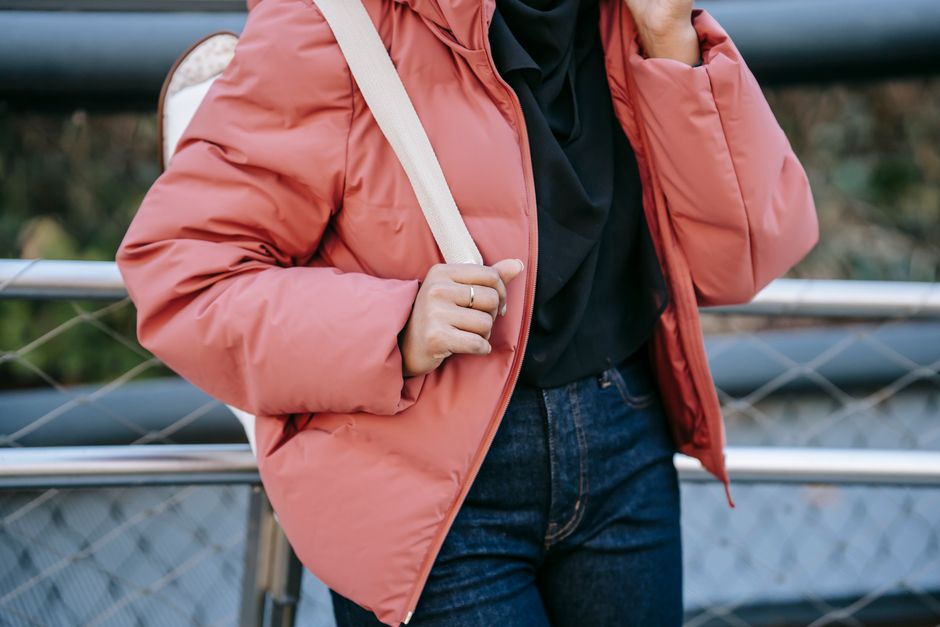
A puffer coat brings welcome warmth to cold days, but its rounded shape can make an otherwise tidy outfit feel unfinished. Looking polished starts with treating the coat as part of your outfit from the beginning. Its length, volume, and neckline affect everything visible around it. With a few adjustments to fit and proportions, you can make a practical puffer feel considered while keeping the comfort that makes you reach for it.
Start with the coat fastened
Try your puffer over the layers you actually wear. Close the zipper, reach forward, and sit down. You should have room to move without tightness across your shoulders or pulling at the fastening. Sleeves should cover your wrists without getting in the way of your hands. If the coat feels awkward, adjust any existing cuffs, waist tabs, or hem drawcords before changing the rest of your outfit.
Checking the coat closed matters because that is how you may need to wear it outdoors. An outfit that relies on an open front to show its shape may look quite different once you bundle up. Look at the closed silhouette first, then use the visible neckline, trouser hems, footwear, and bag to give it a deliberate finish.
Work with your puffer’s length
Short puffers
A short puffer leaves most of your lower half visible, giving trousers or a skirt a strong role in the outfit. Try straight jeans with a smooth sweater, or trousers with a clear crease. A waistband that meets your top helps the layers look connected. If you prefer an untucked top, smooth its hem and check that the portion below the coat looks intentional rather than caught halfway inside.
Hip-length puffers
A hip-length coat works with many trouser shapes, but the transition below its hem deserves attention. Straight legs offer an easy starting point. Wider trousers also work when the fabric falls smoothly instead of gathering around your shoes. Look from the side as well as the front: a bulky top bunched at the waistband can change the outline more than the trousers themselves.
Long puffers
A long puffer becomes most of your outdoor outfit. Focus on the smaller areas that remain visible. A neat sweater neckline, trousers that clear the ground, and boots in good condition can make a useful difference. With a dress or skirt, compare the hemlines in a mirror. A visible section of skirt can look lovely; the two hems do not need to match exactly.
Create definition without tight clothing
You do not need skinny trousers to balance a padded coat. Definition can come from a straight seam, a clean hem, or fabric that holds its shape. A generously cut puffer over wide trousers can feel polished when the layers underneath lie smoothly. Try a simple top and let the coat and trousers provide the main shapes.
If your coat has an adjustable waist, experiment with a gentle adjustment rather than pulling it as tight as possible. The aim is a comfortable outline with enough room for your layers. Adding a separate belt can make some coats bunch or interfere with pockets and fastenings, so check how it behaves when you sit and move before making it part of the outfit.
Use color to connect the pieces
Repeating a color is an easy way to make practical outerwear feel integrated. With a black puffer, try black trousers and a lighter sweater. With an olive coat, cream knitwear and brown footwear can create a quiet combination. You can also repeat the coat’s color in a small visible detail, such as socks, without matching everything exactly.
A bright coat can carry the outfit on its own. Place it over a simple base, such as a navy top and navy trousers, and see how much more the look needs. A glossy finish already provides visual interest. If several pieces compete for attention, try removing one pattern or extra color and reassess the combination with the coat closed.
Give the neckline breathing room
A hood, tall collar, and thick sweater neck can occupy the same space. Arrange each layer so it sits comfortably. A fine turtleneck may fit inside a high collar more easily than a chunky rolled neck. A crew neck is another straightforward option. Check that the hood lies evenly across your back and has not trapped a fold of your sweater.
When you need a scarf, leave enough space to turn your head freely. A flatter fold inside the coat may sit more neatly than a large bundle above the collar. Close the zipper to a comfortable height and adjust the scarf afterward. Warmth should guide the arrangement; an exposed neckline is unnecessary if the weather calls for full coverage.
Check the footwear and bag together
Shoes provide a visual anchor beneath the coat’s rounded shape. Sturdy boots, simple lace-ups, or clean sneakers can all work when appropriate for the conditions. Try your trousers with the actual shoes you plan to wear. Hems should avoid dragging through wet pavement, and fabric should not collect in a heavy pile over the footwear.
A bag with a clear outline can add structure beside soft quilting. A neatly packed tote or compact shoulder bag is enough; it does not need to look formal. Adjust the strap over your coat instead of keeping its usual indoor length. A crossbody strap should sit comfortably without pulling the front sharply across your chest or catching beneath the hood.
Build an outfit for your day
- Everyday errands: Wear a hip-length puffer with straight jeans, a plain sweater, and weather-appropriate boots. Smooth the sweater hem and arrange the jeans above the soles.
- A casual office: Pair a long puffer with tailored trousers and a fine knit. Add simple boots and a practical bag. Make sure the outfit underneath feels complete when you remove the coat.
- A relaxed dinner: Try a short puffer over a simple knit dress, warm tights, and boots. Let the dress create a continuous line beneath the quilting.
Finish with a quick practical check
Before leaving, fasten the coat, settle your bag, and check for twisted cuffs, trapped fabric, or pockets stuffed unevenly. Brush away visible lint and follow the care label when dealing with marks. Padded coats can have specific cleaning and drying requirements. Finally, walk and sit in the complete outfit. The most useful polished look is one you can comfortably wear through your actual day.
