
Most people think you can just toss on any three chains and call it a look. That’s how you end up with a tangled mess that takes ten minutes to undo every morning. I learned the hard way.
After eight years of wearing three to five necklaces daily, I’ve broken more clasps than I care to admit and donated at least six chains that just didn’t work with anything else. Here’s what actually matters.
The 2-Inch Rule Is Non-Negotiable
Every necklace in your stack needs its own breathing room. If two chains sit on top of each other, they’ll twist, kink, and eventually snap at the clasp.
The minimum gap between any two necklace lengths? 2 inches. Not 1.5. Not “close enough.” Two inches.
Here’s the length system I’ve settled on after testing about forty different combinations:
| Layer | Length | Best For | Example Piece |
|---|---|---|---|
| Choker | 14-16 inches | Solid collar, no pendant | Catbird Tiny Choker ($98, 14k gold) |
| Mid layer | 18-20 inches | Small pendant or charm | Mejuri Mini Hoop Necklace ($175) |
| Long layer | 22-24 inches | Statement pendant or lariat | Missoma Lucy Williams Coin Necklace ($245) |
| Extra long | 28-32 inches | Dramatic drop over clothes | David Yurman Cable Wrap ($450) |
Stick to three layers max unless you’re going for a deliberately chaotic look. Four or five chains only work if at least two are ultra-fine (1mm or thinner) and sit at dramatically different lengths.
What Happens When You Break the Rule
I once wore a 16-inch chain with a 17-inch chain. Within an hour, the shorter one had threaded itself through the longer one’s links. Took me six minutes with a straight pin to separate them. Never again.
If you absolutely must wear two chains at similar lengths, make one a solid cable chain and the other a bead or pearl strand. Different textures don’t tangle as aggressively.
Mixing Metals Without Looking Like a Hardware Store
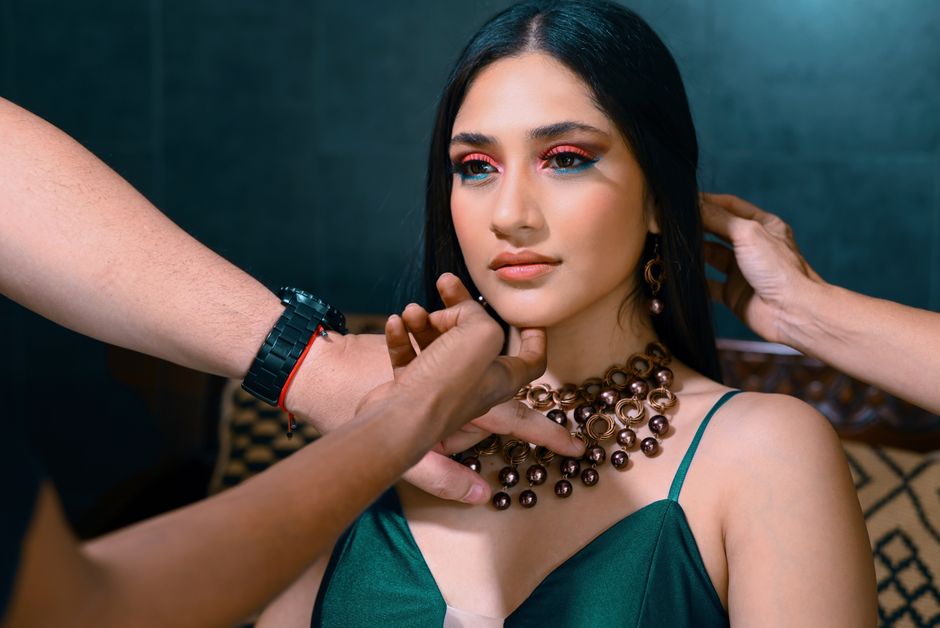
The old rule was “don’t mix gold and silver.” That rule died around 2019. But there’s a right way and a wrong way to do it.
The wrong way: wearing a warm yellow gold chain with a bright white silver chain, both the same thickness, at the same length. That looks like you grabbed two random necklaces from different decades.
The right way: pick a dominant metal (60-70% of your stack) and use the other as an accent. My daily stack right now is two yellow gold pieces and one rose gold piece. The rose gold bridges the visual gap because it has warm undertones like yellow gold but a pinkish tint that echoes silver.
White gold is your best friend if you want the look of silver without the maintenance. It doesn’t tarnish, and it sits visually between yellow gold and sterling silver. Tiffany & Co. makes a 2mm white gold chain ($320) that I’ve worn daily for three years without polishing once.
When NOT to Mix Metals
If your skin tone is very cool (blue veins, burns before tanning), stick to white metals near your face. A yellow gold choker against cool-toned skin can look jarring. Save the warmer metals for longer chains that fall onto clothing.
Also avoid mixing plated metals with solid gold. The plated piece will wear down faster and start looking dull next to your high-polish chains. Either go all-plated (and replace yearly) or all-solid (and keep forever).
Pendant Placement Changes Everything
Most people hang a pendant on their shortest chain. That’s a mistake.
The pendant should sit on the second or third layer, not the choker. A pendant on a 16-inch chain sits right at your collarbone hollow — which works if the pendant is tiny (under 10mm). But anything bigger looks cramped and pulls the chain down, creating a weird V-shape.
I wear my statement pendant on a 20-inch chain. It falls just above my sternum, which means it’s visible above a crewneck but doesn’t get lost in a V-neck. The shorter chains above it frame the pendant without competing.
For layered pendants, keep them within the same visual family. Don’t mix a geometric bar with a heart charm. Stick to either all organic shapes (circles, coins, ovals) or all geometric (bars, triangles, rectangles). Mixing the two looks like you raided a grandmother’s jewelry box.
The One Exception
If you’re wearing a very fine chain (1mm or thinner) as your top layer, you can put a tiny charm on it — think a single letter initial or a 4mm birthstone. The chain is delicate enough that it reads as a single unit, not a separate layer.
Clasp Types: The Silent Dealbreaker
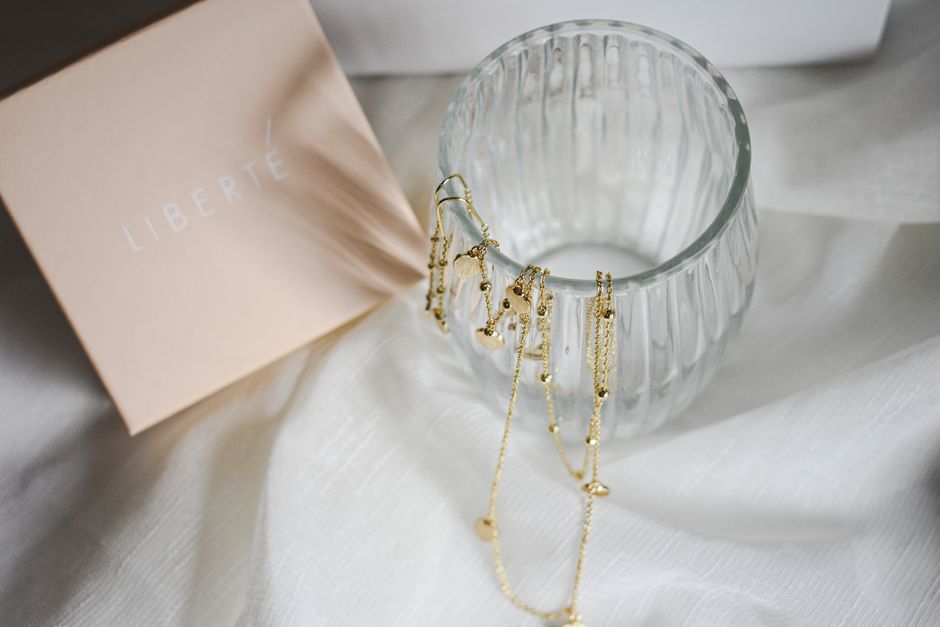
I own a beautiful Mejuri chain with a lobster clasp. It’s also the chain I’ve had to repair twice. Lobster clasps on fine chains (under 2mm) are too heavy for the links and eventually stretch them out.
Here’s what I’ve learned about clasps through trial and expensive error:
- Spring ring clasps (round, pull-back mechanism): Best for chains under 2mm. Lightweight, low profile, won’t distort thin links. Only downside is they’re harder to open with long nails.
- Lobster clasps (curved, trigger-style): Fine for chains 2mm and thicker. Avoid on delicate pieces.
- Magnetic clasps: Do not use on layered necklaces. The magnets will grab each other across your neck and create a tangled knot that’s nearly impossible to undo.
- Box clasps: Great for multi-strand pieces, but bulky for single chains. Only use if you’re wearing a single statement necklace.
My current favorite is the spring ring clasp on a 1.5mm curb chain from Missoma ($165). It’s been through gym sessions, sleeping, and ocean swims. No issues in two years.
Also: check your clasp size before buying. A 4mm clasp on a 1mm chain looks like a button on a thread. The clasp should be roughly the same width as the chain link.
Storage That Actually Prevents Tangles

Throwing your layered necklaces into a jewelry box together is a recipe for a Gordian knot. I’ve wasted more mornings untangling than I want to admit.
Here’s the system that finally worked after trying seven different storage methods:
Individual zip bags for each chain. Not pouches — pouches let chains move around and find each other. Small 2×3 inch resealable bags from a craft store ($5 for 50). Each chain gets its own bag. Lay them flat in a drawer.
If you want something more display-friendly, use a slot-style travel case with individual elastic loops. The key is that each chain has its own compartment that doesn’t share space with another chain.
For the stack you wear most often, buy a single necklace holder with multiple hooks at different heights. Hang your go-to stack as a pre-assembled set. I use a small brass tree stand ($22 on Amazon) with five hooks. My daily three necklaces live there, already layered. I lift them off together in the morning and put them back together at night.
One more thing: never store necklaces with clasps closed. The clasp adds weight that pulls the chain into a tight loop, which creates kinks in the metal. Always store them open and hanging straight.
After eight years, I’m still learning. The brands I trusted five years ago aren’t always the ones I recommend now. But the principles — length gaps, metal balance, clasp weight, smart storage — those haven’t changed. Good jewelry outlasts trends, but only if you treat it right.
