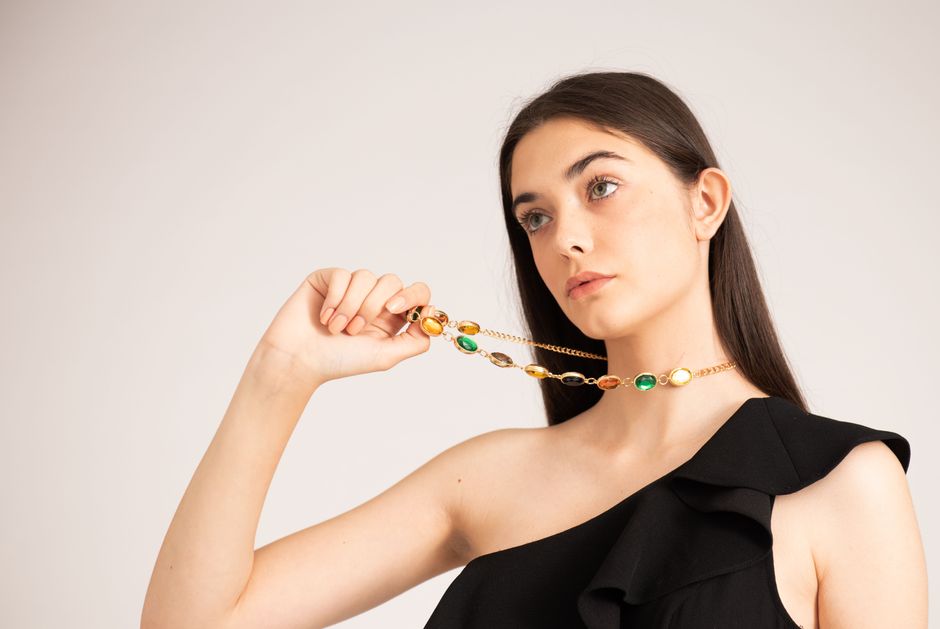
A 2026 survey by The Knot found that 67% of women own at least one statement necklace they never wear. The reason given most often? “It didn’t look right with my outfit.” That’s not a necklace problem. That’s a neckline problem.
Statement necklaces are not one-size-fits-all accessories. A chunky bib piece that looks stunning on a mannequin can look awkward and heavy against a crewneck sweater. The shape of your neckline determines which necklace shapes, lengths, and weights will flatter your proportions. This article explains the specific rules for each common neckline type — and when to break them.
This is not legal advice — consult a licensed attorney for contract disputes involving jewelry purchases.
Why Neckline Shape Dictates Necklace Length and Weight
The fundamental principle is visual balance. A necklace creates a line across your torso. That line interacts with the line created by your neckline. When the two lines clash — for example, a short choker worn with a deep V-neck — the result is visual confusion. The eye doesn’t know where to rest.
Three variables matter: length (measured in inches from the collarbone down), weight (how heavy the piece looks and feels), and shape (curved, angular, geometric, organic).
Length Rules by Neckline
Crew neck (round, high, sits at the collarbone): Necklaces should fall below the neckline edge, not sit on top of it. A 16-inch choker will crowd the crew neckline. An 18- to 20-inch pendant or lariat creates a clear vertical line that elongates the torso.
V-neck (deep V, moderate V, or keyhole): The necklace should mirror the V shape. A V-shaped pendant or a Y-necklace that follows the dip works best. Length should end just above the point of the V — not below it, not above it. For a deep V, a 22- to 24-inch chain with a small pendant is appropriate.
Scoop neck (wide, curved, low): Wide bib necklaces and collar-style pieces that follow the curve of the scoop work well. The necklace should sit inside the scoop, not outside it. A 16- to 18-inch collar that hugs the neck is a safe choice.
Off-shoulder and strapless: These necklines leave the entire collarbone and shoulder area bare. A choker or short collar (14 to 16 inches) draws the eye upward. Alternatively, a longer lariat that falls between the collarbone and the bust creates drama without competing with the exposed skin.
Turtleneck and high neck: Long, layered necklaces (24 to 36 inches) that fall well below the neckline break up the solid fabric. Short necklaces disappear against the fabric. A multi-strand beaded necklace or a long chain with multiple pendants works.
Square neck: Geometric necklaces that echo the square shape — a rectangular pendant or a box-chain collar — create harmony. Avoid round pendants; they fight the straight lines.
| Neckline | Ideal Necklace Length | Best Shape | Avoid |
|---|---|---|---|
| Crew neck | 18–20 inches | Pendant, lariat | Chokers (14–16 inches) |
| V-neck | 18–24 inches | V-shaped pendant, Y-necklace | Round bibs, wide collars |
| Scoop neck | 14–18 inches | Bib, collar, curved pendant | Long chains that dangle outside the scoop |
| Off-shoulder | 14–16 inches | Choker, collar, lariat | Heavy bibs that pull fabric down |
| Turtleneck | 24–36 inches | Layered, multi-strand, long pendant | Short necklaces (under 18 inches) |
| Square neck | 16–20 inches | Geometric, rectangular, box-chain | Round pendants, circular medallions |
The One Rule That Overrides All Others: Fabric Weight

Neckline shape matters, but fabric weight matters more. A lightweight silk blouse with a deep V-neck cannot support a heavy resin bib necklace. The fabric will pull, wrinkle, and distort. The necklace will sit crooked.
Here is the rule: The necklace must be lighter than the fabric it rests on.
For lightweight fabrics — silk charmeuse, rayon, thin cotton, linen — choose necklaces under 50 grams. Acrylic, lightweight metal chains, and small pendants (less than 1 inch in diameter) are appropriate. For medium-weight fabrics — denim, tweed, wool blends, mid-weight cotton — necklaces up to 100 grams work. For heavy fabrics — leather, thick wool, structured blazers, canvas — necklaces over 100 grams, including resin, wood, and large metal pieces, are safe.
Failure to follow this rule is the most common mistake. A 200-gram chunky acrylic necklace on a thin rayon blouse will ruin both the blouse and the look.
One exception: structured necklines. A boatneck or a high crewneck made of stiff fabric (like a denim jacket) can support a heavier necklace even if the neckline is high. The fabric provides the necessary mechanical support.
Statement Necklace Failure Modes: Three Mistakes to Avoid
Buying a statement necklace without considering your neckline is like buying shoes without knowing your size. Here are the three most common failures.
Mistake 1: The Choker + Crewneck Clash. A choker necklace (14–16 inches) worn with a crewneck top creates a stacked, crowded look. The necklace sits on top of the neckline edge, creating two parallel lines that compete. The result is a shortened, widened appearance. Fix: wear the choker with an off-shoulder or strapless top, or swap to an 18-inch pendant.
Mistake 2: The Bib Necklace on a Deep V-Neck. A wide bib necklace worn with a deep V-neck creates a triangle-on-triangle effect. The bib covers the upper chest, and the V extends below it. The eye gets stuck between the two shapes. Fix: choose a V-shaped pendant that follows the neckline, not a solid bib.
Mistake 3: The Pendant That Hangs Below the Neckline Point. For V-necks and scoop necks, the pendant must end at or above the lowest point of the neckline. A pendant that hangs below the V creates a disjointed line. The necklace appears to be sliding off. Fix: measure the distance from your collarbone to the V point, then choose a chain length that places the pendant just above that point.
When NOT to Wear a Statement Necklace
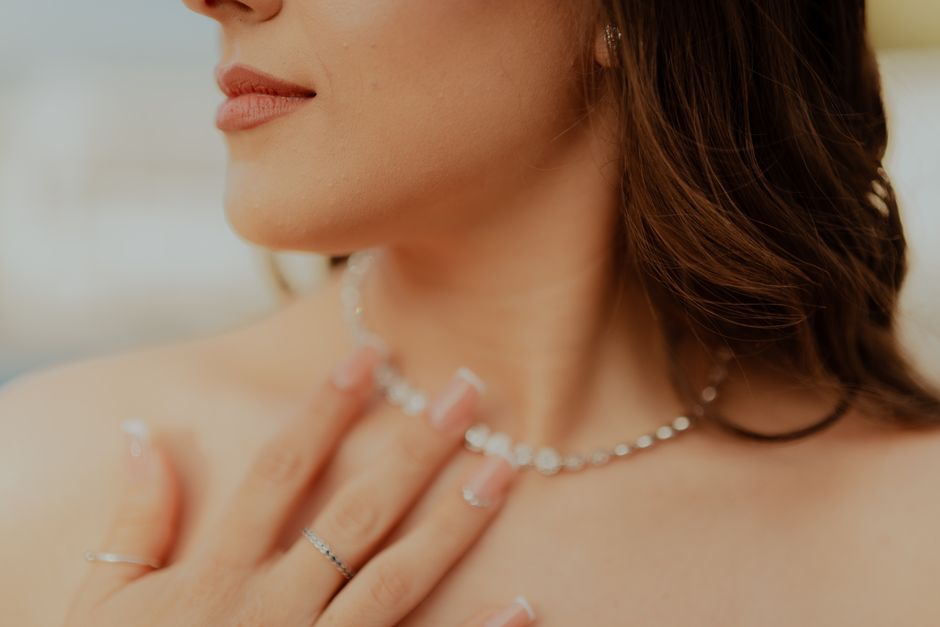
Some necklines are best left bare. A statement necklace adds visual weight. If the neckline already draws significant attention — through embellishment, ruffles, intricate draping, or a dramatic cut — a necklace competes rather than complements.
Specific situations to skip the necklace:
- Asymmetrical necklines (one-shoulder, diagonal cuts, draped one-side): The asymmetry is the statement. Adding a necklace introduces a second asymmetry that rarely resolves well.
- Heavily embellished necklines (beaded, sequined, embroidered, lace-trimmed): The embellishment is the accessory. A necklace creates visual noise.
- High-neck blouses with ruffles or bows at the collar: The neckline has its own focal point. A necklace competes with it.
- Deep cowl necks: The fabric drapes in a soft curve. A necklace interrupts the drape. Earrings are a better choice here.
When in doubt, test the rule: if the neckline has more than one design element (cut + fabric detail + embellishment), skip the necklace. Choose statement earrings or a cuff bracelet instead.
Proportion and Body Shape: Adjusting the Rules
Neckline rules are guidelines, not laws. Your body proportions — specifically your shoulder width, bust size, and neck length — modify how those rules apply.
Short neck (less than 3 inches from earlobe to collarbone): Avoid chokers and short collars. They make a short neck appear shorter. Choose longer necklaces (20 inches or more) that draw the eye downward. A V-neck with a 22-inch pendant is ideal.
Long neck (more than 4 inches from earlobe to collarbone): Chokers and short collars work well. They break up the vertical line and add visual interest at the collarbone. Longer necklaces can make a long neck appear even longer, so use them sparingly.
Broad shoulders: Wide bib necklaces and collars that span the collarbone balance the width. Avoid thin, delicate chains that get lost against the width. A 2- to 3-inch-wide bib is appropriate.
Full bust (D cup or larger): Necklaces should end above the bust line, not below it. A pendant that falls into the cleavage area draws attention there, which may or may not be desired. A 16- to 18-inch necklace that sits above the bust is a safe choice. Avoid long lariats that end at the bust line.
Petite frame (under 5’4″): Oversized statement pieces can overwhelm a small frame. Choose necklaces that are proportional — no wider than 3 inches, no longer than 20 inches. A small bib or a medium pendant works. A 4-inch-wide resin bib will look like armor.
Material and Finish: Matching the Occasion and Neckline

The material of the necklace communicates formality. A chunky resin or wooden piece reads casual. A gold chain with crystals reads formal. The neckline sets the context.
For casual necklines (cotton crewnecks, linen V-necks, denim jackets): Choose natural materials — wood, leather, acrylic, ceramic, resin. Matte finishes work better than high shine. Avoid overly polished gold or silver; they look out of place against casual fabrics.
For professional necklines (button-down shirts, sheath dresses, blazers, silk blouses): Choose refined materials — gold vermeil, sterling silver, freshwater pearls, semi-precious stones. Keep the weight under 50 grams. A delicate chain with a small stone pendant or a thin gold collar is appropriate.
For formal necklines (strapless gowns, deep V evening dresses, off-shoulder cocktail dresses): Choose high-shine materials — gold plate, crystal, cubic zirconia, Swarovski elements, genuine gemstones. Larger pieces are acceptable because the neckline is bare. A crystal bib or a multi-strand pearl collar works.
One material that works across all three contexts: gold-filled chain. It has the look of solid gold at a fraction of the cost. A 2mm gold-filled chain with a small pendant (like a 6mm round cubic zirconia) transitions from day to night without looking out of place.
The finish also matters. High-polish finishes reflect light and draw attention. Brushed or matte finishes are more subtle. For a statement piece, high-polish is usually the right choice — the point of a statement necklace is to be seen. But if the neckline is already shiny (like a satin blouse), a matte necklace provides contrast.
Compressed Verdict: One Rule for Each Neckline
Here is the shortest possible version of this entire article. Memorize these six rules.
- Crew neck: Wear a pendant that falls below the neckline edge. 18–20 inches. No chokers.
- V-neck: Mirror the V shape. Pendant ends just above the V point. 18–24 inches.
- Scoop neck: Wear a bib or collar that sits inside the scoop. 14–18 inches.
- Off-shoulder/strapless: Short choker or collar. 14–16 inches. Or a long lariat for drama.
- Turtleneck/high neck: Long layered necklaces. 24–36 inches. Break up the solid fabric.
- Square neck: Geometric shapes only. Rectangular pendant or box chain. 16–20 inches.
For most women, the most versatile statement necklace is a 20-inch gold-filled chain with a medium-sized pendant (about 1 inch in diameter) that can be swapped out. This single piece works with crew necks, V-necks, scoop necks, and square necks. It fails only with off-shoulder and turtleneck styles. For those, a 16-inch choker and a 30-inch lariat are the two additional pieces that cover every neckline in your wardrobe.
