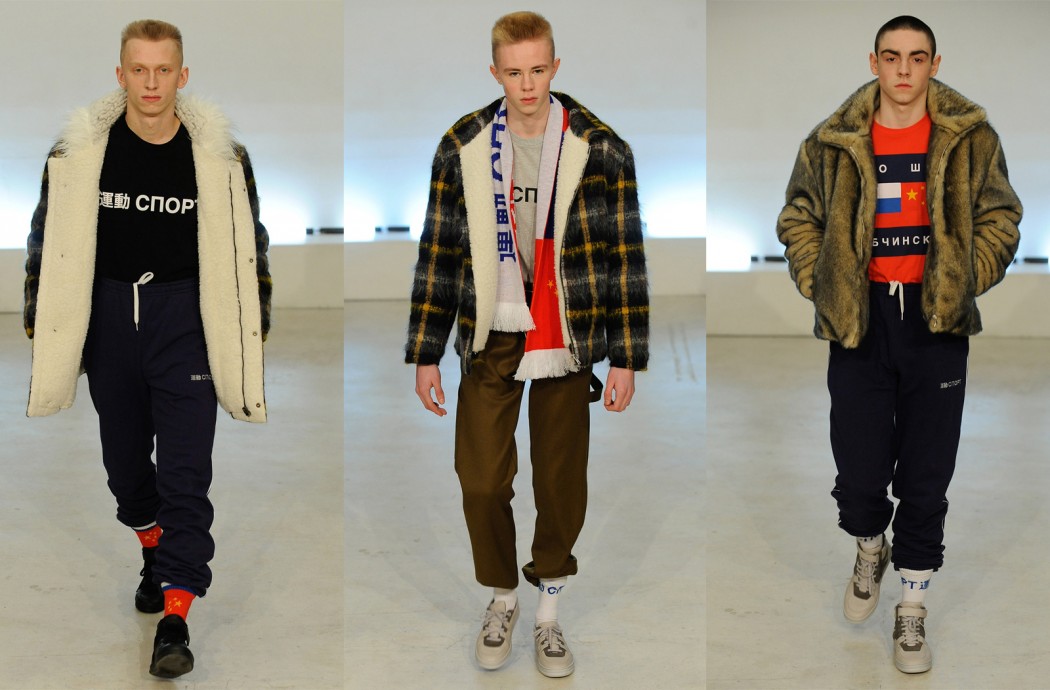
You see a grainy photo on Instagram. A model in an oversized tracksuit, Cyrillic lettering across the chest, standing in a concrete stairwell that looks like it belongs in a Soviet housing block. The caption reads “Gosha AW15.” You’ve heard the name. But what actually made this collection matter?
Let’s strip away the hype. The Gosha Rubchinskiy AW15 collection, shown in June 2015 for the Fall/Winter 2015 season, didn’t just sell clothes. It sold a specific vision of post-Soviet youth culture that the fashion world hadn’t seen packaged like this before. At a time when streetwear was still trying to figure out whether it wanted to be luxury or remain subcultural, Rubchinskiy picked a third path. He made clothes that looked like they cost $50 but retailed for $500. And people paid it.
This article breaks down exactly what the AW15 collection contained, why it resonated, and what you should know before buying it secondhand today. No nostalgia. No brand worship. Just the numbers and the context.
What Was in the Gosha Rubchinskiy AW15 Collection?
The AW15 collection was titled “Pac-Man.” Yes, the arcade game. But Rubchinskiy didn’t use it as a playful reference. He used it as a symbol of cultural collision — Western pop culture meeting Eastern European reality.
The collection included roughly 25-30 pieces across menswear. Here’s what dominated:
- Oversized tracksuits in navy, burgundy, and grey — the same three-color palette as Soviet-era sportswear, but cut wider and longer
- Crewneck sweatshirts with “Gosha Rubchinskiy” in bold Cyrillic across the chest, often paired with the Pac-Man ghost imagery
- Long-sleeve tees featuring the Pac-Man maze printed in faded, almost bootleg-quality graphics
- Bomber jackets in nylon with contrasting sleeves, reminiscent of 1990s Russian track jackets
- Cargo pants with elastic cuffs and drawstring waists — baggy, utilitarian, no branding
- Knit beanies and scarves in thick acrylic, looking like they came from a street market in Moscow
The materials were not premium. Rubchinskiy used cotton jersey, polyester blends, and acrylic knits. This was intentional. The collection was supposed to feel accessible, even cheap, in its materiality — while the pricing told a different story.
Retail prices at launch (2015):
| Item | Retail Price (USD) | Material |
|---|---|---|
| Crewneck sweatshirt | $450 | 100% cotton jersey |
| Bomber jacket | $850 | Nylon shell, polyester lining |
| Long-sleeve tee | $250 | Cotton-poly blend |
| Cargo pants | $380 | Cotton twill |
| Beanie | $95 | Acrylic knit |
Bottom line on pricing: You were paying for the name and the narrative, not the fabric. A standard Adidas tracksuit cost $80 at the time. The Gosha version cost 5-10x more for the same garment construction. That was the point.
Why Did AW15 Become a Cult Collection?
Three factors converged.
First, timing. 2015 was the year streetwear started its serious migration into luxury fashion. Demna Gvasalia had just launched Vetements in 2014. The “ugly fashion” trend was gaining momentum. Rubchinskiy’s AW15 landed right in the middle of this shift. It gave buyers a way to participate in the anti-luxury aesthetic without buying from a Parisian house. You could wear a $450 sweatshirt that looked like it cost $30 and signal that you understood the irony.
Second, scarcity. Rubchinskiy produced small runs. Very small. Most retailers received 5-10 pieces per style. If you didn’t buy within 48 hours of drop, you missed out. This wasn’t manufactured hype — it was a function of a small brand with limited production capacity. But the effect was the same: the collection became instantly collectible.
Third, the cultural moment. Western fashion media was obsessed with “post-Soviet” aesthetics in 2014-2016. The annexation of Crimea, the Sochi Olympics, the rise of Russian oligarch visibility — Russia was in the news constantly. Rubchinskiy offered a romanticized, youth-focused version of that reality. It wasn’t political. It was nostalgic for a time his generation never actually experienced.
Resale prices for AW15 items in 2016-2017 hit 2-3x retail. A crewneck that cost $450 was selling for $1,200 on Grailed within six months of release.
Verdict: The collection became cult because it captured a specific cultural moment — the intersection of streetwear’s rise, post-Soviet nostalgia, and ironic anti-luxury — at exactly the right time. The clothes themselves were basic. The context was everything.
How to Spot Authentic Gosha Rubchinskiy AW15 Pieces
The resale market for Gosha Rubchinskiy is full of fakes. AW15 is one of the most counterfeited collections because the designs are simple to replicate. A screen-printed graphic on a blank sweatshirt? Easy money for counterfeiters.
Here’s what to check on original AW15 pieces:
- Tags. Authentic pieces have a white woven neck tag with “Gosha Rubchinskiy” in black serif font. The tag is sewn into the collar seam, not attached by a separate stitch. Fake tags often use a bolder, sans-serif font.
- Wash labels. Inside the side seam, there’s a white fabric label with washing instructions in Russian and English. The Russian text should be Cyrillic, not Latinized. Counterfeiters often skip this detail.
- Print quality. The Pac-Man graphic on authentic pieces is screen-printed with a slightly cracked, distressed finish. It’s not smooth. Fakes usually apply a clean, plastisol-style print that looks too new.
- Stitching. Look at the hem stitching on sweatshirts and tees. Authentic pieces use a double-needle stitch with consistent tension. Loose threads or uneven stitching = red flag.
- Size tag. AW15 used standard letter sizing (S, M, L, XL) printed directly on the wash label. No numerical sizing. If you see “46” or “48,” it’s not AW15.
Common mistake: Buyers assume that because a piece looks worn, it’s authentic. Fakers intentionally distress new garments. Condition alone is not proof. Always check tags first.
Price check: As of 2026, authentic AW15 crewnecks in good condition sell for $800-$1,500 on Grailed and Vestiaire Collective. Bomber jackets: $1,500-$3,000. If you see a “bargain” at $300, it’s almost certainly fake.
What the AW15 Collection Got Wrong
Let’s be honest about the flaws.
Quality was poor. The cotton jersey used for the sweatshirts was thin. After 10-15 washes, the fabric pilled noticeably. The screen prints on some early production runs started cracking and peeling within a year of regular wear. This wasn’t a manufacturing defect — it was a deliberate choice to use low-grade materials. But for $450, you expected something that lasted longer than a season.
Sizing was inconsistent. A size M in one style fit like a size L in another. The tracksuit pants in particular had wildly different inseam lengths between colorways. If you bought online without trying on, you were gambling.
The irony wore thin. The whole “I’m paying $500 to look poor” thing worked in 2015. By 2018, it felt tired. The cultural moment passed, and suddenly you were just wearing an overpriced tracksuit. The collection’s value today depends almost entirely on its historical significance, not its wearable utility.
When NOT to buy AW15: If you want a comfortable, durable tracksuit that you’ll wear regularly, buy an Adidas Originals set for $120. The Gosha version is a collector’s item, not a wardrobe staple. If you need to ask whether it’s a good “investment,” you’re already in the wrong mindset. Fashion resale is not the stock market. Most pieces lose value over time. AW15 is an exception because of its scarcity, but that could change if the hype cycle moves on.
Gosha Rubchinskiy AW15 vs. Other Landmark Streetwear Collections
How does AW15 compare to other collections from the same era?
| Collection | Year | Retail Price Range | Resale Value (2026) | Key Difference |
|---|---|---|---|---|
| Gosha Rubchinskiy AW15 | 2015 | $95-$850 | 2-4x retail | Post-Soviet nostalgia, low production |
| Vetements SS16 (DHL tee) | 2016 | $185-$1,200 | 1-2x retail | Graphic irony, oversized silhouettes |
| Supreme x Louis Vuitton FW17 | 2017 | $400-$4,000 | 1-3x retail | Luxury collaboration, high production |
| Palace FW14 (Tri-Ferg) | 2014 | $80-$300 | 1-2x retail | Skate culture, UK-centric |
Key takeaway: AW15 holds its value better than most streetwear collections from the same period because it was produced in smaller quantities and has a stronger cultural narrative. Vetements DHL tees were everywhere — they don’t feel special anymore. Gosha AW15 still feels rare.
But here’s the tradeoff: the Gosha aesthetic is harder to wear today. The post-Soviet look was very specific to 2015-2017. Vetements and Supreme have broader styling flexibility. If you’re buying for wearability, not collectibility, look elsewhere.
The Legacy of AW15: Where Is Gosha Rubchinskiy Now?
Rubchinskiy paused his namesake brand in 2018 after allegations of inappropriate behavior with young models surfaced. He apologized and stepped back. The brand never officially returned.
In 2026, he launched a new project called Gosha (minus the Rubchinskiy) in collaboration with the Italian brand Slam Jam. The new collection was more subdued — workwear-inspired, less overtly Russian, no Cyrillic text. Prices were similar ($300-$800), but the cultural impact was not. The magic of AW15 came from its specificity. The new stuff feels generic.
Rubchinskiy’s influence, however, persists. The oversized, logo-heavy, “ugly” aesthetic that he helped popularize is now standard in streetwear. Brands from Balenciaga to Nike have adopted the post-Soviet visual language. You see it in the baggy cargo pants, the Cyrillic fonts on hoodies, the faded, bootleg-quality graphics. AW15 didn’t invent any of this, but it was the collection that proved the market existed.
What this means for buyers: The original AW15 pieces are historical artifacts of a specific moment. They’re not coming back. Rubchinskiy’s new work under the “Gosha” label shares the same name but not the same energy. If you want a piece of the original story, you have to buy secondhand. Pay the premium, check the tags, and understand that you’re buying a piece of fashion history — not a practical garment.
The Gosha Rubchinskiy AW15 collection was never about the clothes. It was about the story. And that story is worth remembering, even if the sweatshirts pilled after five washes.
