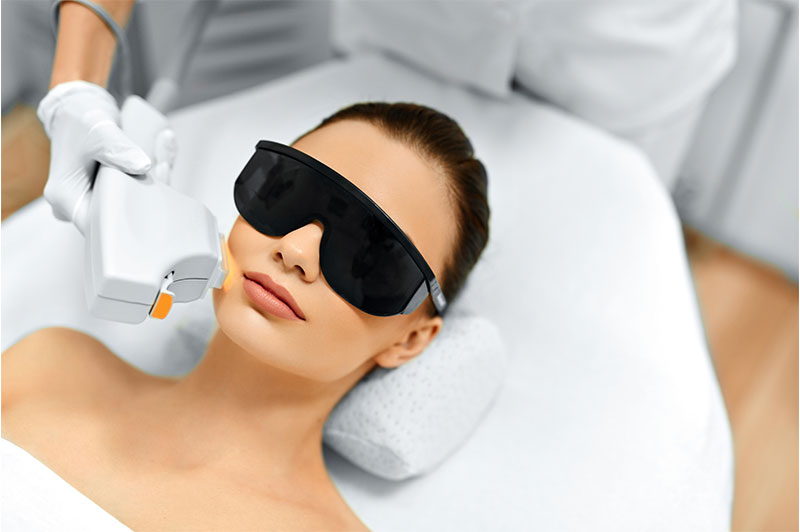
If you wear sleeveless tops, short dresses, or swimwear regularly, you know the hassle of constant hair removal. Shaving every other day, waxing every three weeks — it eats time and money. Laser and non-laser solutions promise longer-lasting smoothness, but they work very differently. Here is what actually matters when choosing between them.
How Laser and IPL Actually Work — The Physics You Need to Know
Both laser and intense pulsed light (IPL) target melanin in the hair follicle. The light energy converts to heat, damaging the follicle so it stops producing hair. But the devices are not the same.
Laser: Single wavelength, high intensity
Medical-grade lasers (like the Candela GentleLase Pro) emit a single wavelength of light — usually 755nm or 810nm. This means the energy is concentrated. It zaps the follicle in a fraction of a second. Because the light is so focused, it works best on people with dark hair and light skin. The contrast lets the laser find the follicle without burning surrounding skin.
IPL: Broad spectrum, lower intensity
At-home devices like the Braun Silk-Expert Pro 5 ($430) or Philips Lumea Prestige ($500) use a broad spectrum of light — 400nm to 1200nm. Think of it like a flashbulb rather than a laser pointer. The energy is spread across a wider area, making it safer for home use but less effective on stubborn hair. IPL requires multiple passes and more sessions.
Electrolysis: The only permanent solution
Electrolysis uses a needle inserted into each follicle to deliver a small electric current. It works on any hair color and skin tone. The catch: it is slow. A single session can take an hour for a small area like the upper lip. Full legs might take 10-15 sessions of 2 hours each. Cost runs $50-$150 per session depending on location.
| Method | Wavelength | Best for | Cost per session | Sessions needed |
|---|---|---|---|---|
| Medical laser | Single (755-810nm) | Dark hair, light skin | $150-$400 | 6-8 |
| At-home IPL | Broad (400-1200nm) | Dark hair, light-medium skin | $300-$500 (device) | 12+ |
| Electrolysis | N/A (electric current) | All hair/skin types | $50-$150 | 15-30 |
Key takeaway: If you have dark hair and light skin, medical laser gives the fastest results. If you have lighter hair or darker skin, IPL is safer but slower. Electrolysis is the only permanent option for everyone — but you will pay in time and money.
Cost Comparison Over 2 Years — What You Actually Spend
Fashion people think about cost per wear. Same logic applies here. Let’s run the numbers for treating both legs and underarms over two years.
Shaving
Razors and cream: $15 per month. Over 2 years = $360. Plus the time: 10 minutes per shower, 4 times a week = 70 hours of shaving. And you still have stubble the next day.
Waxing
Professional waxing for legs and underarms: $70 per session, every 4 weeks. Over 2 years = $1,820. At-home wax kits: $40 upfront plus $15 per refill kit. Over 2 years = $220. Stubble-free for about 2 weeks, then regrowth starts.
At-home IPL
The Braun Silk-Expert Pro 5 costs $430 upfront. You use it weekly for 12 weeks, then monthly for maintenance. Over 2 years, that is about 40 sessions. No ongoing costs except electricity. Total = $430. After 8-10 sessions, you see 70-80% reduction. Maintenance keeps it that way.
Medical laser
Six sessions for legs and underarms: $2,400 total ($400 per session). After those 6 sessions, most people see 80-90% reduction. Touch-ups every 6-12 months: $200 per visit. Over 2 years = $2,800. Higher upfront cost, but you are done faster.
Verdict: At-home IPL wins on cost if you are willing to do the work. Medical laser wins on convenience if you have the budget. Shaving is cheapest but costs time and constant maintenance — not ideal for someone who wears revealing clothes daily.
Pain, Downtime, and Skin Reactions — What Nobody Tells You
I have tried both. Here is the honest truth about what each feels like.
Medical laser
Feels like a rubber band snapping against your skin. Quick, sharp, then gone. Most clinics offer cooling gel or a cold air blower to reduce pain. After the session, your skin is red and warm — like a mild sunburn. This lasts 2-4 hours. Some people get tiny bumps (follicular edema) that disappear within a day. Do not apply deodorant or lotion for 24 hours.
At-home IPL
Warm, not sharp. The Braun Silk-Expert Pro 5 has a skin tone sensor that adjusts intensity automatically. On the lowest setting, you barely feel it. On the highest, it feels like a warm pinprick. Redness is minimal — maybe 30 minutes. You can shave between sessions. Common mistake: using it on tanned skin. IPL detects melanin and will burn a tan. Wait until your tan fades completely.
Electrolysis
Each zap feels like a tiny static shock. After 10 minutes, the area feels tender. The real issue is time — sitting for an hour while someone pokes your face with a needle is mentally draining. Redness and small scabs can appear for 1-2 days. Do not pick the scabs. They heal into tiny white spots if you do.
Waxing
Pain is intense for 2 seconds, then it is over. But you repeat it every 3-4 weeks. Ingrown hairs are the real problem — especially on bikini lines and thighs. Exfoliating 2-3 times a week helps, but some people get them no matter what.
Bottom line: If you have low pain tolerance, start with at-home IPL on the lowest setting. If you want the fastest results and can handle a few minutes of discomfort, medical laser is better. Avoid electrolysis for large areas unless you have patience and a high pain threshold.
When NOT to Use Laser or IPL — Skin Tone, Hair Color, and Medical Conditions
This is the part most articles skip. Laser and IPL are not universal. Here is when you should avoid them entirely.
If you have light blonde, red, gray, or white hair
These hair colors have little to no melanin. The laser or IPL light has nothing to target. It will not work. Your options: electrolysis (permanent) or waxing/shaving (temporary). Do not waste money on IPL if your hair is light.
If you have dark skin (Fitzpatrick types V-VI)
Medical lasers can burn dark skin because the melanin in your skin competes with the melanin in the hair. Some clinics use Nd:YAG lasers (1064nm) which are safer for dark skin, but not all have them. At-home IPL devices are generally safer — they have skin tone sensors that shut off if your skin is too dark. The Philips Lumea Prestige is one of the few that works on skin up to Fitzpatrick V. Always patch test first.
If you have a tan or sunburn
Wait 2-4 weeks after tanning before using laser or IPL. The light will target the melanin in your skin and cause burns, blisters, or hyperpigmentation. This is the most common injury from at-home IPL. Users ignore the warning and end up with dark spots that take months to fade.
If you are pregnant or breastfeeding
No studies confirm safety. Most clinics and manufacturers advise against it. Hormonal changes during pregnancy can also cause hair to grow differently — some women get more hair, some less. Wait until after delivery and weaning.
If you have certain medical conditions
Epilepsy (light sensitivity), active skin infections (cold sores, impetigo), or taking photosensitizing medications (some antibiotics, Accutane, St. John’s Wort) — all are contraindications. Check with your dermatologist before starting.
One more thing: Do not use IPL or laser on tattoos, moles, freckles, or dark spots. The light will target the pigment and cause burns. Cover them with white tape or a marker before treating the surrounding area.
What Fashion People Actually Choose — And Why
After talking with stylists, models, and friends who wear revealing clothes daily, here is the consensus.
Models and performers who need completely smooth skin for long periods (shoots, runway, swimwear) go for medical laser on legs, underarms, and bikini. The downtime is minimal — they can work the next day. They budget $2,000-$3,000 upfront and never think about it again for months.
Fashion bloggers and everyday style lovers who want smooth skin without the salon cost buy an at-home IPL device. The Braun Silk-Expert Pro 5 is the most popular because it has a wide treatment window (2.5cm²) and a skin tone sensor that prevents mistakes. They use it for 12 weeks, then touch up once a month. Total cost under $500.
People with sensitive skin or who get ingrown hairs from waxing often switch to IPL. It reduces ingrown hairs significantly because the hair grows back thinner and weaker over time. After 6-8 sessions, many say their skin is smoother than it ever was with waxing.
My pick: For most fashion lovers who want smooth legs, underarms, and bikini without constant maintenance, the Braun Silk-Expert Pro 5 is the best option right now. It costs $430, works on most skin tones up to Fitzpatrick IV, and pays for itself within 6 months compared to waxing. If you have the budget and darker hair/light skin, medical laser is faster — book 6 sessions at a clinic with a Candela GentleLase Pro and be done in 6 months. Either way, you will stop spending weekends shaving and start wearing what you actually want to wear.
