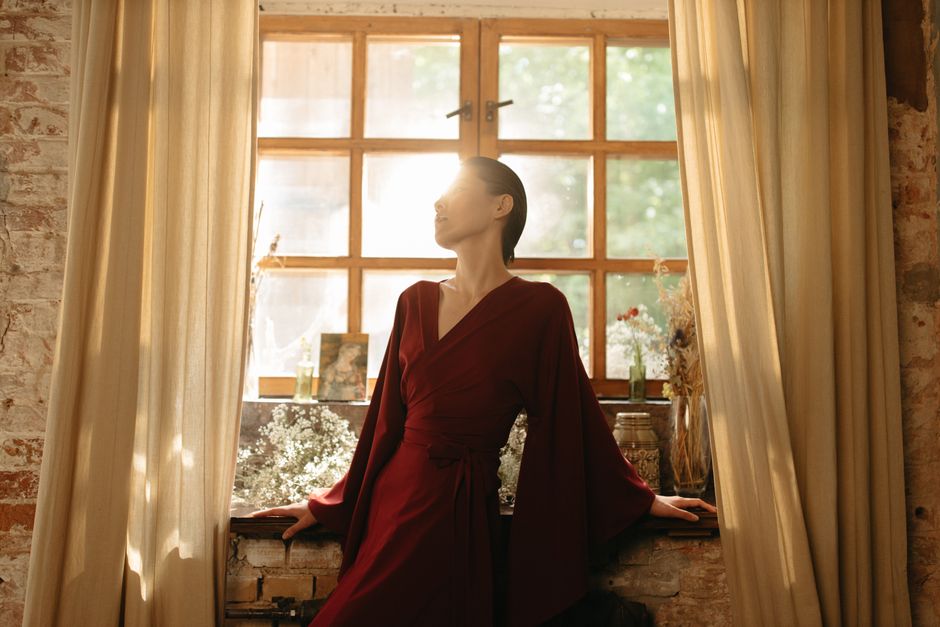
A wrap dress has no fixed waist seam, which means one garment can create several different silhouettes with a small change in tension, knot placement, or layering. You know the problem: the dress looked polished in the fitting room, but at home the neckline shifts, the skirt blows open, or the outfit feels too bare for the weather. The solution does not require a larger wardrobe. It requires a clear order of decisions.
Start with the season, then control coverage, proportion, color, and movement. A wrap dress works best when the rest of the outfit supports its diagonal lines instead of competing with them.
Why Wrap Dresses Work Across Body Shapes and Seasons
The wrap dress solves a basic clothing problem: the body needs room to move, but the outfit still needs a visible waist and a clean outline. Instead of forcing the torso into one rigid measurement, the dress uses overlapping panels and ties to adjust the fit. That construction lets you change the amount of ease around the ribs, waist, and hips while keeping the central shape intact.
The diagonal line creates visual direction
The front overlap draws the eye from one shoulder toward the opposite hip. That diagonal line breaks up a straight column and gives the outfit movement. If you want a longer, cleaner look, keep the dress close to the body and place the knot near your natural waist. If you want a softer effect, loosen the tie slightly and add a long, open layer that repeats the vertical direction.
The neckline also changes the balance of the outfit. A deeper V makes the upper body look longer, while a camisole or high-neck base layer adds coverage and creates a stronger horizontal break. Neither choice is automatically better. The right option depends on the event, weather, and the amount of contrast elsewhere in the outfit.
Fit comes from tension, not just size
A wrap dress can fit through the shoulders and still feel wrong if the ties sit too high or too low. Stand naturally and check three points: the overlap should cover the bust without pulling, the waist should sit close without digging in, and the skirt should remain closed when you walk. The tie should hold the garment in place without requiring constant adjustment.
For fuller busts, a slightly higher wrap point and a secure base layer can prevent the neckline from opening. For a straighter shape, a defined tie and a fluid skirt create more visible waist contrast. For a shorter torso, keep the knot close to the narrowest part of the waist and avoid bulky layers that begin directly beneath it.
Fabric decides the season more than the print
Lightweight woven fabric suits hot weather because it releases heat and moves away from the skin. A medium-weight knit gives better coverage in transitional weather, but it can reveal every fold if the tie sits too tightly. A heavier, stable fabric works for cold months when you need the dress to hold its shape over a base layer.
Fabric also changes the mood. Matte surfaces look sharper for work, soft textures feel relaxed on weekends, and fluid surfaces suit evening dressing. For the most useful year-round wardrobe option, choose a wrap dress with enough structure to keep the overlap flat but enough movement to avoid looking stiff.
What to Wear With a Wrap Dress in Each Season
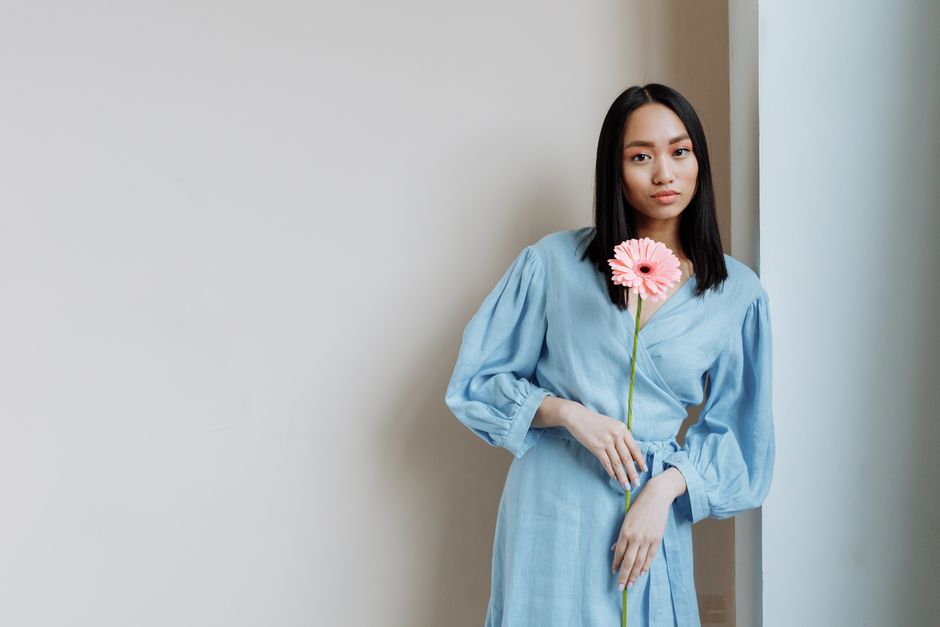
The strongest seasonal outfits change only two or three elements: the layer next to the skin, the shoe, and the outer layer. Keep the dress as the visual center.
| Season | Base layer | Outer layer | Shoe direction | Best styling result |
|---|---|---|---|---|
| Spring | Short-sleeve or fine long-sleeve top | Cropped jacket or lightweight cardigan | Low boots, loafers, or clean trainers | Defined waist with light structure |
| Summer | Breathable camisole or no visible layer | Open linen shirt or light scarf | Flat sandals, woven shoes, or simple flats | Airy silhouette with minimal bulk |
| Fall | Fine knit top or fitted mock neck | Long cardigan, blazer, or short coat | Ankle boots or polished loafers | Warmth without hiding the waist |
| Winter | Close-fitting thermal or fine turtleneck | Structured coat with opaque tights | Tall boots or sturdy ankle boots | Full coverage with a clear vertical line |
Spring and summer need controlled lightness
Spring outfits often fail because they mix a delicate dress with too many heavy pieces. Use one structured item, such as a cropped jacket, then keep the rest streamlined. If the dress has a busy print, choose a quiet layer in one of its background colors. If the dress has a solid color, a textured layer can add interest without making the outfit look crowded.
Summer calls for fewer layers, but less fabric does not mean less planning. Add a close-fitting slip or camisole when the neckline needs stability, then choose shoes with a similar visual weight to the dress. A delicate sandal with a very full skirt can look unbalanced; a simple flat or low platform often gives the outfit a cleaner base.
Fall and winter need length management
In fall, place the outer layer either clearly above the waist or clearly below the hip. A cardigan that ends at the widest point of the body can interrupt the wrap line and make the outfit look wider. A cropped jacket emphasizes the waist, while a long open layer creates a continuous vertical frame.
Winter styling works best when the base layer fits close to the body. A thick sweater underneath a wrap dress usually creates bunching at the bust and waist. Use a fine knit instead, then add warmth through tights, boots, and a coat. Keep the coat open indoors if you want the wrap detail to remain visible, but make sure its front edges do not compete with the dress overlap.
How to Build a Balanced Wrap-Dress Outfit in Five Steps
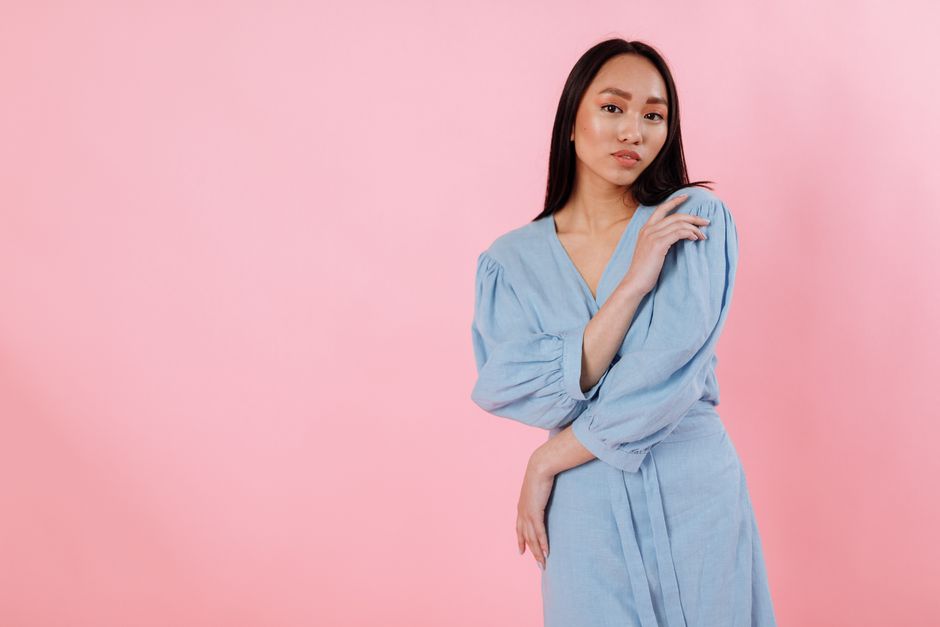
Start with the waist and work outward. The wrap detail already supplies movement, so the rest of the outfit should answer five practical questions in order.
- Set the correct tension. Put the dress on over the undergarments you plan to wear. Cross the inner panel flat across the torso, then tie the inside string before adjusting the outer tie. The fabric should skim the waist and stay closed when you sit down. If you need to pull the tie so tightly that the skirt gathers, the garment needs a different size, cut, or base layer.
- Choose the coverage level. Add a camisole, fitted tank, or fine high-neck layer when the neckline moves too much or the occasion calls for more coverage. Match the layer to the dress rather than automatically choosing a contrasting color. A close tonal match keeps the front line calm; a strong contrast makes the neckline a focal point.
- Pick one proportion to emphasize. A cropped layer highlights the waist. A long open layer lengthens the body. A belt can add definition, but use one only when the dress fabric stays flat beneath it. Do not combine a dramatic belt, a full cardigan, and a large scarf unless the dress has a very simple shape.
- Match shoe height to skirt movement. A midi wrap dress usually benefits from a visible ankle or a tall boot that fills the space below the hem. Flat shoes create a relaxed result, while a modest heel adds polish without changing the entire outfit. Avoid shoes that make the skirt drag or force you to keep adjusting the hem.
- Test the outfit in motion. Walk ten steps, sit in a chair, reach forward, and raise both arms. Check the neckline, overlap, hem, and knot after each movement. This test catches problems that a mirror misses, especially gaping at the bust and a skirt that opens when you walk.
Use color to make the outfit look intentional
The simplest color formula uses one dominant shade, one supporting neutral, and one small accent. For example, a deep-toned dress can work with a warm neutral layer and a small metal or color accent. A pale dress can take a darker shoe or bag to ground the outfit. Keep the accent small enough that it does not compete with the diagonal front.
Use texture instead of extra color
When the dress already has a print, texture creates depth without adding visual noise. Try a smooth dress with a ribbed base layer, a matte dress with a soft knit, or a simple dress with a lightly textured outer layer. The strongest choice is usually one noticeable texture at a time. More than that can make the outfit look assembled rather than styled.
Fix the Wrap Dress Problems That Ruin an Outfit
Most wrap-dress failures come from movement, proportion, or the wrong amount of tension. Solve the specific problem instead of adding random accessories.
“The neckline keeps opening.”
First, check the inner tie. Many people secure the outer tie and assume the dress will hold itself closed, but the inner panel does most of the work. Tie it flat, then place the outer knot at the natural waist rather than on the side of the hip. If the neckline still shifts, add a close-fitting base layer or a small hidden fastening designed for clothing. Avoid pulling the outer tie tighter and tighter; that often creates bunching without solving the gap.
