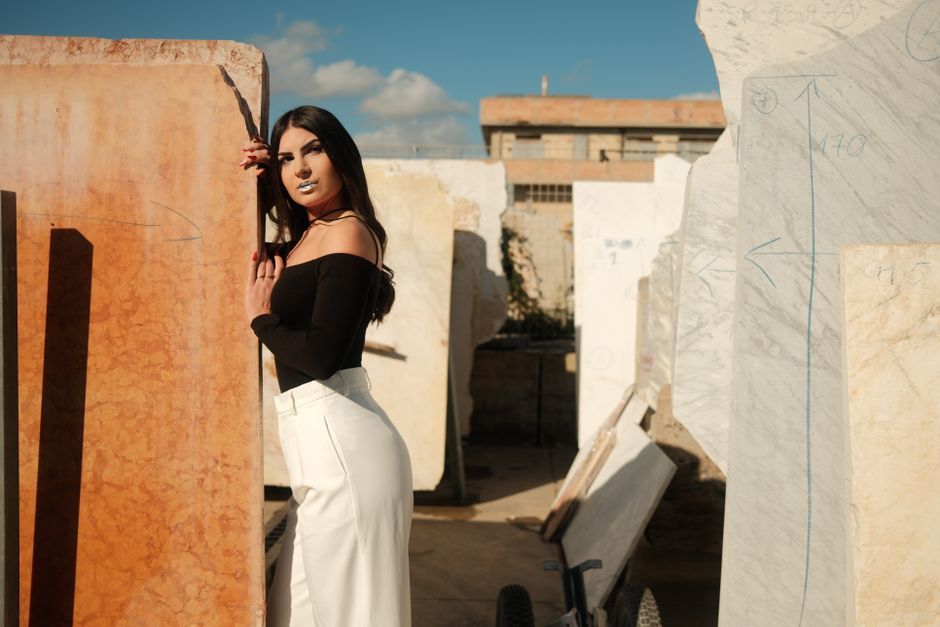
White trousers do not look difficult because white is too bold. They look difficult because every fit problem becomes visible. A waistband that cuts in, a pocket that pulls, or fabric that goes transparent under daylight can change the whole outfit. The fix is not more confidence. It is better control over fit, fabric, proportion, and contrast.
Choose the right cut, check the outfit in direct light, and use contrast where the eye needs direction. Once those decisions are made, white trousers become easier to style than black ones.
Why white trousers feel harder, and the fit rule that fixes them
Start with tension, not the size label
The most important rule is this: white trousers should skim the body without showing every line beneath them. A close fit at the hips can work, but the fabric must lie flat when standing, sitting, and walking. Check the front rise, pocket opening, and upper thigh. If the pocket gapes by more than a few millimetres, the trousers are too tight or the pocket placement is wrong. Going up one size and adjusting the waist is often cleaner than keeping a smaller size that pulls across the hips.
Look for at least 2 to 3 centimetres of ease through the upper thigh in a straight or wide cut. For slim trousers, the fabric should move with the leg rather than cling to it. A mid- or high-rise waist usually creates a longer visual line, while a low rise can make a cropped top and white fabric feel disconnected.
Check the fabric before styling the outfit
Opacity matters more than softness. Hold the trousers up to a bright window, then bend forward and sit under direct light. A dense cotton blend, structured twill, or lined fabric usually looks sharper than a thin stretch material. Thin fabric can work for relaxed summer trousers, but it needs a looser cut and a longer top layer.
Underwear should stay close to the skin and match the skin rather than the trousers. Bright white underwear often creates a stronger outline under white fabric. Seamless edges help, but the bigger win comes from choosing trousers with enough fabric weight. The verdict is clear: prioritize a flat fit and reliable opacity before chasing a dramatic silhouette.
How to build a white-trouser outfit in five practical steps
Use this order when the outfit feels unfinished
- Choose the visual anchor. Start with the trousers and decide what they already say. Wide-leg trousers feel relaxed and fluid. Straight-leg trousers feel neat and versatile. Cropped trousers feel lighter and show more of the shoe.
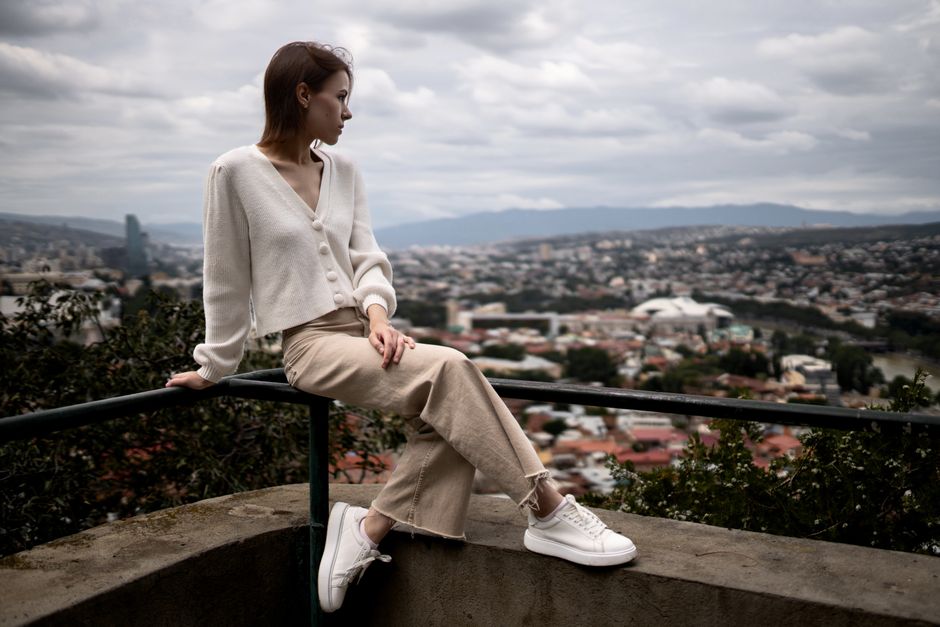
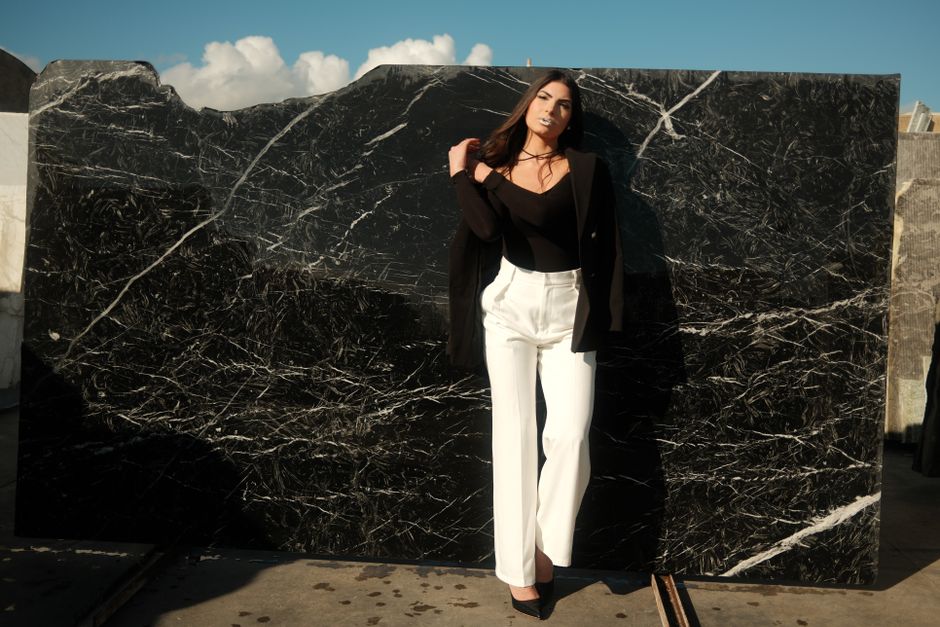
- Add one clear contrast. A dark top, medium-tone knit, strong stripe, or deep earthy shade gives the outfit a focal point. Head-to-toe pale tones can look elegant, but they need texture or a sharp change in silhouette.
- Match the top length to the rise. A high waist usually works best with a tucked top, a cropped jacket, or a top that ends near the hip bone. A longer tunic needs a slimmer trouser leg or a visible side slit so the body does not disappear.
- Keep the shoe line intentional. A wide trouser leg needs enough hem length to nearly meet the top of the shoe. A cropped leg benefits from a clean ankle or a shoe with a simple upper. Avoid a random gap that stops at the widest part of the calf.
- Inspect movement. Walk, sit, reach, and turn sideways. The outfit should still look balanced when the body changes position. If the waistband rolls, the pockets pull, or the hem catches under the shoe, fix that before adding accessories.
Three easy outfit formulas that do not look overworked
For a crisp daytime outfit, pair straight white trousers with a tucked striped shirt and a simple belt. Keep the shirt slightly relaxed so the result feels lived-in rather than uniform. For a softer outfit, use wide-leg trousers with a fine knit in a muted shade and a short jacket that ends above the widest point of the hip. For evening, choose a fluid white trouser with a fitted sleeveless top, a longer open layer, and one piece of visible metal or polished texture.
Accessories should support the line, not compete with it. One structured bag, one defined belt, or one pair of earrings is usually enough. The strongest combination is often the least crowded: clear waist placement, one contrast color, and a shoe that repeats a shade already present in the outfit.
Which white trouser cut works for each outfit goal?
There is no single best white trouser shape. The right cut depends on the line you want to create and how much movement the outfit needs.
Compare the silhouette before choosing the top
| Cut | Best visual effect | Best styling direction | Common risk |
|---|---|---|---|
| Straight leg | Clean, balanced, easy to repeat | Tucked shirt, fitted knit, short jacket | Too much thigh tension can make the leg look uneven |
| Wide leg | Longer, softer, more dramatic | Short top, tucked shirt, defined shoulder | A long loose top can hide the waist and flatten the shape |
| Cropped leg | Light, casual, ankle-focused | Simple top, visible ankle, clean low-profile shoe | The hem may stop at the widest part of the calf |
| Tapered leg | Neat and practical, with a sharper ankle | Relaxed shirt, longer coat, defined footwear | A tight knee and tight calf can look dated and restrictive |
Pick the winner for your main purpose
For the most useful everyday wardrobe, straight-leg white trousers are the best choice. They work with tucked and untucked tops, do not require a dramatic shoe, and hold their shape across casual and polished outfits. For height and movement, wide-leg trousers win, especially with a high waist and a top that shows where the torso ends. For warm weather and casual dressing, cropped trousers are the easiest, but only when the hem clears the widest part of the calf.
Do not choose a cut because it looks impressive on a hanger. Choose it because the waist, hip, thigh, and hem create one uninterrupted line. White fabric exposes poor proportion faster than dark fabric, so the cut must earn its place before color and accessories enter the decision.
White trousers questions, answered
What should you wear under white trousers?
Choose underwear that sits flat and matches your skin tone as closely as possible. Avoid thick elastic, raised seams, strong patterns, and bright white panels. Test the trousers in daylight, not only in a fitting-room mirror. If the outline remains visible after moving, the problem may be the fabric rather than the underwear. A slightly looser cut or a lined pair will solve more than changing the color underneath.
Can white trousers work after summer?
Yes. The seasonal effect comes from the surrounding texture, not from the trousers alone. In cooler months, add a dense knit, a wool-like coat, a leather-textured belt, or a deeper color near the face. White trousers with a charcoal, navy, brown, or dark green top feel grounded and modern. Choose a heavier fabric and a full-length hem so the outfit reads as deliberate rather than beachwear carried into cold weather.
What top looks best with wide white trousers?
A top with a clear endpoint works best. Tuck in a shirt, stop a jacket near the natural waist, or choose a fitted knit that follows the torso without clinging. If the top is long, open it over a closer base layer and create a visible vertical line. The main goal is to show where the upper body ends and the trouser volume begins.
Five mistakes that make white trousers look awkward
Fix the details that change the whole outfit
1. Choosing a size that only works while standing. White trousers need room for sitting and walking. If the fabric strains across the lap or the pockets open, the outfit will look tense. Try the next size or a different rise.
2. Ignoring the hem. A hem that drags collects dirt and breaks the line. A hem that floats too high can make a wide leg look shortened. For full-length trousers, aim for a near-touching relationship with the shoe. For cropped trousers, show the narrow ankle area rather than stopping at mid-calf.
3. Adding contrast in too many places. A dark top, dark belt, dark bag, and dark shoe can divide the body into separate blocks. Repeat one darker shade once or twice, then let the white trousers create the open space.
4. Treating transparency as a minor issue. If the fabric becomes see-through in sunlight, the outfit will not feel polished no matter how good the accessories look.
5. Using white trousers when the setting works against them. A crowded outdoor event, muddy route, or meal with high spill risk may not be the right moment for pristine white fabric. Choose ecru, stone, or a washable mid-tone when movement and maintenance matter more than brightness.
The clear verdict: straight-leg white trousers with a flat waistband, opaque fabric, and a hem that suits the shoe give the widest range of outfits. Wide-leg trousers are the stronger choice for drama and length. Cropped trousers are best for relaxed warm-weather dressing. Confidence follows the same order every time: fit first, fabric second, proportion third, decoration last.
