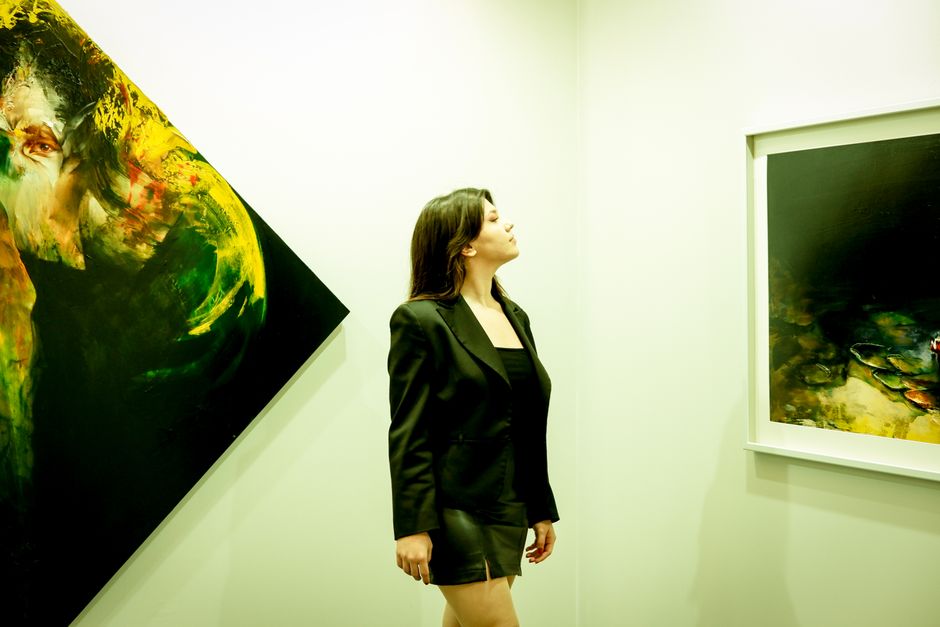
What should you wear to a winter art gallery opening?
The safest answer is a polished outfit with enough structure for the room and enough warmth for the journey. A winter gallery opening usually calls for more effort than everyday errands, but it rarely demands a formal evening gown. The strongest look sits between smart daywear and cocktail dressing.
Start with the room, not the weather
Gallery spaces often feel warmer than the street, yet visitors still spend time outside, in coat checks, or walking between venues. Build the outfit around a base that works indoors, then add an outer layer that looks intentional rather than temporary. A fine-knit top, tailored trousers, and a long wool coat can handle most openings. So can a midi dress with opaque tights, ankle boots, and a clean belt.
Look at the venue before choosing the final level of dress. A private viewing in a small contemporary gallery may suit sharp separates, while a museum benefit may call for a dressier silhouette. The invitation, start time, neighborhood, and expected crowd reveal more than the phrase gallery opening alone.
Choose one deliberate line
The outfit should have one clear visual idea: a long vertical coat, a sculpted shoulder, a column skirt, or a strong contrast between light and dark. Too many competing details make the clothes feel busy beside large paintings and installations. The best starting rule is warmth before ornament. If the clothing keeps its shape and feels comfortable after two hours of standing, the styling already works.
For most women, a dark neutral base with one muted color creates the right balance. Charcoal with burgundy, cream with chocolate brown, or navy with deep green feels seasonal without turning the outfit into a costume.
How to build a gallery-opening outfit in five steps
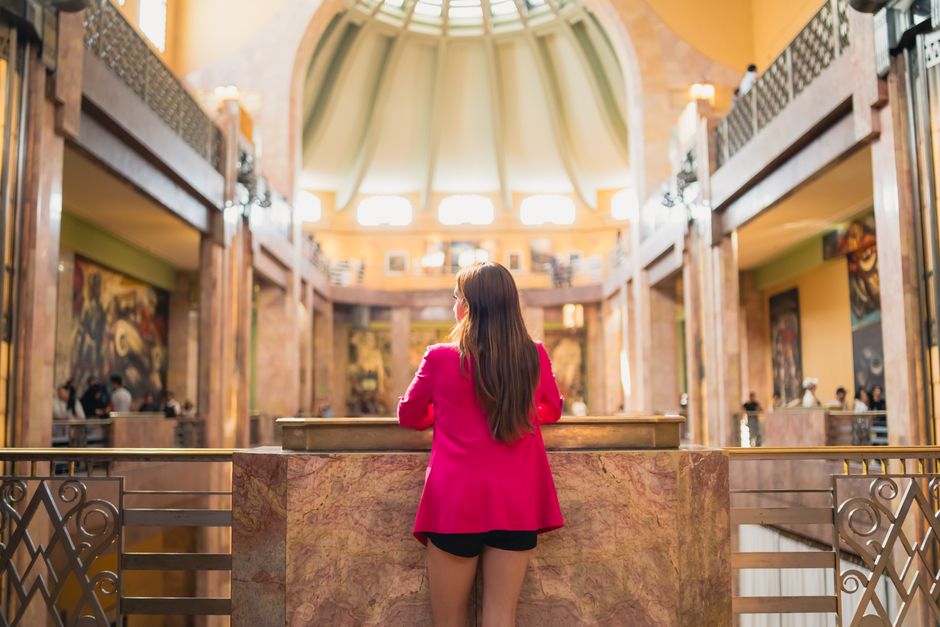
Use the following sequence when the invitation gives little guidance. It keeps the decision practical and stops accessories from driving the whole look.
- Check the setting. Confirm the opening time, venue type, travel distance, and likely dress level. A daytime studio event and an evening museum reception need different finishing touches.
- Pick the main silhouette. Choose either a long, clean line or a defined waist. A straight trouser with a shorter jacket feels modern; a midi dress with a long coat feels more elegant.
- Build a thin warm layer. Use merino, fine wool, silk, or a smooth thermal layer beneath the visible clothing. Avoid thick layers that bunch under fitted sleeves or distort the waist.
- Set the shoe limit. Select a heel no higher than 5 to 7 centimetres if the event involves standing or walking. A flat boot or low block heel usually looks more composed than a painful high heel.
- Add one focal detail. Pick a sculptural earring, colored tights, a patterned scarf, or a distinctive bag. One strong detail looks considered; five make the outfit compete with the artwork.
- Test the movement. Sit, walk, lift one arm, and stand in the coat. If a sleeve pulls, a hem rides up, or the shoes pinch after five minutes, the outfit will become a distraction before the first glass of wine.
The final check is simple: the coat, shoes, and bag should all belong to the same level of formality. A refined dress with a casual sports backpack creates a visual mismatch, while tailored trousers with a structured crossbody bag feel coherent.
How to stay warm without making the outfit look bulky
Winter dressing fails when warmth gets treated as an afterthought. The solution is not adding every sweater in the wardrobe. It is controlling thickness, texture, and proportion so each layer has a job.
Use a thin base and a shaped middle layer
A close-fitting base layer traps warmth without changing the outline of the outfit. Choose a smooth neckline that stays hidden under the visible top. Over it, add one shaped layer such as a fine cardigan, fitted waistcoat, soft blazer, or slim knit dress. The middle layer should end at a useful point: the natural waist, high hip, or just below the jacket hem.
Bulky insulation works best outside the main outfit. A long coat with room through the shoulders gives more warmth than a tight coat worn over several thick layers. The coat should close without pulling across the chest, and the sleeve should cover the wrist when the arm is extended.
Balance texture with clean surfaces
Winter fabrics can quickly become visually heavy. If the coat has a fuzzy or brushed finish, keep the visible top smooth. If the skirt has a strong ribbed texture, choose a simple coat and quiet accessories. This contrast gives the outfit depth without making it look overloaded.
Opaque tights in a weight of roughly 60 to 100 denier provide more warmth than sheer tights while still working with dresses and skirts. Wool socks can help with cold floors, but they should sit smoothly inside the shoe. Wrinkled socks create discomfort and can change the line of an ankle boot.
Plan the outside layer as part of the look
The coat will often be the first and last thing people see. Treat it as a major garment, not a cover-up. A long wrap coat reads softer and more elegant; a straight tailored coat feels sharper; a belted coat gives definition over a loose dress. Scarves should sit close enough to avoid constant adjustment, and gloves should allow easy movement around a drink, phone, or program.
Winter outfit formulas that work for different gallery settings
These combinations show how the same principles change with the event. The details are flexible, but the proportions matter.
| Gallery setting | Core outfit | Warmth plan | Best finishing detail |
|---|---|---|---|
| Daytime neighborhood gallery | Wide-leg trousers, fine knit, cropped jacket | Thin base layer and ankle boots | Small sculptural earrings |
| Evening contemporary gallery | Midi dress, opaque tights, long coat | Thermal layer under the dress and wool coat | Colorful clutch or narrow belt |
| Museum reception | Column skirt, tucked blouse, tailored coat | Fine cardigan beneath the coat | Polished low heel |
| Outdoor sculpture opening | Fine-knit dress, straight trousers, weatherproof coat | Warm socks, gloves, and a close base layer | Textured scarf in a controlled color |
| Artist studio event | Dark jeans, refined sweater, relaxed blazer | Light base layer and comfortable boots | One unusual ring or pendant |
The clear winner for a mixed indoor and outdoor evening is the midi dress, opaque tights, and long-coat combination. It looks dressed up when the coat comes off, keeps the legs covered, and does not rely on a high heel to create polish. For a casual daytime opening, tailored trousers are the better choice because they handle walking, sitting, and uneven floors with less adjustment.
What should you wear when the dress code is unclear?
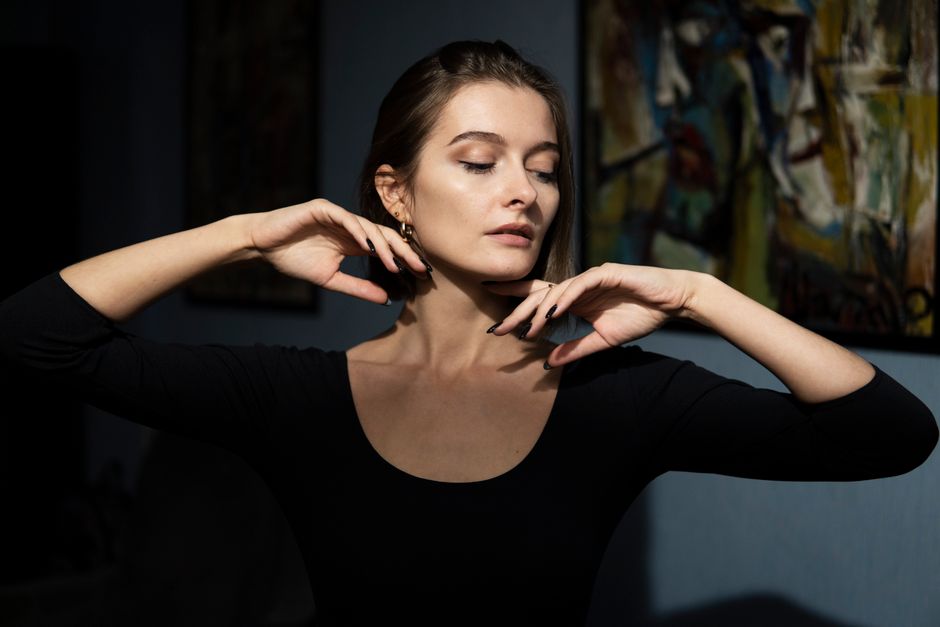
Is black too formal for an art opening?
No. Black becomes too severe only when every element has the same flat texture and rigid shape. Break it up with a soft knit, a brushed coat, a silver-toned accessory, or a visible contrast between matte and satin surfaces. A black outfit with varied texture feels artistic and deliberate rather than corporate.
Can you wear trousers instead of a dress?
Yes, and trousers are often the more practical option in winter. Choose a fuller leg, a pressed crease, or a strong high-waisted shape so the outfit has occasion value. Pairing tailored trousers with a fine knit and a structured coat usually looks more polished than forcing yourself into a dress that needs constant fixing.
What if the opening includes a reception?
Choose clothes that allow easy movement and modest comfort while standing. Avoid sleeves that drag into food, very low necklines that need repeated checking, and shoes that make walking across the room difficult. A small bag should hold the essentials without requiring one hand to remain occupied all evening. The goal is to look prepared for conversation, not dressed for a photograph alone.
The best final outfit plan for a winter gallery opening
The most reliable choice is a simple indoor outfit with one strong shape and a serious outer layer. Start with a fine knit or smooth blouse, add tailored trousers or a midi skirt, and finish with a long coat that gives the look its line. Keep the palette to two or three colors, then add one detail that feels personal rather than decorative for its own sake.
Use the three-point test before leaving
Check three things: can you walk comfortably, can you stay warm outside, and does the outfit still look intentional with the coat removed? If the answer is yes to all three, the clothes will support the evening instead of demanding attention. This test is more useful than chasing a strict dress code that the invitation never clearly stated.
When the venue is formal, sharpen the outfit with a polished shoe, a defined waist, or a compact bag. When the venue is relaxed, soften the same base with a textured sweater, flat boots, or a looser coat. The adjustment should be small. A gallery opening rewards restraint because the setting already supplies plenty of visual interest.
The strongest winter gallery outfit is warm enough to forget, polished enough to remember, and simple enough to let the art remain the main event.
As gallery events become more varied, the most useful style direction will move away from rigid dress codes and toward adaptable clothing: pieces that travel well, layer cleanly, and remain comfortable through a full evening of looking, walking, and conversation.
