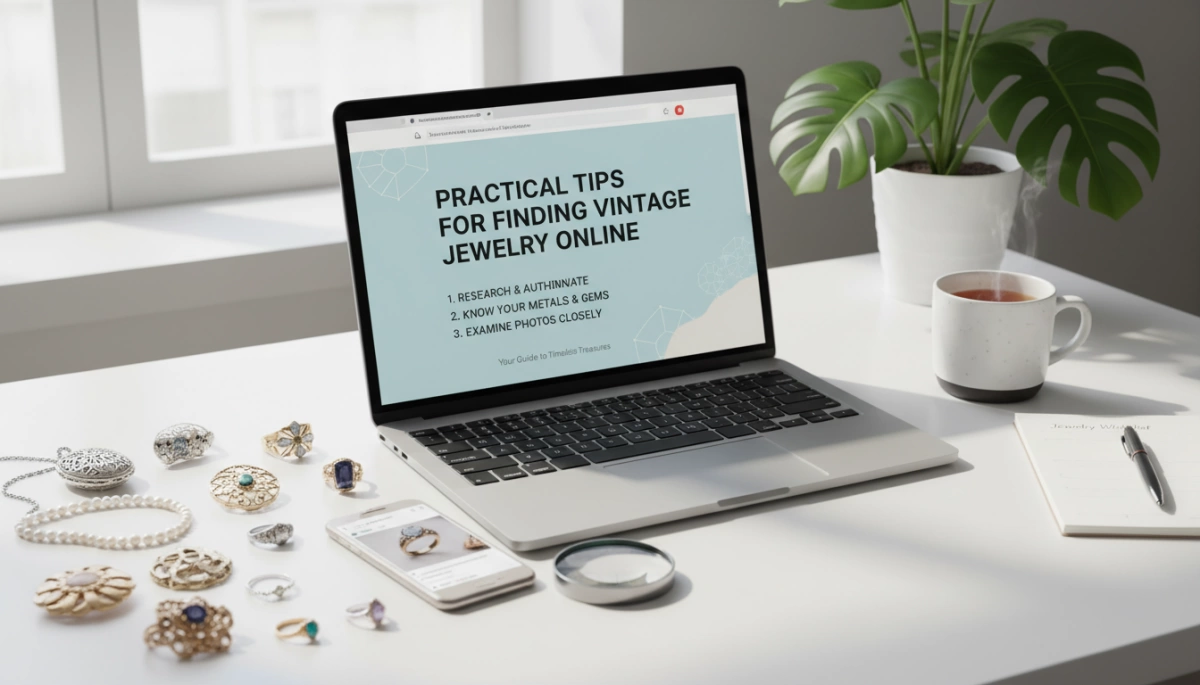
If you’re hunting for vintage jewelry online, you know it’s a different game than browsing at a local store. The thrill of finding a unique piece comes with risks—fakes, unclear descriptions, sizing guesswork. This guide cuts through the noise with practical tips for finding vintage jewelry online that actually work. You’ll learn how to spot authentic pieces, decode hallmarks, vet sellers, and avoid costly mistakes. Ready to shop smarter and add real vintage treasures to your collection? Let’s get started.
Defining Your Scope: Know What You Are Hunting
Start by clarifying what type of vintage jewelry you want. Are you after fine jewelry, with precious metals and gemstones? Or maybe costume jewelry, which focuses on style and often uses less expensive materials? Understanding the difference is key:
- Fine jewelry: Usually made from solid gold, sterling silver, or platinum, featuring genuine diamonds, rubies, or sapphires.
- Costume jewelry: Crafted from gold filled or plated metals, glass stones, Bakelite, or other affordable materials, often linked to vintage costume jewelry brands.
- Estate jewelry: Pieces previously owned and often including both fine and costume items, but with a focus on provenance and originality.
Next, identify the era you want to explore. Vintage spans multiple periods—each with its distinct style and significance:
- Victorian mourning jewelry: Known for its sentimental value and dark motifs.
- Art Deco engagement rings: Famous for geometric shapes and intricate settings.
- Mid-century and Retro designs, notable for bold, unique looks.
Knowing your scope saves time and sharpens your eye for authenticity. Dig into era characteristics and materials like gold hallmarks identification and sterling silver patina to differentiate real vintage finds from modern reproductions or altered pieces. This clarity will guide your search and help you spot genuine estate jewelry online.
The Digital Inspection: How to “See” Without Touching
Buying vintage jewelry online means you can’t hold the piece in your hand, so mastering the digital inspection is crucial. Start with photo analysis—look for clear, high-resolution images from multiple angles, including close-ups of clasps, settings, and any visible marks. These photos help you catch details like wear, scratches, or repairs that aren’t always obvious.
Next, learn to decode hallmarks and maker’s marks. These tiny stamps reveal a lot, from metal type—like gold hallmarks identification distinguishing solid gold from gold filled vs. solid gold—to the jewelry’s origin or designer. Look for these marks carefully in the pictures, and don’t hesitate to ask the seller for additional images or info if they’re not clear.
Also, pay close attention to the jewelry condition report. A good seller will provide a description of the item’s condition including any flaws, repairs, or patina like the desirable sterling silver patina on vintage pieces. Condition reports combined with photos are your best bet to assess quality and authenticity without ever touching.
Taking the time to inspect online photos and decode marks can save you from surprises when your piece arrives. It’s your digital loupe—an online substitute for the hands-on jewelry loop/loupe inspection experts use in shops. This approach ensures you’re confident about your vintage jewelry purchase before committing.
Sizing and Scale: The Online Buyer’s Greatest Hurdle
One of the toughest parts of buying vintage jewelry online is getting the sizing and scale right, especially with pieces like rings or bracelets where fit matters a lot. Without being able to try the item on, you need to rely on detailed measurements and visual clues.
Ring Sizing Realities
- Know your exact size: Vintage ring sizes can vary from modern standards. Ask the seller for the ring’s size and whether it’s measured in US, UK, or European sizing.
- Resizing limitations: Keep in mind that not all vintage rings can be resized easily. For example, intricate settings or delicate materials like Victorian mourning jewelry or gold-filled pieces may be at risk if resized.
- Compare with your own rings: Use a ring you own that fits well as a reference. Compare its diameter or circumference with the measurements provided.
Visualizing Scale Online
- Look for scale references: Good sellers include a ruler, coin, or a known object in photos to help you grasp the size.
- Consider the design’s bulk: Vintage costume jewelry brands often feature larger, statement designs. Measuring just length or diameter isn’t enough—you want to anticipate how heavy or bulky a piece feels.
- Ask for extra photos: Don’t hesitate to request images showing the piece on a hand or finger for better scale understanding.
Sizing mistakes can be costly, so take your time. Using these tips will help bridge the gap between screen and reality and give you confidence in your online vintage jewelry purchase. For more detailed advice on finding vintage jewelry online, check out this helpful guide on finding vintage jewellery online.
Vetting the Seller: Buying the Dealer, Not Just the Piece
When hunting for vintage jewelry online, you’re not just buying a piece—you’re buying trust in the dealer. So, vetting the seller is crucial.
The Communication Test:
Reach out with questions about the piece’s history, condition report, or any doubts about gold hallmarks identification. Reputable online vintage sellers respond promptly and clearly. If the answers are vague or slow, consider it a red flag.
Return Policies:
Check the return policies carefully. A trustworthy dealer will offer a reasonable window for returns or exchanges, especially since you can’t inspect the jewelry in person. Without this, you risk being stuck with something not as expected.
Analyzing Reviews:
Look beyond the seller’s website. Check independent reviews and feedback on forums or social media. Pay attention to repeated concerns about authenticity, shipping, or customer service. Positive reviews combined with transparent reports on estate jewelry verification build confidence.
Choosing a seller with good communication, fair return policies, and solid reviews helps you avoid pitfalls when buying vintage pieces—from Art Deco engagement rings to vintage costume jewelry brands. This approach ensures you get more than just a pretty item—you get a reliable investment in sustainable luxury accessories.
Red Flags and Deal Breakers: Spotting Trouble Early
When hunting for vintage jewelry online, watch out for red flags that signal trouble ahead. The biggest warning sign? A price that seems too good to be true. Estate jewelry verification can be tricky, and unusually low prices often mean the piece isn’t genuine or has hidden flaws. Be cautious with sellers pushing “steals” — real vintage costume jewelry brands and authentic gold pieces rarely come cheap.
Vague descriptions are another deal breaker. If the seller doesn’t specify materials (like gold hallmarks identification or if it’s gold filled vs. solid gold), era, condition, or provenance, consider it a red flag. Honest sellers provide clear, detailed jewelry condition reports and history.
Beware of altered photos too. Sellers sometimes edit images to hide scratches, discoloration, or repairs. Use a jewelry loop/loupe inspection tool if available or ask for more close-up shots before buying. If the seller resists or ignores these requests, it’s likely a sign to move on.
Being alert to these issues will save you frustration and money while building your collection of genuine, well-vetted vintage jewelry.
Care and Maintenance for Your New Find
Once you’ve secured your vintage jewelry, proper care is key to preserving its charm and value. Start with immediate steps:
- Gentle Cleaning: Use a soft cloth to wipe away dust and oils. Avoid harsh chemicals, especially with gold filled vs. solid gold pieces or sterling silver patina, as they require different treatments.
- Avoid Water: Many vintage costume jewelry brands and delicate items like Bakelite can be damaged by water. Keep pieces dry.
For deeper cleaning:
- Use mild soap and warm water with a soft brush for sturdier items like gold or estate jewelry verification pieces.
- For intricate designs or Art Deco engagement rings, consider professional cleaning to avoid damaging gems or altered settings.
Regular maintenance helps keep your vintage jewelry looking great and retains authenticity. Proper care is part of enjoying your sustainable luxury accessories in the long run.
