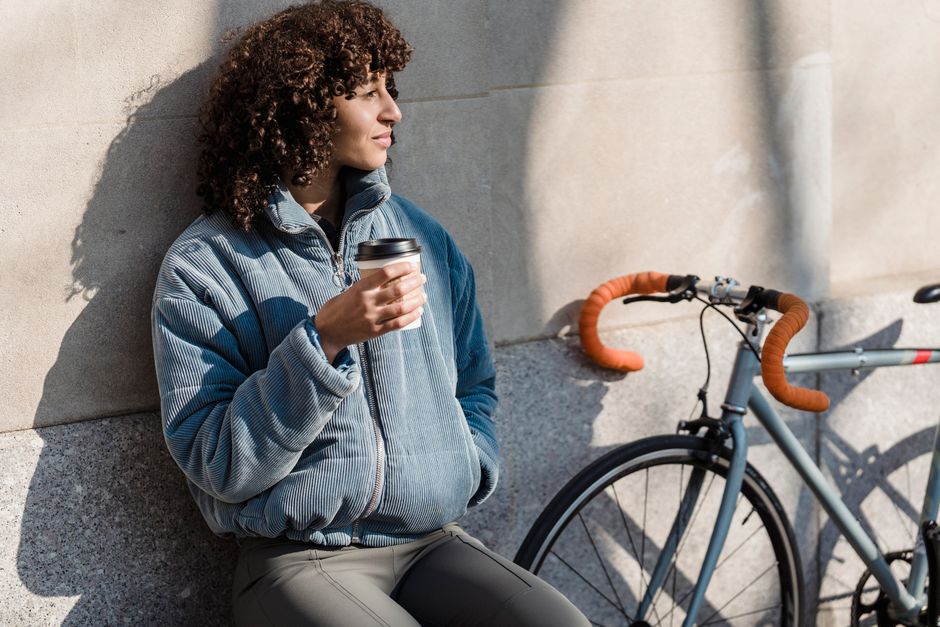
Corduroy brings warmth and character to autumn outfits without asking you to rethink your whole wardrobe. The raised ribs give familiar shapes a different finish, whether you choose straight trousers, a button-front skirt or an easy jacket. To make it work for everyday life, start with the fabric’s weight, check how the garment moves and build around clothes you already enjoy. A few thoughtful choices can make corduroy feel comfortable, practical and entirely your own.
Choose the corduroy that suits your day
The raised ribs in corduroy are called wales. Narrow ribs create a relatively subtle surface, while wider ribs make the texture more noticeable. If you want an easy introduction, fine-wale trousers can fit naturally alongside plain shirts and simple shoes. Broader ribs are useful when you want a jacket or skirt to be the main feature.
Do not judge warmth by rib width alone. Feel the fabric, read its composition and check for a lining. A fine-ribbed garment can still be heavy, while a wider-ribbed overshirt may feel soft and flexible. Think about where you spend your day: a substantial pair of trousers may suit outdoor errands but feel too warm in a heated office.
- For mild days: choose supple corduroy and a light cotton top.
- For cooler weather: consider a heavier piece with room for comfortable layers.
- For a quieter finish: try narrow ribs in a color you already wear often.
Check the fit beyond the fitting-room mirror
Corduroy should feel comfortable when you sit, reach and walk. With trousers, check that the waistband stays comfortable while seated and that the pockets lie reasonably flat. Strong pulling across the hips or seat, especially when the ribs look distorted, can mean you need more room or a different cut.
Stretch can make a garment feel easier to move in, but it cannot fix every fit problem. Try bending your knees and taking a full stride. For jackets, reach forward as though holding a steering wheel. Wear the sort of top you plan to put underneath so you can judge the space across the shoulders and upper arms.
Set the hem with your shoes on
Full-length trousers should clear the ground as you walk. A dragging corduroy hem can collect dirt and wear along the edge. Try your pair with your usual autumn shoes before deciding on alterations. With cropped trousers, sit down too: check whether you like the amount of sock or ankle that becomes visible.
Build an outfit around corduroy trousers
Begin with a shape you already like. Straight-leg cords are straightforward to combine with everyday tops, while a tapered cut leaves a different outline around the ankle. Wide-leg corduroy can also work well, particularly when the fabric falls comfortably instead of feeling rigid. Choose the silhouette for your preferences and movement rather than a rule about body shape.
For an easy daytime combination, pair brown cords with a cream cotton shirt and lace-up shoes. Tuck the shirt in if you want to show the waistband, or leave it loose when the length feels balanced. Smooth cotton lets the ribs remain visible without adding another strong texture to the outfit.
For a workplace that welcomes casual separates, try navy corduroy trousers with a plain jersey top and a neat jacket. Corduroy generally feels more relaxed than smooth suiting, so consider your workplace expectations. Empty bulky items from the pockets if you want the trousers to keep a cleaner line throughout the day.
Make a corduroy jacket your useful autumn layer
A corduroy overshirt or jacket is handy for cool mornings and milder afternoons. Wear it over a simple cotton top with trousers in a smoother fabric. Check that the sleeves allow your base layer to sit comfortably, and fasten the jacket during your fitting even if you expect to wear it open.
Length changes how the outfit feels. A shorter jacket leaves more of your trousers or skirt visible; a longer overshirt gives a more relaxed outline. Try both with the bottoms you actually own. If the hem catches awkwardly at your hips or needs constant adjustment, another cut may be a better choice.
For wet weather, add outerwear suited to rain. Corduroy itself is not dependable rain protection. Make sure your outer layer has enough room for the jacket underneath, particularly across the back and elbows. On a mild but rainy day, lighter corduroy trousers may be more convenient than stacking two substantial jackets.
Keep corduroy skirts and dresses comfortable
With a corduroy skirt, check your stride as carefully as the waistband. A firm fabric needs enough ease, or an appropriate slit, to let you walk comfortably. Sit down to check that buttons stay flat and the front does not pull open. Pair it with a plain long-sleeved top for an uncomplicated starting point.
A sleeveless corduroy dress works well over a thin top. Bulky sleeves can bunch at the armholes, so test the layers together. If you add tights, walk around and check whether the skirt catches against them. A suitable slip may help it move more smoothly, especially with an unlined garment.
Choose colors that connect with your wardrobe
Tan, olive, chocolate and navy are familiar choices, but corduroy does not require an entirely earthy palette. Black can fit into a mostly dark wardrobe, while cream can brighten an everyday combination. Before buying, picture the piece with several tops and your most frequently worn shoes. Useful connections matter more than finding a supposedly perfect autumn shade.
The raised pile catches light, so the color can look different as you move. Check it in daylight when possible. If you want matching corduroy separates, inspect them together rather than assuming similar color names will match. Alternatively, choose a clear contrast between the pieces and let the difference feel intentional.
Finish simply and care for the surface
Choose footwear for your plans: sneakers for a casual outing, loafers for a neater finish or boots when you want more coverage. Notice how the hem meets the shoe. If trousers catch on a boot shaft, try a wider opening or another length. Fixing that meeting point often does more than adding extra accessories.
Read the care label before washing, drying or pressing. If machine washing is permitted, turning the garment inside out can help protect its surface. Avoid pressing an iron directly onto the ribs unless the care instructions allow it, since heat and pressure can flatten the pile. Let damp garments dry fully before storing them.
Give corduroy a little room in your wardrobe rather than packing it tightly between other clothes. Before wearing it, check the knees, seat and hems for lint or marks. With the right fit and a few familiar supporting pieces, your cords can become an easy answer to those mornings when the air turns crisp.
