
A turtleneck can make a sleeveless dress look like a long-sleeved dress before the hemline changes at all. That is the appeal. The problem starts when the neckline bunches, the sleeves wrinkle, or the waist gains a visible ridge under the dress. You leave the house feeling layered and end up looking wrapped in extra fabric.
The fix is not complicated. The base layer needs a close fit, the dress needs enough room at the armhole and torso, and the colors need a clear visual plan. These choices turn the outfit from an emergency cold-weather solution into a deliberate look.
Choose the right turtleneck fit before layering
1. Check the neck height
- Choose a neck that reaches high enough to sit under the dress neckline without folding over.
- Look for a flat, flexible collar that does not create a thick roll under the chin.
- Allow roughly 1 to 2 centimeters of visible neck if the dress has a wide or square neckline.
A high collar looks polished when it stands upright. A loose collar can make the neck area look crowded, especially beneath a round-neck dress. A mock neck also works when a full turtleneck feels too tall.
2. Check the sleeve and shoulder fit
- The shoulder seam should sit close to the natural shoulder rather than falling down the upper arm.
- The sleeve should reach the wrist without creating a thick fold at the cuff.
- The underarm should remain smooth when the arm bends.
Sleeve fit matters more than fabric weight. A lightweight layer with a clean arm line usually looks better than a thicker layer that creates wrinkles beneath the dress sleeve. If the dress has narrow armholes, choose the thinnest close-fitting layer that still feels comfortable.
3. Check the torso length
The turtleneck should stay tucked or remain long enough to meet the dress waistband. A short hem creates a horizontal ridge around the ribs. A longer hem can be tucked into tights or a smooth underlayer so it stays flat while walking.
The best choice for most outfits is a thin, close-fitting turtleneck with full wrist coverage and a torso long enough to stay in place. That combination prevents the three main problems: neck bunching, sleeve wrinkles, and waist movement.
Which dress shapes layer best?
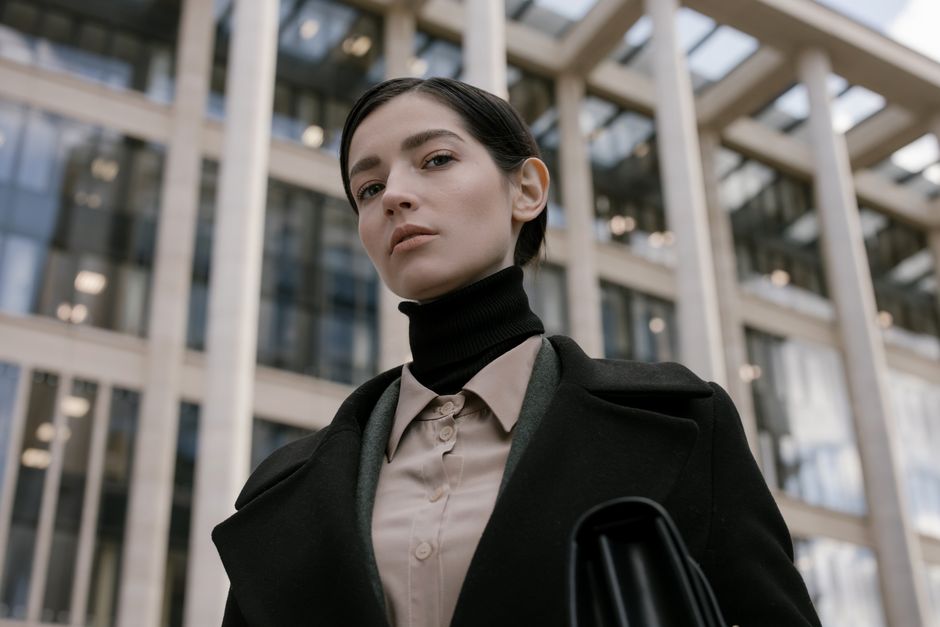
The dress silhouette decides how much room the turtleneck has to move. The best result comes from matching a slim base layer with a dress that does not press tightly across every seam.
| Dress shape | Best turtleneck line | Main risk |
|---|---|---|
| Slip dress | Slim, smooth, long-sleeved | Visible bunching at the straps and chest |
| Fit-and-flare dress | Fine knit with a close collar | Fabric ridge beneath the fitted bodice |
| Shift dress | Fitted or lightly ribbed | Too much loose fabric at the arms |
| Shirt dress | Thin mock neck or turtleneck | Collar and turtleneck compete |
| Body-skimming knit dress | Very thin and seamless | Every fold shows through |
Match the base layer to the dress volume
A wide dress needs a narrow layer underneath. A close-fitting dress needs an exceptionally smooth layer, or the combination will show every edge. The easiest pairing is a slim turtleneck under a shift, pinafore, slip, or lightly flared dress.
Watch the armhole before the neckline
Many layering problems begin at the armhole rather than the neck. If the dress presses into the turtleneck sleeve, the fabric gathers toward the armpit and pulls across the chest. Try moving both arms forward before leaving home. If the dress rides up, choose a roomier shape.
The clear winner is a shift or lightly flared dress with a fitted turtleneck. It gives the base layer enough space while keeping the overall outline sharp.
How to layer without bunching at the neck and waist
Layering works best as a short sequence, not as a last-minute pull over the head. Small adjustments at the start prevent large folds later.
Use this five-step dressing order
- Put on the turtleneck and smooth the shoulder seams into place.
- Run both hands from the upper chest to the waist to remove trapped folds.
- Pull the sleeves fully to the wrists, then bend both elbows once.
- Put on the dress without dragging it across the neck.
- Check the side seams, waist, and back before adding a belt or jacket.
The elbow bend matters because sleeves often look smooth while the arms are straight and then bunch when the elbows move. If the underlayer shifts, adjust it before fastening the dress or adding accessories.
Keep the waistline flat
Do not gather the turtleneck at the waist and hope the dress will hide it. That usually creates a visible ridge. Tuck the base layer evenly, or leave it untucked if the dress falls freely from the shoulders. A narrow, smooth waistband can help hold the layer in place under a loose dress.
Control static and friction
Static can make the dress cling to the turtleneck and expose every fold. A smooth base layer reduces friction, while a light mist of water on the inside of the dress can calm static before dressing. Avoid piling several textured layers together. One ribbed surface is enough.
The best method is to smooth from the shoulders downward, test movement at the elbows, and check the side profile. A front view alone will not reveal the folds that appear when the body moves.
Use color and texture to make the layers look deliberate

Match the turtleneck to one clear element of the dress. The strongest choice is a base layer that either blends into the dress or creates a controlled contrast. Random contrast makes the outfit look assembled from separate pieces.
Choose blending for a longer line
A turtleneck close to the dress color creates a continuous column from the neck through the body. Black under black looks narrow and clean. Cream under tan feels soft. Deep brown under warm red makes the dress color look richer without adding visual clutter.
Blending works especially well when the dress has a strong print, unusual neckline, or statement sleeves. The base layer recedes and lets those details lead.
Choose contrast for a sharper frame
A contrasting turtleneck can define the dress shape. White under a dark dress makes the neckline graphic. Black under a pale dress adds a clear border. The contrast should be repeated somewhere else, such as in shoes, tights, or a bag, so it feels connected.
Keep texture controlled. Smooth fabric under a textured dress creates balance. Ribbed fabric under a smooth dress adds depth. Two thick, raised textures usually make the torso look wider.
Use pattern with restraint
Patterned turtlenecks can work under solid dresses, but the pattern needs scale. Small, regular stripes support a simple dress. Large graphics compete with the dress neckline. For the most reliable result, choose a solid turtleneck and let the dress provide the visual interest.
The clearest recommendation is to blend colors for a slim, polished line and use contrast only when the dress is simple enough to support it.
What mistakes make a turtleneck-and-dress outfit look bulky?
Why does the neck look crowded?
The collar may be too loose, too thick, or folded more than once. A turtleneck should rise cleanly beneath the dress neckline. If the collar collapses, smooth it once and stop. Repeated folding adds height and makes the head look disconnected from the outfit.
Why does fabric gather under the arms?
The dress may have a narrow armhole, or the sleeve may be too wide. Raise both arms and lower them slowly. If the dress follows the turtleneck sleeve upward, the layers are fighting for space. Choose a thinner sleeve or a dress with a deeper armhole.
Why does the waist look wider?
Usually, the turtleneck is too short or too thick. A short hem rolls at the ribs, while a thick knit creates a ridge beneath the dress. Smooth the base layer flat and check the side view. If the ridge remains, change the layer rather than tightening the dress with a belt.
Why does the outfit look too casual?
Texture and finishing may be the problem. A soft, visibly fuzzy turtleneck under a structured dress can look mismatched. Choose a smoother fabric, keep the collar crisp, and repeat the base-layer color in one accessory.
These errors have one shared cause: the underlayer has become visible in places where it should provide structure. The solution is not more accessories. It is a cleaner fit.
