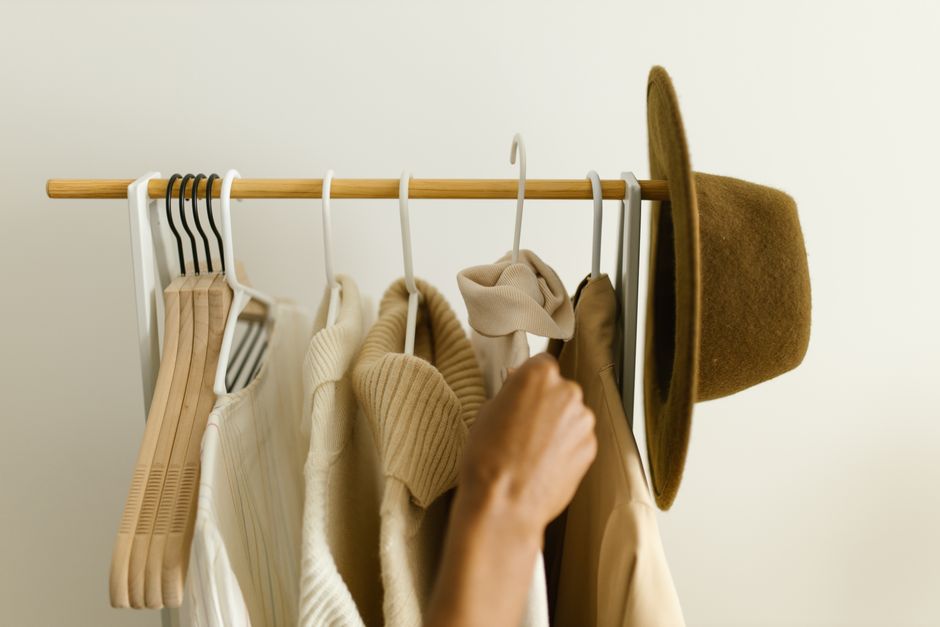
A wool coat or favorite sweater can stay in regular rotation for a long time when its care routine suits its construction. The biggest difference comes from knowing when a garment needs washing, when it simply needs airing, and how to handle it while damp. Caring for wool coats and knitwear does not require an elaborate setup. Start with the label, use a light touch, and give each piece enough space to dry and rest properly.
Read the care label before choosing a method
The fiber label tells you what a garment contains; the care label tells you how the finished piece should be treated. Both matter. A coat may combine wool with a lining, interfacing, shoulder padding, and decorative trims. Even if its outer fabric could tolerate water, those other components may respond differently.
Follow the instructions for the whole garment. Do not assume a wool blend is machine washable or that every sweater needs dry cleaning. If the label is missing or unclear, ask a professional cleaner before immersing the piece, particularly if it is tailored, embellished, vintage, or valuable to you.
Build a gentle routine between wears
Air garments before putting them away
After wearing wool, let it air somewhere dry and ventilated, away from direct sunlight and heat. Avoid pushing a slightly damp coat straight into a crowded wardrobe. Give knitwear a chance to release everyday odors before deciding it needs a wash. Airing helps with freshness, but it does not remove stains or replace cleaning when a garment is dirty.
Support the shape
Hang a structured coat on a broad, shaped hanger that supports its shoulders without forcing them outward. Empty the pockets so keys and other heavy items do not pull on the fabric. Leave enough space around the coat to prevent the lapels and sleeves from being crushed.
Fold sweaters instead of leaving them on narrow hangers, especially when the knit is heavy or loosely constructed. Let a worn sweater air flat on a clean, dry surface before returning it to a shelf. Rotating between garments also gives each piece time to recover from everyday stretching.
Remove surface debris carefully
On a suitable woven coat, use a soft clothing brush with light strokes in the direction of the surface fibers. Try an inconspicuous area first. Delicate, fluffy, or loosely knitted pieces may catch under a brush, so lift away visible lint gently by hand instead. Avoid repeatedly dragging adhesive rollers over fragile surfaces.
Treat spills without scrubbing
Blot a fresh liquid spill with a clean, absorbent cloth. Press gently rather than rubbing, which can spread the mark and disturb the wool’s surface. Lift solid residue carefully without scraping it into the fabric. Check the care label before adding water or a cleaning solution.
For a washable garment, test any permitted spot treatment on a hidden area first. Use a small amount of wool-suitable detergent diluted according to its instructions, and avoid soaking a small patch unnecessarily. Local wetting can leave a visible ring. With a dry-clean-only coat, an oily stain, or an uncertain mark, take it to a cleaner and explain what spilled and what you have already applied.
Wash knitwear only when the label allows it
Before washing, check the cuffs, neckline, and underarms, then inspect for loose seams or holes. Mend small problems first so handling does not enlarge them. Use a detergent specifically suitable for wool, following its dosage instructions. Avoid bleach and ordinary enzyme detergents unless they are explicitly labeled as suitable for the garment’s wool fibers.
For hand-washable pieces
- Fill a clean basin with cool or lukewarm water at the temperature permitted by the label. Mix in the detergent before adding the garment.
- Lower the knitwear into the water and gently press it through. Avoid rubbing, twisting, or vigorous agitation, and follow the detergent’s soaking guidance.
- Rinse gently with water at a similar temperature, unless the detergent is designed to be left without rinsing.
- Support the entire garment as you lift it. Press out water gently rather than wringing it.
For machine-washable pieces
Use the wool cycle and temperature specified by the care label and your machine’s instructions. A general delicate cycle is not automatically interchangeable with a wool cycle. Wash compatible colors together, avoid an overloaded drum, and use an appropriate spin setting. A mesh bag can reduce snagging, but it cannot make a hand-wash-only sweater safe for machine washing.
Dry flat and reshape while damp
Lay washable knitwear on a clean towel, gently roll the towel around it, and press to absorb excess water. Do not twist the roll. Unroll it and move the garment to a fresh, dry towel or a suitable flat drying rack that supports its weight.
Ease the sweater back into its natural outline without pulling. Straighten the seams, smooth the sleeves, and align the ribbing. Keep it away from radiators and strong sunshine, and do not tumble dry unless the label explicitly allows it. Change a saturated towel and allow airflow underneath where possible. Make sure thick cuffs and seams are fully dry before folding.
If your coat gets wet in rain, shake off excess water gently and let it dry naturally on a supportive hanger with room around it. If it is saturated or its shape has changed, seek a cleaner’s advice. Do not attempt to restore a shrunken garment by forceful stretching; reliable recovery is not guaranteed.
Handle pills, snags, and wrinkles with restraint
Pills are small tangles of loose fibers that often appear where fabric rubs against itself or a bag. Their presence alone does not tell you everything about a garment’s quality. Remove them only when the garment is dry, using a tool appropriate for its texture and testing somewhere discreet first.
Keep the fabric supported and work lightly. A shaver or comb can catch loose stitches, raised patterns, and fuzzy finishes, so avoid those areas. Never pull pills off by hand. Likewise, do not cut a snagged loop: it may be part of a continuous knitted stitch. A knitwear repairer can draw it back through and secure it properly.
For wrinkles, check whether steaming or ironing is permitted. Use the recommended wool setting and a pressing cloth when appropriate, avoiding heavy pressure that could flatten the texture or create shine. Tailored lapels and delicate trims are best handled by a professional if you are uncertain.
Store clean wool with room to breathe
Before seasonal storage, clean garments according to their labels and let them dry completely. Check folds, cuffs, and pockets for debris. Store folded knitwear in clean, dry containers, and protect hanging coats with suitable garment covers. Avoid compressing pieces so tightly that shoulders, trims, or chunky stitches become distorted.
Inspect stored wool periodically for holes, larvae, or shed casings. Cedar and scented sachets are not substitutes for cleaning and inspection. If you find signs of pests, isolate affected items and seek appropriate cleaning and pest-control advice. With regular attention, small repairs and gentle care become manageable habits that keep your wool ready to wear.
