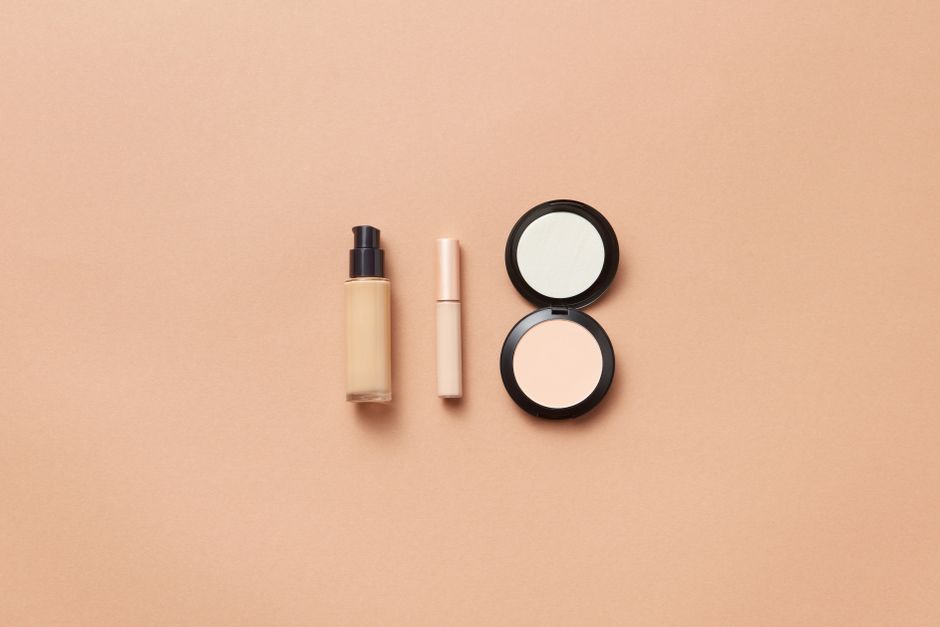
Finding the right foundation match gets easier when you separate shade, coverage, and finish. A color can look convincing on your hand yet leave a visible edge around your jaw. Another might blend beautifully but feel too heavy for your everyday routine. The aim is foundation that connects naturally with the skin around your face and feels comfortable to wear. You can get there with a small shortlist, a careful swatch test, and a little time to see how each candidate settles.
Decide where your foundation should blend
Your face, neck, and chest may have different colors. Facial redness, freckles, or darker areas around your mouth can make matching a single spot misleading. Before testing foundation, look at these areas together in indirect daylight. Think about where your makeup will end and the necklines you usually wear.
The lower cheek and jaw make a useful starting point because you can compare your face with your neck. Consider your chest too if it is usually visible. You are looking for a believable transition between exposed areas, without a strong boundary. You do not need to make every natural variation disappear or cover your neck with foundation to disguise an unsuitable shade.
Separate depth from undertone
Start with how light or deep the shade looks
Depth describes how light or deep a foundation is. Narrow this down first: a shade that is clearly too light or deep will remain noticeable even if its undertone seems promising. Compare neighboring shades within one formula. Shade numbers and names do not translate reliably between different ranges, so your usual label is only a starting point.
Then compare the underlying color
Undertone describes the color character within a shade. Warm foundations may look golden, yellow, or peach; cool ones may lean pink or rosy. Neutral shades aim for a balance. Olive descriptions often suggest a muted greenish or golden quality. These terms vary, so use them to organize your shortlist rather than treating them as fixed categories you must fit.
Vein color and jewelry preferences cannot reliably settle the question alone. Actual swatches offer a more useful comparison. At a similar depth, one shade might look orange, another pink, and a third almost disappear. The disappearing shade is the stronger candidate. Red cheeks alone do not establish your undertone, so avoid matching only the most flushed area.
Test a small shortlist on your face
Leave the testing area free of foundation, but prepare your skin as you normally would. Include your usual sunscreen when appropriate, and let your skincare settle before applying makeup. An unfamiliar preparation routine can make it harder to judge how the foundation will look and feel at home.
- Select a few neighboring shades, including different undertones if you are uncertain.
- Apply narrow swatches beside one another along the lower cheek and toward the jaw.
- Keep part of each stripe visible while softening one edge to assess how it blends.
- Compare the blended edges with your face and neck, looking for the least obvious transition.
Your hand or wrist can help you compare textures, but neither replaces testing where you will wear the product. Use clean applicators and follow the shop’s tester hygiene arrangements. Avoid applying shared tester product directly from its container to your face. If testing safely is difficult, ask whether a sample is available.
Check again after the foundation settles
A fresh stripe is only the first check. Foundation can look different as it dries and settles over skincare. Give the candidates time, then compare them again before deciding. A sample lets you take the strongest candidate through an ordinary day and assess it with your usual makeup tools.
Look in indirect daylight and in the indoor lighting you use most. Turn your head to inspect the jaw from the side, where a color boundary can become clearer. A phone photograph can provide another perspective, but camera processing and screen settings may shift colors. Treat pictures as supporting information rather than letting them overrule what you see in person.
If the foundation becomes noticeably darker or warmer during wear, repeat the comparison using your normal preparation. Changes often described as oxidation can involve several factors affecting the product’s appearance. You do not need to diagnose the chemistry to make a useful decision: choose a shade that still blends once it has settled.
Judge color and texture separately
A close shade match can still look obvious if the finish or coverage does not suit you. Sheer coverage lets more of your natural coloring show through, while fuller coverage makes small color differences easier to notice. After comparing swatches, test the amount you actually plan to wear across a larger area.
- A distinct color boundary: reconsider shade depth and undertone instead of spreading foundation farther down your neck.
- A heavy appearance: apply less and add coverage selectively where you want it.
- Emphasized dry-looking patches: assess the finish and application before assuming the color is wrong.
- More shine than you prefer: consider another finish or test a small amount of powder separately.
Comfort matters too. Stop using a product if it causes irritation. If irritation, redness, or other skin concerns persist, seek advice from a dermatologist or doctor rather than applying more makeup to conceal the problem.
Build a better online shortlist
If you cannot test in person, start with a foundation that already matches you well, if you have one. Note its exact formula and shade name. Online matching tools can narrow the possibilities, but they cannot guarantee an equivalent because pigments, finishes, and shade descriptions differ.
Look for images showing several neighboring shades together on skin similar to yours. Those comparisons give more context than an isolated digital color square. Read shade descriptions alongside the images, and check whether samples or returns are available before buying. The color inside a bottle provides limited evidence of how a thin layer will look on your face.
Keep track of what works
Record the formula, shade, skin preparation, and appearance after wear once you find a promising match. Reassess if your skin color changes with sun exposure or self-tanner; do not deliberately tan to fit foundation. If you use two shades of the same formula to accommodate changes, test the mixture before applying it widely.
Your best match should simplify getting ready. Start with a thin layer, inspect the jaw and hairline, and add coverage only where you want it. When the color blends with the surrounding skin, the texture feels comfortable, and the result works in your everyday lighting, you have practical reasons to choose it.
