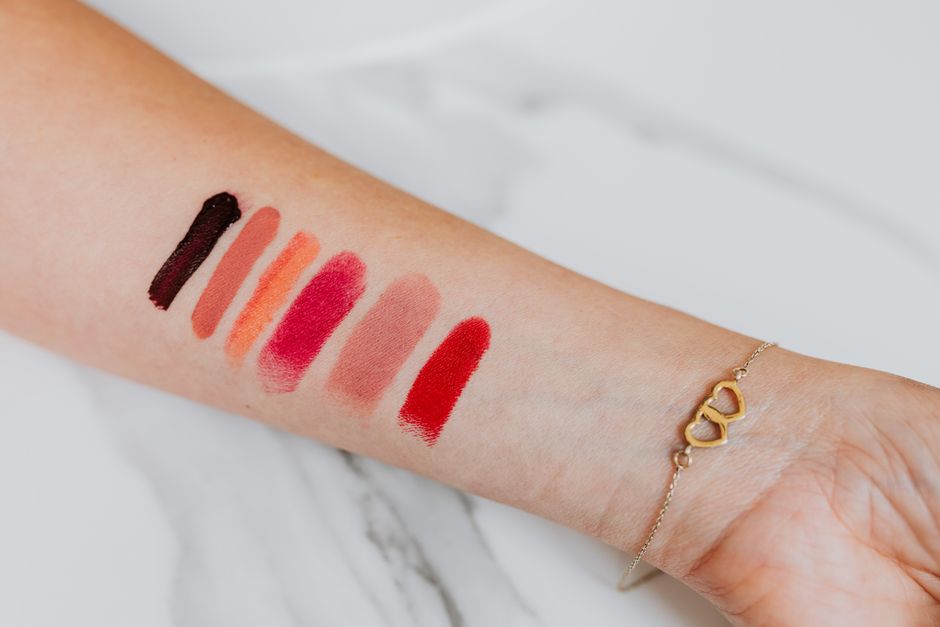
Choosing a lipstick shade for your undertone becomes easier when you treat color advice as a starting point, then check what happens on your own lips. A shade can look peachy in its tube, pink on your hand, and unexpectedly brown once applied. Your undertone matters, but so do your natural lip color, the lipstick’s depth, and how much pigment you wear. A few focused comparisons can help you find a shade that feels harmonious without turning makeup shopping into a complicated color analysis exercise.
Separate undertone from skin depth
Skin depth describes how light or deep your complexion appears. Undertone describes its underlying color character, often discussed as warm, cool, neutral, or olive. These are separate qualities: light and deep complexions can each have warm, cool, neutral, or olive characteristics. Avoid assuming that pale skin always needs pink lipstick or that deep skin always needs warm brown.
Warm undertones are commonly described as golden or peachy, while cool undertones may appear rosy or bluish. Neutral coloring can sit between those descriptions. Olive coloring can have a muted greenish or grayish quality and may lean warmer, cooler, or more neutral. You do not need to fit neatly into one category to choose lipstick well.
Use comparisons instead of a single test
Vein color and jewelry preferences can offer clues, but neither gives a definitive answer. Lighting, personal taste, and surrounding colors can change your impression. Look at your face beside a plain, neutral background in indirect daylight. Compare two lip shades in the same family, such as a peach rose and a cooler pink rose, and notice which effect you prefer.
Look beyond whether a shade technically matches. Does it draw attention to your lips in a pleasing way? Does it feel balanced with your face, or unexpectedly gray, orange, or stark? Your reaction to an actual lip color is more useful than forcing a label that never quite fits.
Choose a color family first
Start with the kind of lipstick you want to wear: an understated everyday shade, a lively pink, or a clear red. Comparing unrelated colors makes it harder to identify what you like. A pale peach and a deep raspberry differ in depth and intensity as well as temperature, so they cannot tell you much about undertone alone.
Within your chosen family, compare a warmer and cooler version at roughly the same depth and opacity. If you want a rose lipstick, try a peach rose beside a blue-leaning rose. For red, compare an orange-leaning red with a blue-leaning red. This keeps the decision manageable.
Starting points for different undertones
- Warm: Explore peach rose, warm coral, terracotta, cinnamon, or orange-leaning red. Choose lighter or deeper versions according to the contrast you enjoy.
- Cool: Explore cool rose, raspberry, mauve, or blue-leaning red. If a shade feels too icy, try a richer version with less white in its base.
- Neutral: Begin with balanced rose, pink brown, or a red that looks neither distinctly orange nor distinctly blue. Compare neighboring shades to find your preference.
- Olive: Compare muted rose, rose brown, brick, and balanced reds. Very pale or very orange colors may look different than expected, but olive coloring does not rule out either.
These suggestions are options to investigate, not restrictions. A contrasting undertone can create a deliberate, striking effect. If a cool pink makes you feel great despite warm coloring, there is no reason to replace it with coral.
Account for your natural lip pigment
Lipstick sits over an existing color rather than a blank surface. A sheer peach can appear rosier on naturally pink lips, while a soft pink may look more muted over brown or mauve pigmentation. If your upper and lower lips differ in color, the same lipstick may appear slightly different on each.
Use a hand swatch to compare shades, then judge the final choice on your lips when you can do so hygienically. Never apply a shared tester directly to your mouth. Ask about a fresh sample or a hygienic sampling option. If none is available, use swatches as a preliminary guide and check the return policy before buying.
For a natural-looking result, look for a shade related to your own lip color with the depth or warmth adjusted to suit your taste. A nude lipstick does not have to be beige. Rose brown, caramel, muted plum, and pink taupe can all serve as understated lip colors on different people.
Check depth, brightness, and finish separately
Sometimes the undertone is fine, but another quality makes the lipstick feel wrong. A color may be too pale, too vivid, or too opaque for the result you wanted. Before abandoning a whole shade family, identify which part of the effect bothers you.
If the color looks chalky
Try a deeper version or one with less of a pale, milky base. A very light lipstick can create strong contrast against both your skin and natural lip pigment. A warmer shade will not necessarily solve that; extra depth or a more translucent finish may be the useful change.
If the color looks too bright
Compare a softer, more muted version of the same color. You can also apply a thin layer and blot it gently to reduce its impact. If you like the resulting tint, you may prefer that color in a sheer formula rather than needing a different undertone.
If the color looks flat or gray
Try a little more pink, red, or warmth while keeping the depth similar. Brown and mauve shades vary widely: some have a lively rosy base, while others are much grayer. Comparing those differences can be more helpful than deciding that every brown or mauve is unsuitable.
Test the shade in your everyday setting
Apply your usual amount, let it settle, and look at your whole face from a normal mirror distance. Check it in indirect daylight and in the indoor lighting where you spend time. Strong store lighting and phone camera processing can alter how colors appear, so use photographs as a secondary reference.
Wear the makeup you would normally pair with that lipstick. A shade that seems intense on an otherwise bare face may feel balanced with your usual brows and blush. Also consider clothing near your face: a bright scarf or strongly colored top can influence your impression of the lipstick.
Keep comparisons simple. Note the color family, whether it leans warmer or cooler, and what you would change. For example, wanting a slightly deeper rose gives you a clearer next step than deciding that pink does not suit you.
Keep the shades you enjoy wearing
Once you find a useful everyday shade, use it as your reference. You might want a similar color with more brightness, or a richer shade for a stronger effect. There is no need to collect a lipstick from every undertone category.
Comfort matters alongside color. Stop using a lipstick that causes irritation, and see a dermatologist or doctor if lip irritation, cracking, or other problems persist. The best shade for your routine is one you enjoy seeing on your face and feel comfortable wearing. Let undertone narrow the options, then let the mirror and your own preferences make the decision.
