
A cape or poncho does not automatically make an outfit look shapeless. The common mistake is treating a loose outer layer like a regular coat. Its volume sits differently around the shoulders, waist, and hips, so the rest of the outfit needs a clear line. The strongest looks control one thing at a time: width, length, texture, or color. Pick a defined base, keep the lower half visually clean, and let the outer layer create movement without hiding every proportion.
Cape or Poncho: Which Shape Works for Your Outfit?
A cape and a poncho can both look polished, but they solve different styling problems. Use the comparison below before choosing an outfit formula. The goal is not to find one universal winner. It is to match the construction to the movement, coverage, and level of definition you want.
| Feature | Cape | Poncho |
|---|---|---|
| Arm movement | Usually leaves the arms partly open and works well over sleeves | Can restrict arm movement if the side openings are narrow |
| Visual shape | Creates a shoulder-led line with a clearer front opening | Creates a broad torso shape with a strong horizontal hem |
| Best base layer | Dress, fitted knit, shirt, or narrow trousers | Fine knit, slim top, straight skirt, or close-cut trousers |
| Most useful length | Upper hip to mid-thigh for daily outfits | High hip to low hip when worn with a defined lower half |
| Main risk | The front can fall open and look unfinished | The body can look compressed if the hem ends at the widest hip point |
| Strongest styling advantage | Vertical lines and easy layering | Warmth, movement, and a bold graphic outline |
For a long, lean outfit, the cape is the stronger choice because its opening gives the eye a vertical route. For a relaxed, sculptural outfit, the poncho wins because its broad shape looks intentional when the bottom half stays narrow. Neither shape needs a belt, but both need a visible point of control: a clean neckline, a tucked layer, a sleeve line, or a hem that stops before the widest part of the leg.
Keep the verdict practical. Pick a cape when you want the layer to frame the clothes beneath it. Pick a poncho when you want the outer layer itself to be the main visual statement.
How to Choose the Right Length and Proportion

Length matters more than most people expect. A cape or poncho can be attractive on a hanger and awkward on the body because its hem lands at a visually heavy point. Use these steps to control the proportions before you build the rest of the outfit.
- Locate the widest point. Stand naturally and identify the broadest area of the hips, thighs, or calves. Avoid ending the outer layer exactly there unless the lower half has a strong vertical line. A hem two to five centimetres above or below that point usually looks more deliberate.
- Match length to the base garment. A short cape works with a dress, high-waisted trousers, or a straight skirt because the base creates a clear lower line. A longer poncho needs a narrower base so the outfit does not become a stack of competing hems.
- Check the sleeve relationship. The sleeve under the outer layer should either be visible and intentional or mostly hidden. A bulky sleeve ending halfway below a short cape creates an accidental shelf around the arm.
- Keep one vertical anchor. This can be an open front, a long pendant, a pressed trouser crease, a straight skirt seam, or a single uninterrupted color from shoulder to shoe. One anchor is enough; several can make the outfit look busy.
- Test movement before leaving home. Sit, reach forward, carry a bag, and walk up stairs. If the hem rides up, the side opening pulls, or the fabric catches on your hands, the shape is too restrictive for the day ahead.
Useful length guides
For a compact frame, an upper-hip or mid-thigh hem often preserves leg length. For a taller frame, a longer cape can work because the body has more vertical space to absorb the fabric. These are not strict body rules. They are visual starting points. The right length is the one that leaves a clear relationship between the hem, the waist, and the shoes.
Use a mirror from several steps away. Close-up views encourage overthinking texture and neckline details. The full silhouette tells you if the garment creates balance.
How to Wear a Cape or Poncho With Dresses, Skirts, and Trousers
The strongest outfit combinations come from contrast. A loose outer layer needs a base with a different type of line, not another version of the same volume. A dress supplies one continuous column. A skirt creates a waist-to-hem break. Trousers can sharpen the lower half and make a soft cape look more deliberate.
With a dress
A cape over a dress is the easiest route to a polished outfit because the dress already provides a complete shape. Keep the dress hem visible when possible, or choose lengths that create a clear relationship rather than two nearly identical hems. A sleeveless or narrow-sleeved dress lets the cape move freely. If the dress has a large collar, ruffle, or strong shoulder detail, use a simpler neckline on the outer layer so the chest does not become crowded.
With a skirt
Use a tucked or close-fitting top with a skirt so the waist remains readable when the cape moves. A straight skirt gives a clean contrast to a rounded poncho. A fuller skirt can work, but the outer layer should finish above the skirt’s widest flare or extend well below it. Two hems landing at the same level often make the outfit look accidental. For a work setting, a crisp top and a controlled skirt line keep the relaxed layer from looking like indoor loungewear.
With trousers
Trousers offer the most flexibility. Narrow or straight legs balance a broad poncho, while wide trousers work better under a shorter cape with visible structure at the shoulder. Keep the shoe shape clear. A hem that covers the shoe, a wide trouser leg, and a long poncho can blur the entire lower half. A small amount of ankle or a clean shoe line gives the eye a stopping point.
The best outfit formula is not the one with the most layers. It is the one with the clearest contrast: soft over sharp, wide over narrow, or short over long.
Common Cape and Poncho Mistakes to Avoid
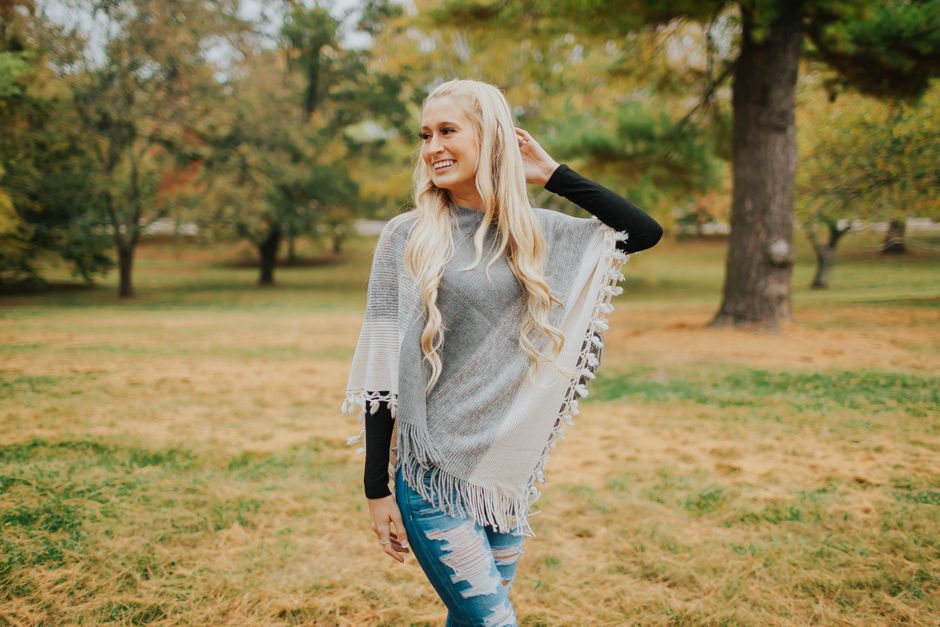
Most styling problems come from proportion, not from the garment itself. Check these failure points before deciding that a cape or poncho does not suit you.
- Adding volume everywhere. A wide outer layer over a loose top and wide trousers can erase the body’s outline. Keep at least one zone narrow or visibly structured.
- Ignoring the arm opening. A beautiful shape is not useful if you cannot reach, drive, work, or carry a bag comfortably. Move your arms before committing to the outfit.
- Choosing the wrong hem point. A hem that ends at the widest part of the hip or calf can make the outfit feel heavy. Shift it slightly higher or lower and compare the full silhouette.
- Using too many competing textures. Fringed fabric, chunky knitwear, a large scarf, and textured shoes can turn a simple shape into visual noise. Let one texture lead.
- Hiding every hand and sleeve. When the arms vanish completely, the garment can look more like a blanket than clothing. A visible cuff, sleeve, or hand opening adds scale and purpose.
- Matching every layer too closely. One uninterrupted color can look elegant, but several layers in almost identical shades may flatten the outfit. Add contrast through texture, tone, or a clear neckline.
- Forcing a belt on a closed shape. A belt is not a repair tool. If it creates bunching or pulls the fabric sideways, remove it and create definition through the base layer instead.
- Wearing the same volume for every setting. A dramatic poncho may suit a casual walk but feel impractical at a desk, on public transport, or in a crowded room. Match the shape to the movement required.
The most useful test is a five-minute routine: walk, sit, reach, turn, and put both hands in the pockets or openings. If the garment fails that routine, styling cannot solve the basic fit problem.
When a Cape or Poncho Is the Wrong Choice
If you need precise arm movement, a close fit, or a dependable layer for crowded spaces, choose a tailored coat or structured jacket instead; the cape or poncho is the wrong choice when freedom of drape creates more inconvenience than style value, because no color, scarf, or belt can fix fabric that blocks your hands, catches on furniture, or makes every layer underneath look bulky. If your wardrobe already contains many oversized shapes, add a sharply cut layer with clear sleeves and a defined shoulder, but if your clothes are mostly narrow and simple, a cape is the stronger choice because it adds movement without demanding a complete change of personal style. The final verdict is practical: choose a cape for an open vertical line, choose a poncho for a relaxed sculptural outline, and skip both when the day requires speed, precision, or frequent movement; the right garment is the one that keeps its shape while you live normally inside it.
