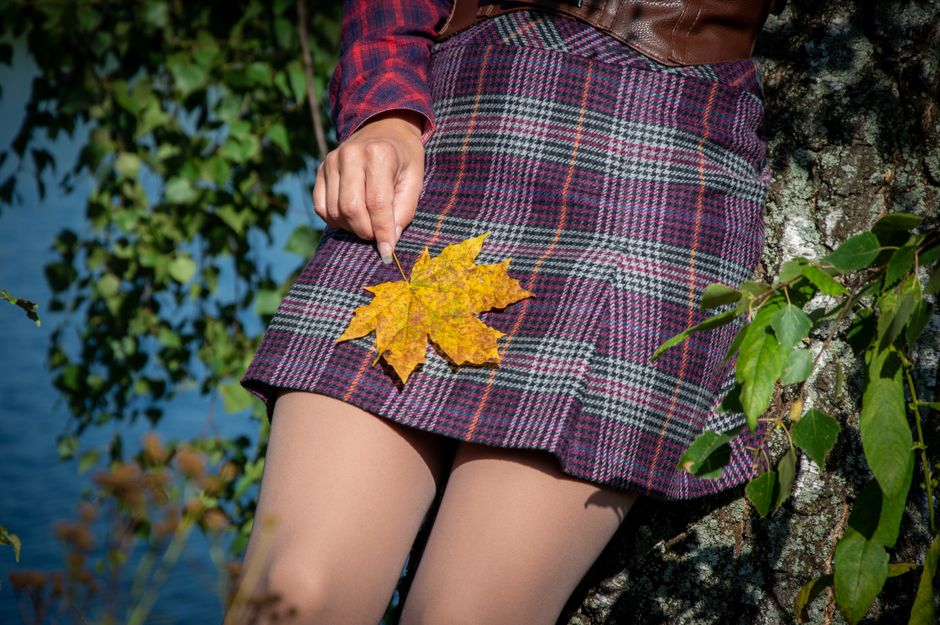
The common mistake is treating tights and knee-high socks as two separate accessories that must compete for attention. They work best as a single visual layer. The tights create a continuous base, while the socks add a deliberate break near the knee.
Start with Proportion, Not Color
The best styling rule is simple: decide where the eye should stop. A short skirt with knee-high socks creates several horizontal lines: the hem, the top of the socks, and sometimes a gap of exposed leg. If those lines sit too close together, the outfit can look crowded. If they sit too far apart, the legs can look visually divided.
Choose the right skirt length
For a balanced outfit, pair a mini skirt with socks that finish 8 to 15 cm below the hem. That space gives the skirt a clear edge without creating a large empty gap. A knee-length skirt works better with tights alone or with socks hidden under the hem, because visible socks can make the leg look shorter.
Use the waist to lengthen the silhouette
A high waist helps offset the horizontal lines created by socks. Tuck in a fitted top, keep the jacket ending near the waist, and let the skirt carry the volume. If the skirt sits low on the hips, use a longer, cleaner top and keep the socks close in color to the tights.
Match the Layer to the Skirt Length
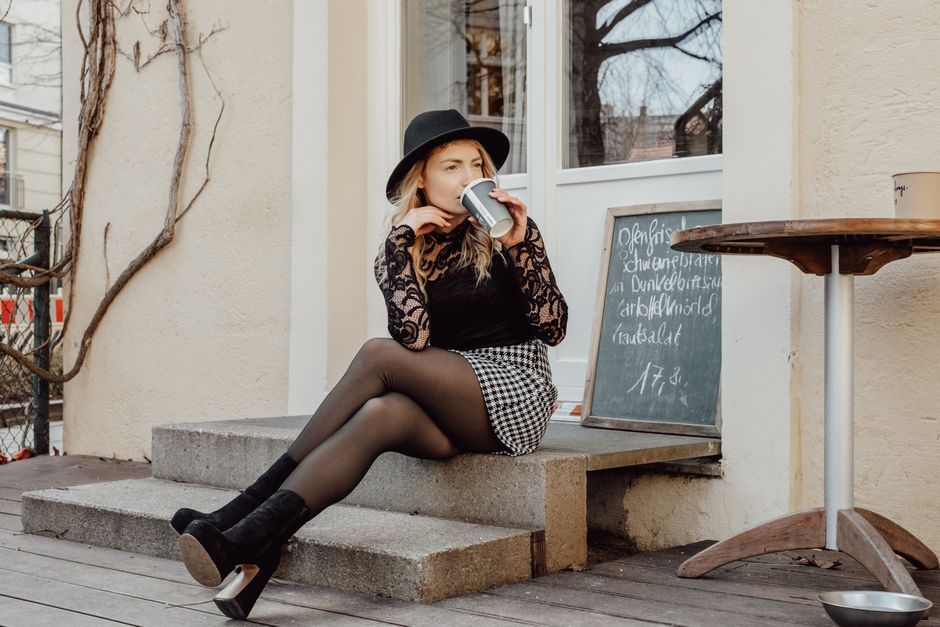
The skirt length determines how much visual information the lower half can handle. This quick comparison gives a reliable starting point before color or texture enters the outfit.
| Skirt length | Tights | Knee-high socks | Best visual result |
|---|---|---|---|
| Mini, 30 to 40 cm | Opaque or 40 to 80 den | 8 to 15 cm below hem | Clear layered leg line |
| Above-knee, 40 to 48 cm | Sheer or medium weight | 6 to 10 cm below hem | Playful but controlled contrast |
| Knee length, 48 to 60 cm | Sheer or opaque | Mostly hidden | Longer, quieter silhouette |
| Midi, below 60 cm | Optional | Usually hidden | Clean line without extra bands |
The strongest everyday combination
For a short pleated skirt, choose matte tights, socks in a similar color, and shoes with a low visual break. This keeps the outfit readable from a distance. The skirt supplies movement; the leg layers supply structure.
Build the Outfit in Five Deliberate Steps
Use this order when an outfit feels close but not quite right. It prevents small styling choices from fighting each other.
- Set the base color. Start with one dark or neutral leg color. Black, charcoal, brown, and deep navy create the clearest foundation.
- Choose the skirt shape. Pleats add movement, an A-line cut adds space, and a straight skirt creates a sharper frame. Do not add a busy sock pattern to a skirt that already has strong movement.
- Place the sock break. Keep the top of the socks either clearly visible or fully hidden. A narrow, accidental strip often looks like a sizing mistake.
- Repeat one detail upstairs. Echo the sock color in a bag, hair ribbon, sweater trim, or small jewelry detail. One repeat looks intentional; several can feel costume-like.
- Check the outfit from ten steps away. If the socks are the first thing visible, reduce contrast. If the legs disappear into one dark block, add texture or a lighter skirt.
For a soft outfit
Use a flared skirt, fine tights, ribbed socks, and rounded shoes. Keep the colors within one family, such as cream, tan, and warm brown.
For a sharper outfit
Use a straight mini skirt, smooth tights, flat socks, and structured shoes. Keep the palette to two main colors so the lines stay crisp.
Keep the Color Break Intentional
Use one sentence as the verdict: match the socks to the tights when you want longer-looking legs, and contrast them with the skirt when you want the socks to become the focal point; a dark skirt, dark tights, and dark socks create the longest uninterrupted line, while a light skirt over dark tights with pale socks creates a clear graphic effect that works best when the skirt is simple, the top is quiet, and the shoe repeats either the sock or tights color.
Fix Bulk, Bunching, and Awkward Gaps

Layering fails when each fabric adds thickness in the same place. The fix is not always a thinner item. Often, the better solution is moving the bulk away from the knee or reducing the number of competing textures.
Stop socks from bunching
Choose a sock with enough stretch to stay up without cutting into the leg. A cuff that sits 2 to 4 cm below the skirt hem usually looks intentional. If the sock slides down, do not keep pulling it higher; that creates a thick ridge. Switch to a firmer knit or wear the sock lower with a wider gap.
Prevent a heavy lower half
Pair thick socks with smooth tights rather than ribbed tights. Pair textured tights with plain socks. This one-texture rule keeps the leg from looking padded. A bulky shoe also adds weight, so balance it with a skirt that has enough volume to move around the hips.
Avoid layering two strong patterns on the same leg. Stripes, checks, and large dots need open space around them. If the socks have a pattern, keep the tights plain and let the skirt use a solid color.
Which Sock Height Works for Each Outfit?
There is no single correct sock height, but each placement sends a different style message. These answers cover the choices that cause the most hesitation.
Should knee-high socks show above boots?
Yes, if the visible section is narrow and clean. A 3 to 6 cm band above a boot can connect the shoe to the skirt and add a deliberate school-inspired detail. A much taller section draws attention downward and can shorten the leg.
Can socks match the skirt?
They can, and this is one of the easiest ways to make a patterned skirt feel calmer. A matching sock and skirt color create a framed leg, especially when the tights sit between them in a darker shade. Keep the top plain so the repeated color has room to work.
Are knee-high socks suitable for a polished outfit?
Yes, when the fabric is smooth, the cuff is flat, and the rest of the outfit has clean lines. For a polished result, choose a straight skirt, a tucked-in top, and one restrained accessory. Skip novelty patterns and uneven layers.
Know When Tights or Socks Should Stand Alone
Knee-high socks are the wrong choice when the outfit already has several strong horizontal details, such as a wide belt, cropped jacket, and bold skirt hem. They are also a poor fit when the skirt ends at the widest part of the knee and the socks stop only a few centimetres below it. In that case, tights alone create a longer, cleaner line.
Choose tights alone for length
Use tights without visible socks for formal settings, narrow skirts, and outfits built around a long coat. This removes one visual break and lets the skirt shape lead. Sheer tights make the result lighter; opaque tights make it more graphic.
Choose socks alone for contrast
Use socks without tights when the weather, setting, and skirt length allow more exposed leg. The contrast is strongest with a simple mini skirt and a sock that clearly repeats a color from the top or shoes. If the exposed section feels too large, the outfit needs a longer hem rather than another layer.
The single most important takeaway is to treat tights, knee-high socks, and the skirt as one proportion system, then use color and texture to support that shape.
