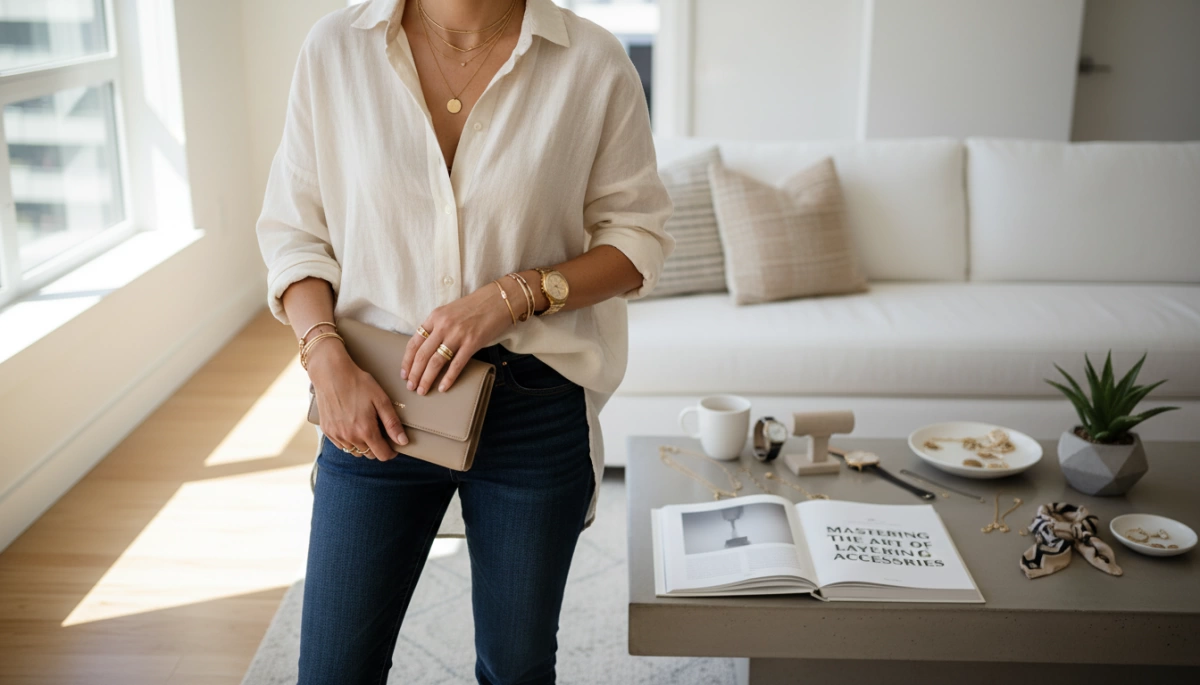
Mastering the art of layering accessories starts with knowing the golden rules that make every piece work in harmony. First, create a focal point—one standout piece that draws the eye, whether it’s a bold statement necklace or a striking watch. This anchors your entire look and prevents the layering from feeling chaotic.
Next, follow the rule of three. Stick to three main elements per area—think three necklaces of varying lengths or a trio of bracelets. This keeps your accessories curated, not cluttered, and effortlessly chic.
Finally, balance visual weight to maintain a polished silhouette. If you wear chunky rings, opt for delicate bracelets; if your necklace cascade is heavy, keep your ear stack minimal. This thoughtful distribution makes every accessory pop without overwhelming your outfit.
Apply these key principles as your foundation in this jewelry stacking guide, and watch your accessory game reach new heights with ease and style.
Necklaces: Creating the Perfect Cascade
Mastering necklace layering means understanding the basics of lengths and texture for that flawless cascade. Here’s the breakdown:
Choker (14-16″): Sits snugly around the base of your neck, perfect for framing the face and adding an edgy or minimalist touch. Ideal for layering under longer pieces.
Mid-Length (18-20″): This length rests near the collarbone, a classic choice that pairs well with most necklines and sets the stage for layering.
Pendant/Lariat (24″+): These longer chains add drama and movement, especially when you want to showcase a statement pendant or create depth by mixing chain styles.
Texture play is key to avoiding a flat look—combine sleek paperclip chains, delicate link styles, and chunky metals to boost interest. Following the pendant rule, keep only one statement pendant in the mix to avoid visual clutter.
Using a simple neck-length chart can help plan your necklace stacking effectively. This layered look works great to elevate everyday outfits or add a curated edge to your capsule wardrobe accessories. For more inspiration on accessorizing, check out tips on wearing and feeling Parisian, where minimalist accessory layering meets chic style.
The Arm Party: Stacking Bracelets and Watches
When it comes to the arm party, your watch often serves as the anchor, setting the tone for the rest of your bracelet stacking. Choose a timeless watch that balances well with your jewelry; this creates a solid base to build around. For a curated look, mix materials like metal, leather, and beads—this adds texture and visual interest without overwhelming your arm candy styling.
Fit matters: snug bracelets sit nicely next to your watch, while a few looser pieces can add movement and flair. However, avoid overcrowding one wrist; the “quiet” wrist opposite to your stacked arm enhances balance and keeps the look sophisticated. For inspiration, explore how watches have evolved and paired seamlessly with modern accessories in this insightful piece on the evolution of watches from pocket to wrist.
Ring Stacking: From Knuckle to Base
When it comes to ring stacking, there’s a creative freedom that lets you express your personal style while keeping things balanced. Mastering vertical vs. horizontal stacking is key here:
Vertical stacking means piling rings along the finger from base to knuckle, which creates a bold, elongated look.
Horizontal stacking spreads rings across multiple fingers, giving a more relaxed yet curated vibe similar to a minimalist accessory layering approach.
Midi rings, also known as knuckle rings, add an extra layer of interest and texture without overwhelming your hand. Pair these smaller rings with a bold statement ring placed at the base for contrast and focus.
Don’t forget the power of negative space. Leaving a finger or two bare, or spacing rings out wisely, prevents the look from becoming too crowded. This balance in visual weight elevates your stack, much like an arm candy styling but for your hands.
Pro tip: Mix different ring widths and designs for that effortlessly chic effect. This approach works perfectly for those looking to build a curated look that fits any occasion—whether casual weekend or evening out.
Breaking the Taboo: How to Mix Metals
Gone are the days when mixing metals was considered a fashion no-no. The old rule of sticking strictly to gold or silver is out, and the new reality celebrates the creative blend of two-tone jewelry and mixed metal jewelry styling. It’s all about balance and thoughtful pairing.
Old Rule vs. New Reality
Traditionally, matching metal tones was key to a polished look. Today, layering different metals—think gold with silver or rose gold with platinum—adds depth and a modern edge to your accessory game. This shift unlocks endless possibilities for jewelry stacking, making your style more versatile.
The Bridge Piece
A smart way to tie your metals together is using a “bridge piece” — a single accessory that features multiple metal tones. For example, a bracelet or necklace that combines both gold and silver acts as a harmonious link, helping your other pieces blend effortlessly.
Ratio Matters
When mixing metals, keeping an eye on ratio is crucial. Stick to one dominant metal and use the other as an accent. This avoids visual clutter and ensures the look feels intentional, not accidental. For instance, if you wear mostly silver rings, add just one gold midi ring to introduce contrast without overwhelming your arm party.
Mastering the art of layering accessories means embracing these new rules. Mixing metals with purpose gives your overall look a fresh, sophisticated vibe while maintaining balance and visual appeal.
For more tips on elevating your style, check out how to enhance your work outfits with elegant accessories.
Context and Occasion: Reading the Room
Mastering the art of layering accessories means knowing when and where to wear them. Different settings call for different jewelry stacking guide approaches to keep your look appropriate and stylish.
Office/Professional
In professional environments, keep it minimalist accessory layering. Stick to subtle pieces like a delicate necklace cascade with shorter lengths (think chokers or mid-lengths) and a few simple rings. Avoid loud statement jewelry pieces to maintain a polished vibe. A clean arm party with one watch as the anchor and a couple of sleek bracelets works best.
Evening/Date Night
Here, you can get bolder. Elevate your outfit with a curated ear stack, layer multiple necklace lengths for that perfect cascade, and add a mix of textures and metals. Don’t shy from statement rings or a bohemian jewelry style for that wow factor. This is where you can play with jewelry for different necklines and really express your personal style.
Weekend/Casual
On weekends, have fun with relaxed arm candy styling. Mix paperclip chain styling, stack midi rings and knuckle rings freely, and experiment with two-tone jewelry. This casual look celebrates breaking traditional rules, including mixing metals and layering more playfully.
By reading the room and adapting your layered accessories, you keep your style fresh, on-point, and perfectly suited to every occasion. For more ideas on blending classic and edgy looks, check out the detailed takes on Vivienne Westwood Man for inspiration.
Common Layering Mistakes to Avoid
When it comes to mastering the art of layering accessories, some pitfalls can quickly ruin your look. Avoid these common mistakes to keep your style sharp and balanced:
The Tangle Trap: Piling on necklaces without considering their lengths or clasps leads to frustrating tangles. Use a necklace lengths chart to space pieces properly, especially when mixing chains like paperclip chain styling with pendants.
Ignoring the Neckline: Your necklace and accessory choices should complement your outfit’s neckline. Overlooking this can throw off the visual balance in fashion. For example, layering a choker with a deep V-neck requires careful consideration to avoid overcrowding the neck area.