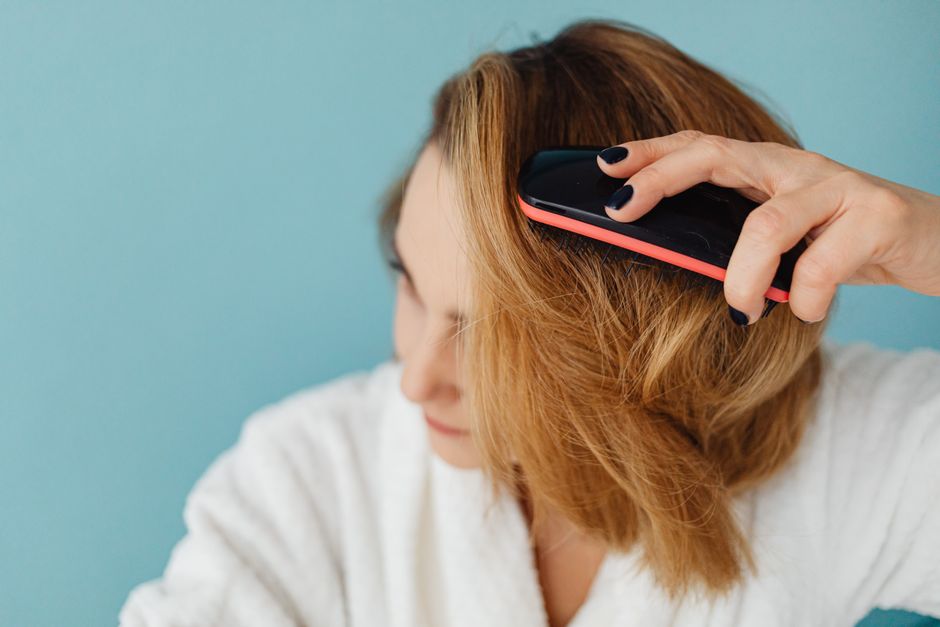
When the heating comes on, your hair may become harder to manage: flyaways lift around your face, ends catch on your sweater, and a smooth style feels rough by lunchtime. Protecting your hair from indoor heating starts with small changes to your surroundings and everyday routine. You do not need to coat every strand in oil or replace everything in your bathroom. Focus on comfortable room conditions, regular conditioning, and less friction, then adjust according to how your hair actually feels.
Understand what changes in a heated room
Indoor heating warms the air, which can lower its relative humidity when no moisture is added. That drier environment can make static and a rough feel more noticeable. Sitting in the path of a warm air vent may add to the discomfort, especially if your hair is already prone to tangling.
Heating is only part of the picture. Hats, scarves, hot showers, and repeated styling can all affect how your hair behaves during colder weather. Look for patterns: does your hair become flyaway at your desk, tangled after wearing a scarf, or stiff after applying another layer of product?
Start with the space around you
Move away from direct airflow
If a heating vent blows toward your head, reposition your chair or redirect the vent where it is designed to allow this. At home, avoid settling with your hair directly beside a portable heater. Keep hair, clothing, and furnishings clear of heaters and follow the appliance’s safety instructions.
You do not need to make your home uncomfortably cold. A comfortable temperature and a seat away from concentrated warm airflow are sensible starting points. Check your workspace too, since hours at a desk can matter more than a brief spell in a warm bathroom.
Use a humidifier thoughtfully
A humidifier may help a room feel more comfortable when the air is dry, but it is optional and will not replace hair care. If you use one, follow its instructions for water, placement, and cleaning. Empty and maintain it as directed rather than leaving water sitting between uses.
Avoid aiming mist at your hair or running the device until windows and walls become damp. Condensation is a reason to reduce use and reassess the room. If you cannot control the heating at work, concentrate on the parts of your routine you can change.
Wash for your scalp, condition for your lengths
Keep washing according to your scalp’s needs. Indoor heating does not create a universal reason to wash less often. If your roots become oily or you use styling products regularly, stretching the interval too far may leave you uncomfortable. If your usual routine leaves your hair feeling stripped, consider a gentler shampoo and review how much you use.
Use comfortably warm water and work shampoo mainly over the scalp without piling the lengths into a tangled bundle. Let the rinse water carry the lather through. Follow with conditioner, concentrating on the areas that feel rough or catch when you detangle.
For fine hair, begin with conditioner on the ends and add more only where needed. Thick, curly, or tightly coiled hair may need it distributed through more of the lengths. Follow the product’s directions for application and rinsing; leaving a rinse-out conditioner in all day is not a necessary extra step.
Add a light protective layer when needed
If rinse-out conditioner leaves your hair manageable, you may not need anything else. When ends still feel rough, try a small amount of leave-in conditioner suitable for your texture. Spread it between your hands, apply to the lengths, and keep it away from your scalp if your roots flatten easily.
A smoothing serum can help control the look of flyaways and reduce friction during styling. Start sparingly, especially on dry hair. Applying more whenever static appears can eventually leave hair limp or coated without solving the source of the problem.
- Fine or easily flattened hair: Choose a lightweight texture and focus on the very ends.
- Thick or coarse hair: Apply in sections so you can distribute a modest amount evenly.
- Curly or tightly coiled hair: Smooth product over sections with minimal disturbance to your curl pattern.
- Bleached or frequently styled hair: Handle gently and limit repeated brushing or hot-tool touch-ups.
Oil is optional. A little on the ends may improve slip, but adding large amounts is not a substitute for conditioning. If your hair becomes sticky, dull, or difficult to style, simplify the layers rather than adding another treatment.
Reduce the friction that encourages flyaways
Static often becomes most obvious after removing a hat or pulling on a sweater. Before brushing repeatedly, smooth your hair gently with your hands. If needed, use the small amount of leave-in product recommended on its label. Avoid laundry sprays or dryer sheets on your hair or scalp; these are not hair-care products.
Notice where tangles form. If the hair at your nape catches against a scarf, tuck it into a loose braid or another comfortable style before heading out. Choose headwear with a smooth lining when possible, and remove hats carefully rather than dragging them through the lengths.
At bedtime, a smooth pillowcase or comfortable hair covering may reduce rubbing. Keep any braid or gathered style loose, with no pulling at the hairline. These measures are about reducing everyday friction, not repairing split ends.
Make drying and styling gentler
After washing, blot or gently squeeze out water with a soft towel instead of rubbing vigorously. Detangle in small sections, beginning at the ends and working upward. Use enough slip and a method that suits your texture; for many curly styles, detangling while conditioner is in the hair is easier than brushing it dry.
If you blow-dry, use a comfortable heat setting, keep the dryer moving, and follow its distance instructions. Apply a heat protectant according to its label when using heated styling tools. Avoid repeatedly passing a straightener over the same section just to chase a few flyaways.
Letting hair dry without heat is also an option when practical. Choose the method that fits your texture and schedule without rough handling. Never use a room heater as a shortcut for drying your hair.
Keep a simple routine and watch your scalp
Begin with three habits: move out of direct heated airflow, condition after washing, and reduce rubbing from towels and clothing. If your ends still need help, introduce one leave-in product and observe how your hair responds over several washes. Changing one thing at a time makes it easier to notice what helps.
Pay attention to your scalp as well as your style. Persistent itching, soreness, flaking, sores, or unusual shedding deserve advice from a dermatologist or doctor rather than repeated product experiments. Stop using anything that irritates your skin. With a comfortable scalp and a manageable routine, protecting your hair can stay a small part of your day.
