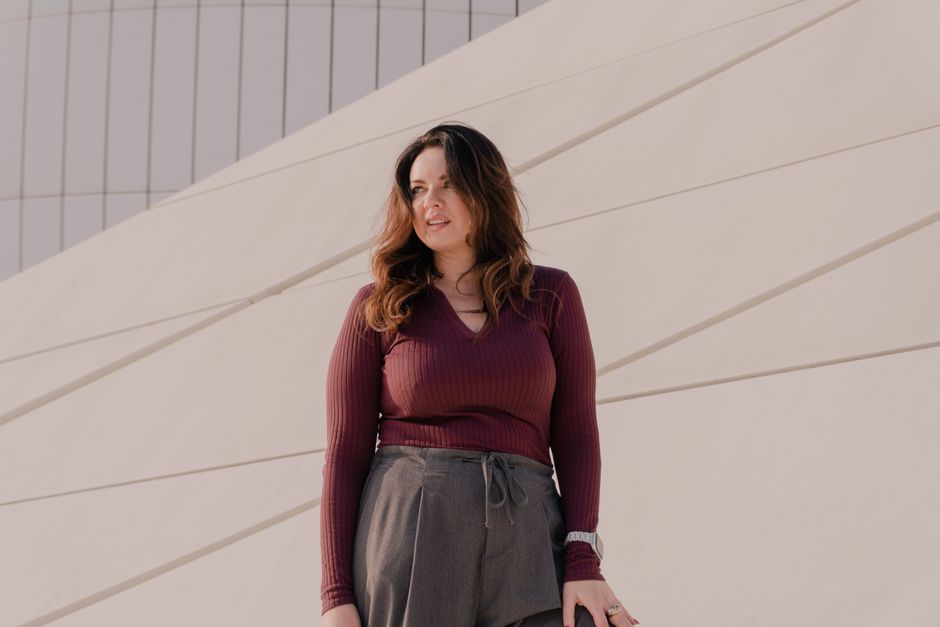
You are standing in front of your wardrobe with a burgundy jumper in one hand and three possible outfits in the other. One looks too dark, another feels too formal, and the third seems to compete with every other colour in the room. A surprising style fact is that burgundy often works like a neutral: it has enough depth to anchor an outfit, but more warmth and character than black, grey, or navy. This guide explains how to use that quality without making every outfit look heavy or overly seasonal.
Why Burgundy Works So Well in Autumn Outfits
Burgundy sits between a colour and a neutral
Burgundy is a deep red with brown, purple, or wine-like undertones. That mixture gives it unusual flexibility. Pure red can feel bright and demanding, while purple may read as cool or dramatic. Burgundy keeps some of the energy of red but lowers the volume. It can therefore support an outfit without taking over every other element.
The most reliable pairings come from three colour families. Warm neutrals such as camel, cream, tan, chocolate, and olive make burgundy feel rich and relaxed. Cool neutrals such as charcoal, denim blue, soft grey, and navy make it look sharper. Pale colours such as ivory, blush, and light blue create contrast and stop deep burgundy from making the outfit appear flat.
Texture prevents a dark outfit from looking dull
Colour alone does not create a successful autumn outfit. Texture supplies the variation. A smooth burgundy item next to denim looks casual. The same colour in a ribbed knit, brushed fabric, or soft suede-like texture feels warmer and more tactile. Pairing two burgundy pieces can work when their surfaces differ, such as a fine knit with a matte skirt or a soft scarf with structured trousers.
Use a simple rule: if the colours are close, vary the textures; if the textures are similar, add clearer colour contrast. This prevents the common mistake of wearing several dark, smooth pieces that merge into one block.
How to Build a Burgundy Outfit Step by Step
Start with one dominant burgundy piece
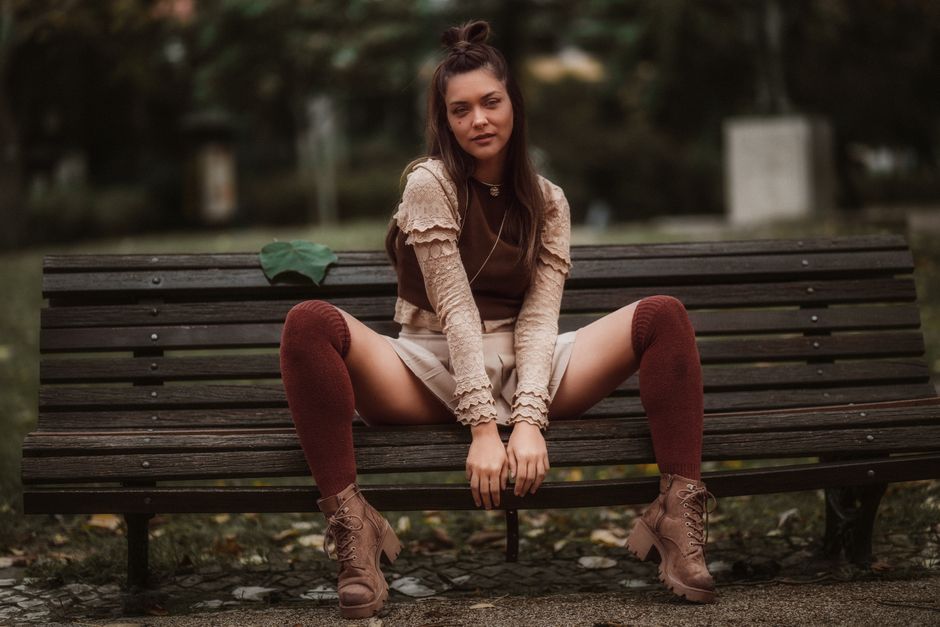
Choose the garment that will carry the colour, then build around it. The strongest starting points are a jumper, skirt, dress, tailored jacket, or wide-leg trouser. Keep the rest of the outfit quieter during the first pass. This makes it easier to see the effect of burgundy before adding accessories.
- Pick the visual anchor. Decide whether burgundy will sit near the face, at the waist, or on the lower half of the body. A top makes the colour more noticeable; a skirt or trouser creates a calmer statement.
- Add one light element. Cream, ivory, pale blue, or soft grey can lift the outfit and keep the dark colour from appearing severe.
- Choose a supporting neutral. Use denim, charcoal, navy, camel, or black for the second major clothing piece.
- Repeat the colour once. A small burgundy detail in a scarf, belt, hair accessory, or bag can connect the outfit, but repeating it in several large pieces may look planned rather than natural.
- Check the contrast. Stand near a window and look at the outfit from a distance. If the silhouette disappears, add a lighter layer or change one dark piece.
Use proportion to keep the outfit modern
Volume matters more than the exact shade. A loose burgundy jumper works best with a straighter or cleaner lower half. A full burgundy skirt benefits from a closer-fitting top or a shorter outer layer. If both halves are oversized, define the waist with a tuck, belt, or visible seam. The goal is not a tight outfit; it is a readable outline.
For a simple weekday formula, combine a burgundy upper layer with straight denim, a pale shirt, and dark shoes. For a more polished setting, use burgundy on a tailored lower half with a fine knit and a structured coat. These formulas work because the colour has one clear job in each outfit.
The Best Burgundy Styling Choice Is Controlled Contrast
The clearest verdict
For most wardrobes, the best way to wear burgundy this autumn is to pair one deep burgundy piece with a lighter neutral and one medium-toned supporting colour, because this creates enough contrast to show the shade while keeping the outfit easy to repeat.
When to avoid an all-dark combination
Skip head-to-toe burgundy with black or very dark brown when the fabrics have the same weight and finish, because the colours can collapse into a single heavy shape; choose charcoal, cream, faded denim, or muted olive instead when you want the outfit to feel lighter, more casual, and easier to wear during the day.
There is no requirement to match burgundy with another red. In fact, forcing a second red into the outfit often makes the colour relationship harder to control. Let burgundy stand alone, then use shape, texture, and a small repeated detail to give it structure.
Burgundy Colour Combinations Compared
Choose the pairing by the effect you want
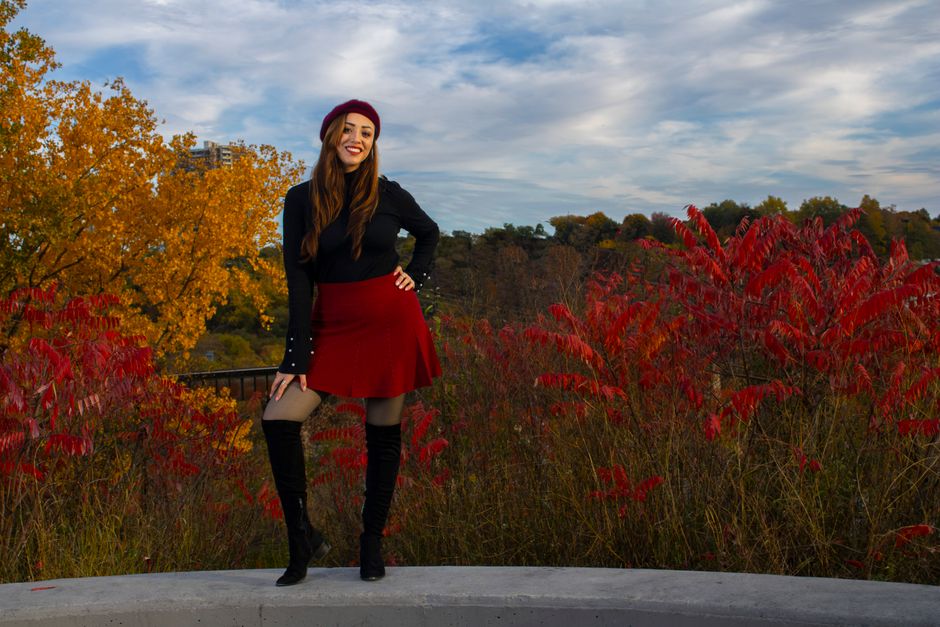
The same burgundy garment can look relaxed, refined, dramatic, or soft depending on the colour beside it. The strongest option for everyday dressing is burgundy with denim or cream because both combinations create contrast without looking over-styled.
| Pairing | Visual effect | Best use | Common mistake |
|---|---|---|---|
| Burgundy and cream | Bright, warm, polished | Daytime outfits and lighter autumn layers | Using too many warm shades at once |
| Burgundy and denim blue | Casual, balanced, approachable | Weekday outfits and relaxed weekends | Adding several unrelated accent colours |
| Burgundy and charcoal | Sharp, quiet, modern | Workwear and evening outfits | Choosing fabrics with no texture contrast |
| Burgundy and olive | Earthy, muted, outdoors-inspired | Layered autumn dressing | Using olive that is too yellow or bright |
| Burgundy and blush | Soft, feminine, lighter in tone | Skirts, dresses, and transitional outfits | Adding a third pastel that weakens the contrast |
Keep the accessories subordinate
Accessories should clarify the outfit, not start a second colour story. Dark brown, black, tan, and muted metallic details usually support burgundy well. If the clothing already contains a strong pattern, choose simple accessories. If the clothing is plain, a textured scarf or sculptural earring can add interest without introducing another loud colour.
A frequent failure mode is matching every small detail to the burgundy garment. Matching shoes, bag, belt, nails, and jewellery can make the look feel staged. Repeat the colour once or twice, then stop.
Questions About Wearing Burgundy in Autumn
Can burgundy be worn with black?
Yes, but the outfit needs a clear break between the two dark colours. Use different textures, show a small area of skin at the neckline or ankle, or add a pale layer between them. Burgundy and black work best for evening dressing or a sharper city outfit. For daytime, denim, cream, or grey usually gives a more open result.
Does burgundy suit warm and cool colouring?
Most people can wear burgundy, but the undertone matters. Warmer burgundy shades contain more brown or brick red and often pair well with camel, olive, and gold-toned neutrals. Cooler burgundy shades contain more purple or blue and tend to work with charcoal, navy, icy grey, and silver-toned details. If the colour near your face feels harsh, move it lower in the outfit and place a softer shade near the neckline.
How can burgundy look less formal?
Use relaxed shapes and casual textures. Denim, soft knits, flat shoes, simple cotton layers, and an undone sleeve make burgundy feel practical rather than ceremonial. Avoid combining a burgundy tailored jacket with several polished accessories unless you want a formal effect. The easiest casual formula is one burgundy layer, one faded or mid-tone neutral, and one textured accessory.
- Most versatile: burgundy with cream or denim.
- Most polished: burgundy with charcoal.
- Most relaxed: burgundy with faded blue and soft grey.
- Most autumnal: burgundy with olive and camel.
