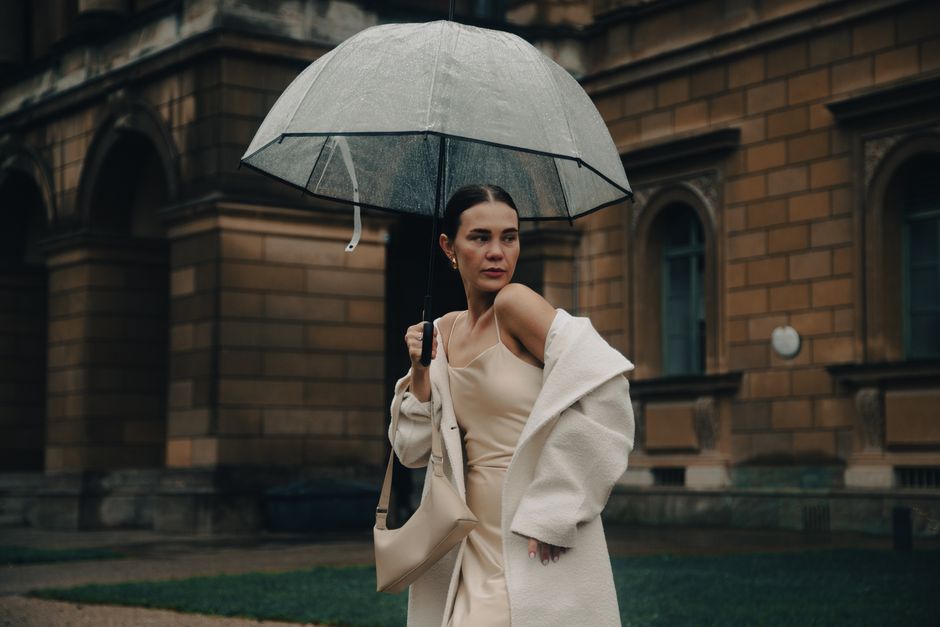
You have ten minutes to leave, the pavement is already shining, and the outfit that looked sharp indoors suddenly feels wrong for the weather. The fix is not a closet full of rain gear. It is a clear order of decisions: protect the fabric, control the shape, and keep the outfit visually simple.
How to Build a Polished Rainy-Day Outfit in Five Minutes
The fastest way to dress well in wet weather is to choose the outfit from the outside in. Start with the layer that will face the rain, then build the rest around its length, volume, and color. This prevents the common problem of adding one emergency layer after another until the outfit looks bulky.
Step 1: Choose the outer shape first
Pick a coat or jacket with enough room for one warm layer underneath, but avoid extra fabric at the shoulders and waist. A straight or lightly shaped cut works for most outfits because it gives the eye one clean line. The outer layer should end at a deliberate point: above the knee, around mid-thigh, or near the hip. A hem that stops at the widest part of the calf can make the whole outfit look shorter and heavier.
Step 2: Keep the middle layer thin
Use one close-fitting middle layer instead of stacking several loose pieces. A fine knit, neat shirt, or slim cardigan gives warmth without creating folds under the coat. If the weather is cold, add warmth through the fabric rather than through extra volume. A thin base layer under a structured sweater often looks cleaner than two oversized tops.
Step 3: Check the bottom half before leaving
- Make sure trousers do not touch the ground when you stand still.
- Choose a hem that stays several centimeters above puddle splash.
- Keep the lower half in one visual color family if the coat is long.
- Remove any trailing scarf, loose tie, or wide trouser leg that could drag across wet pavement.
The final check takes less than a minute. Walk across the room, sit down, raise your arms, and look at the back hem in a mirror. If the outfit still holds its shape during those movements, it will look intentional outside. The best rainy day outfits are not complicated; they are edited before the weather gets a chance to edit them for you.
Why Rainy Outfits Look Messy and How to Fix the Shape
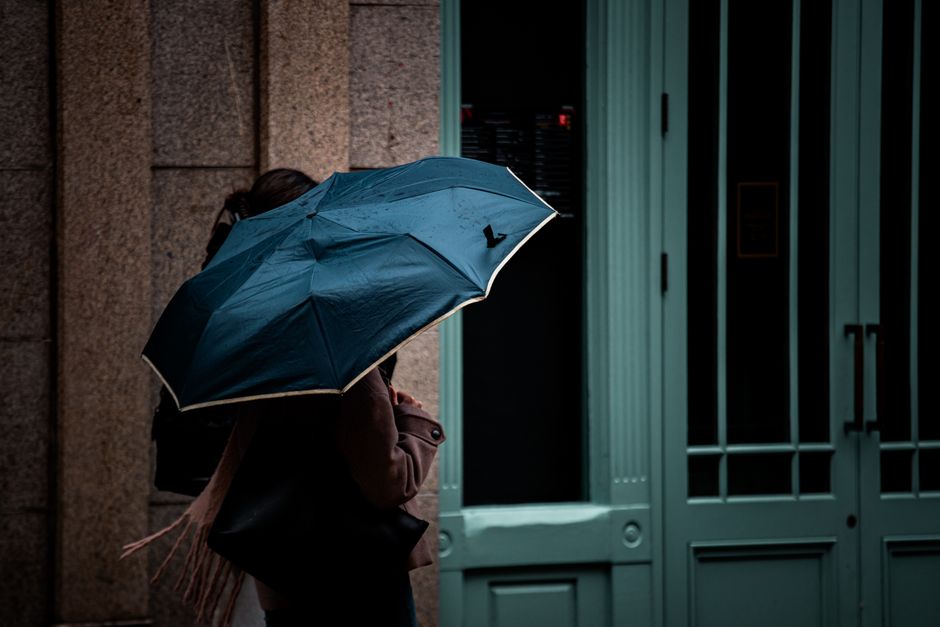
Rain changes how clothing behaves. Fabric darkens, hems cling to shoes, coats become heavier, and damp hair can make a carefully planned outfit feel unfinished. The main styling problem is not the rain itself. It is a loss of visual structure. When every layer is loose, shiny, or crumpled, the eye cannot find a clear outline.
Use one strong line and one soft layer
A polished outfit usually needs contrast between structure and movement. Pair a firm outer line with a softer inner layer, or use a relaxed coat over a crisp, simple base. For example, a straight rain shell over a fitted knit dress creates a clear vertical line. A softly draped coat works better with straight-leg trousers and a neat top underneath. Avoid combining an oversized coat with wide trousers and a large scarf unless the rest of the outfit has a strong color block to hold it together.
Proportion matters more than trend. If the jacket is cropped, the lower half can carry more length. If the coat reaches the knee, the clothes underneath should not create several competing hems. Keep the number of visible horizontal breaks low. One coat hem, one trouser hem, and one shoe line are easier to read than five different lengths.
Use color to create calm
Wet streets already contain a lot of visual noise: reflections, traffic, umbrellas, and dark pavement. A quiet color plan helps the outfit look composed. Start with two neutral tones and add one accent color near the face or on a small accessory. Navy with cream and a muted red accent feels considered. Charcoal with pale blue and soft brown has the same effect without looking severe.
Matching every piece exactly can look stiff, while using too many unrelated colors can make the outfit feel accidental. The strongest approach is a repeated color connection. Let the tone of the shoes appear again in a bag or belt, or repeat the coat color in a small detail near the face. This creates polish without requiring a perfectly matched set.
The shape rule is simple: one relaxed piece, one controlled piece, and one clear vertical line.
Rainy Day Outfit Formulas for Work, Errands, and Dinner
Each formula keeps the outfit practical while giving it one clear style idea.
| Situation | Base outfit | Outer layer | Best proportion |
|---|---|---|---|
| Office commute | Fine knit, straight trousers, low-profile shoes | Mid-thigh coat with a defined shoulder | Long line above a clean, narrow base |
| Casual errands | Simple top, ankle-length trousers, lightweight sweater | Hip-length jacket with a close collar | Short outer layer with a longer inner layer |
| Lunch or gallery visit | Knee-length skirt, opaque tights, fitted knit | Waist-shaped coat ending below the skirt hem | Keep the skirt hem visible and even |
| Evening dinner | Dark dress or tailored trousers with a refined top | Long, simple coat with minimal hardware | Use one uninterrupted dark column |
| Warm rainy afternoon | Breathable shirt, relaxed trousers, light layer | Packable shell worn open when dry | Allow movement without adding bulk |
The office formula
For work, choose a narrow base and a coat with enough room to move your arms. A shirt with a low-contrast knit layer looks sharper than a thick sweater under a fitted jacket. Keep the trouser hem clean and slightly cropped if puddles are likely. The verdict is clear: a simple mid-thigh coat over straight trousers is the most reliable office combination because it protects the outfit without hiding its shape.
The casual formula
Errand outfits benefit from a shorter outer layer, especially when you will sit, bend, or carry a bag. Balance a relaxed jacket with a straighter trouser or skirt. If the jacket is roomy, keep the top underneath close to the body. The result feels comfortable but not careless.
The evening formula
For dinner, reduce the number of visible details. Choose one darker color family, a clean neckline, and a coat that does not compete with the outfit underneath. Skip overly sporty contrast if the destination feels dressy. A long, uncomplicated outer layer gives the strongest finish because it makes the entire look read as one deliberate shape.
What to Wear When the Forecast Changes Hour by Hour
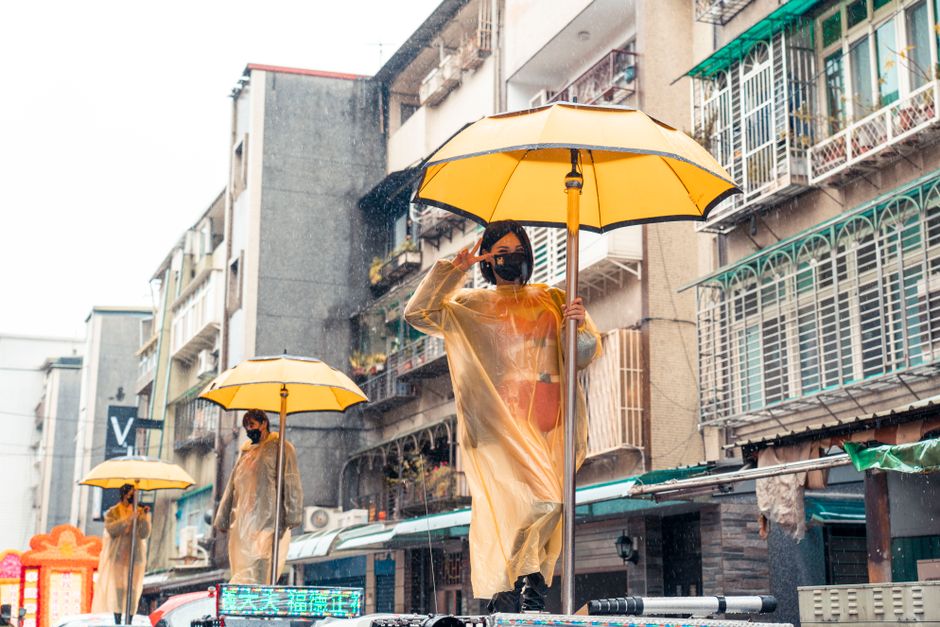
Unpredictable weather calls for an outfit that can change without falling apart. The most useful strategy is to separate protection from warmth. A water-resistant outer layer handles rain, while a removable middle layer handles temperature. This gives you two ways to adjust instead of forcing one heavy garment to do everything.
Pack the layer that solves the biggest risk
- If the morning is cold and the afternoon is mild, wear a thin warm layer that can fold flat into a bag.
- If the rain may become heavy, choose a longer outer layer and keep the lower hem simple.
- If wind is likely, secure loose scarves and choose a neckline that closes close to the body.
- If you will move between heated rooms and wet streets, avoid thick synthetic layers that trap too much heat.
- If you will walk for more than twenty minutes, prioritize stable footwear and dry socks over delicate styling details.
A useful temperature guide is to dress in three light levels. Around 15 to 20 degrees Celsius, a breathable top with a light shell is often enough. Around 10 to 14 degrees, add a thin knit or cardigan. Below 10 degrees, use a warm base layer under the knit and keep the shell roomy enough to close without pulling.
These ranges are a planning tool, not a promise. Wind, humidity, and walking speed can change how the same temperature feels. The key is to make each layer removable. An outfit that looks polished at 8 a.m. should still look intentional after the coat comes off at lunch.
What to remove first
Remove bulk from the middle, not from the protective layer. If you take off the coat and the outfit underneath has a clear neckline, tidy sleeves, and one strong color connection, the transition looks natural. If the middle layer is oversized, wrinkled, or covered in loose straps, the outfit will look unfinished as soon as the coat comes off.
Build for adjustment, not for one perfect temperature. That is the best answer to a forecast that cannot make up its mind.
Rainy Day Outfit Questions, Answered
Are skirts practical for wet weather?
Yes, if the hem and lining stay controlled. Knee-length or midi skirts work best when the outer coat ends near the same area or slightly below it. Avoid very full skirts on windy days because wet fabric can cling and lose its shape. Opaque tights add warmth and make the outfit easier to balance with a simple coat.
What is the biggest rainy-day styling mistake?
The biggest mistake is choosing pieces only for their individual appearance. A beautiful long trouser can fail when its hem drags through puddles. A neat fitted coat can fail when it cannot close over a sweater. A delicate outfit can fail when the wearer spends the day worrying about stains. Start with movement, coverage, and fabric behavior, then make the visual choices.
