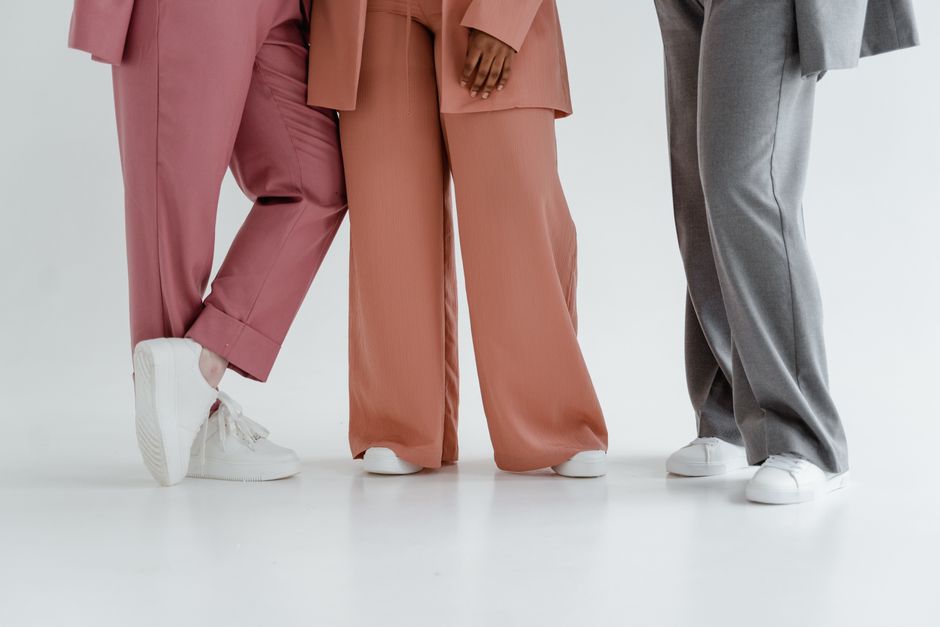
Tailored trousers and sneakers work because they combine structure with ease. The trousers bring a clean line and a dressed-up shape, while the sneakers lower the formality and make the outfit easier to wear through a normal day.
The balance is deliberate, though. Small choices in hem length, sneaker shape, color, and layering decide whether the outfit looks polished or thrown together.
Choose the Right Trouser Shape, Length, and Fabric
The best starting point is not the sneaker. It is the trouser shape. Once the cut and hem are right, the sneaker becomes an easy styling decision.
Match the trouser cut to the sneaker profile
| Trouser shape | Sneaker profile | Resulting mood |
|---|---|---|
| Straight leg | Low or medium profile | Clean and versatile |
| Wide leg | Substantial sole | Relaxed and modern |
| Cropped tapered leg | Low profile | Sharp and light |
| Pleated trouser | Streamlined shape | Polished with ease |
| Barrel or curved leg | Simple rounded shape | Fashion-led and balanced |
Check fabric weight before choosing the hem
Lightweight wool blends, fluid cotton, and drapey synthetics create a softer fall. They usually look best with a clean hem and little stacking. Heavier twill, brushed cotton, and structured suiting hold more shape and can handle a fuller sneaker or a deeper break.
Fabric behavior matters more than the label on the trouser. A thin fabric that gathers around the shoe may look messy even when the length is technically correct. A heavier fabric can create a deliberate fold, but too much stacking makes the lower leg appear crowded.
For the most reliable fit, stand in the sneakers you plan to wear and check the hem from the side. A straight trouser should skim the upper part of the shoe. A wide trouser should cover most of the shoe without dragging on the ground. A cropped trouser should expose a controlled amount of ankle rather than ending at an accidental-looking point.
The clear verdict: start with a straight or gently wide trouser in a fabric that holds its shape, then adjust the hem to the sneaker. This combination gives the most room for repeat outfits and the fewest proportion problems.
Build a Polished Sneaker Outfit in Five Steps
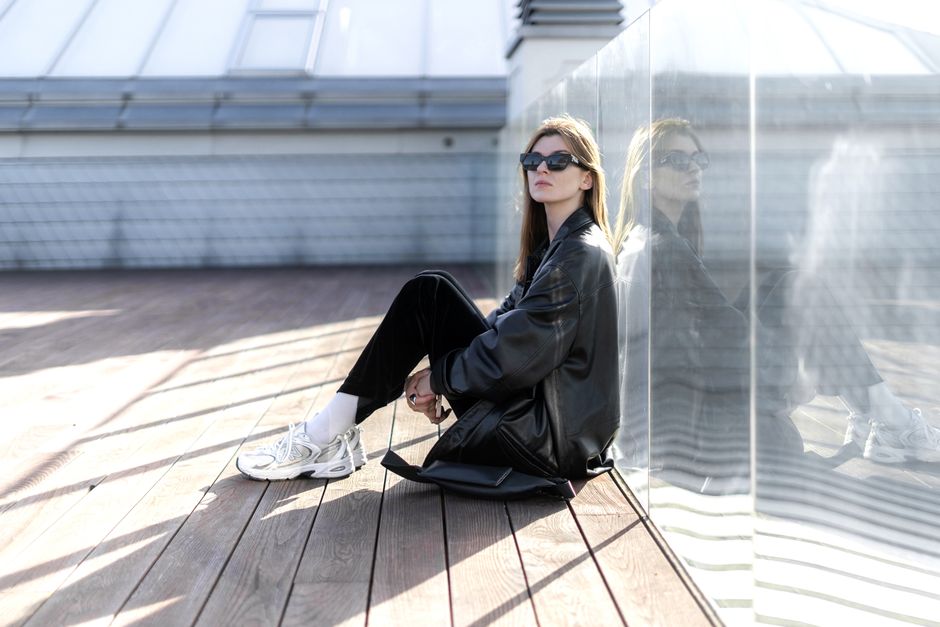
One clean line matters more than a crowded wardrobe. Use this five-step formula when an outfit feels close but not finished.
The five-step formula
- Set the trouser proportion. Decide first whether the outfit needs a straight, wide, tapered, or cropped shape. Do not choose the top before the lower half has a clear silhouette.
- Choose the sneaker role. A quiet sneaker supports the trousers. A brighter or more sculptural sneaker becomes the focal point. Pick one role and let the rest of the outfit support it.
- Control the top layer. A fitted knit or tucked shirt emphasizes the waist. A boxy shirt or loose jacket adds ease. If both the trousers and the top are oversized, show the wrist, ankle, neckline, or waist so the outfit keeps a visible point of structure.
- Repeat one visual detail. Echo the sneaker through a belt, bag, sock, or small color accent. The repetition does not need to match exactly. Similar warmth, brightness, or texture is enough to make the outfit feel connected.
- Remove one unnecessary element. If the trousers have pleats, the top has a bold pattern, and the sneakers have a strong shape, the outfit may already have enough information. Take away one competing detail before adding another.
Use outfit formulas instead of random combinations
- For an office-friendly look, pair straight tailored trousers with a tucked fine-gauge knit, a short structured jacket, and quiet sneakers. Keep the trouser color deeper than the top for a longer visual line.
- For a relaxed weekend look, use wide trousers with a close-fitting tank or simple tee, then add an oversized shirt worn open. The open layer creates movement without hiding the waist completely.
- For a sharper evening look, choose dark trousers, a fluid blouse, and streamlined sneakers with minimal visible detail. Add one piece of sculptural jewelry rather than several competing accessories.
- For a creative outfit, combine cropped trousers with visible socks, a fitted top, and a roomy outer layer. The ankle becomes part of the styling, so the sock color should look intentional.
The best formula is the one that gives each item a job. The trousers establish the line, the sneakers set the energy, and the top layer decides how formal the outfit feels.
Fix the Most Common Tailored-Trouser Mistakes
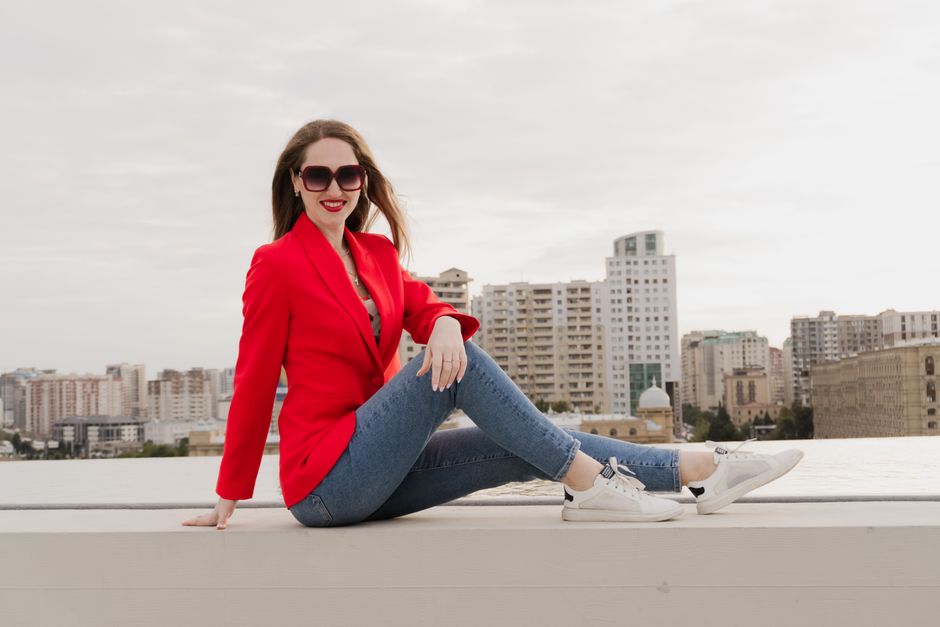
The most common failure is not a bad color combination. It is a proportion problem that makes the outfit look accidental.
Correct these fit and styling errors
- Too much fabric at the ankle: Excessive stacking can hide the sneaker and make the leg look shorter. Shorten the hem or choose a shoe with enough height and shape to support the fabric.
- A narrow shoe under a wide leg: The trouser can overwhelm a delicate sneaker. Try a broader sole or a cleaner full-length hem so the shoe does not look lost.
- Too much exposed ankle: A very short hem can make tailored trousers feel disconnected from the rest of the outfit. The visible space should look planned, not like a trouser that needs altering.
- Matching every color: Exact matching often makes the outfit feel stiff. Repeat a tone instead of copying it. A warm neutral in the sneaker can connect with a belt or bag without turning the look into a uniform.
- Ignoring the waist: Low-slung trousers combined with a long loose top can erase the shape that makes tailoring useful. Tuck, half-tuck, shorten the top layer, or add a visible belt line.
- Mixing too many casual signals: A hoodie, sports socks, large sneaker, and soft tote can pull the outfit far away from tailoring. Keep one or two relaxed elements and let the trousers retain authority.
Know when the combination is not the right choice
Do not force sneakers into an outfit that needs a more formal shoe. A strict dress code, ceremonial event, or highly traditional setting may call for a different level of polish. The same applies when the trouser fabric is delicate or the hem sits so close to the ground that everyday sneakers will cause dragging and wear.
Skip the pairing when the sneaker changes your posture or makes the trouser pull across the calf. A comfortable alternative with a similar low-key spirit may preserve the outfit better than a shoe that technically follows the trend but ruins the line.
Controlled contrast is the goal. The trousers should still look tailored, and the sneakers should still look purposeful. If one side completely defeats the other, change the proportion before changing the entire outfit.
Which Sneaker Mood Fits Each Trouser Outfit?
The right sneaker depends on the mood you want the trousers to express. Use the questions below to make the choice quickly.
Should the outfit look polished or relaxed?
Choose a low-profile, visually simple sneaker when the trousers need to carry the outfit. This works with a tucked shirt, neat knit, or tailored jacket because the shoe adds ease without pulling attention away from the waist and leg line.
Choose a fuller sneaker when the outfit needs more weight at the bottom. This works best with wide or straight trousers that can sit over the shoe. The tradeoff is clear: the outfit feels more current and casual, but the trouser hem needs more careful adjustment.
Should the sneakers blend in or stand out?
For a long, quiet silhouette, keep the sneaker close in color to the trouser or socks. This reduces visual breaks and makes the legs appear more continuous. It is the strongest option when the top has a bold pattern or the outfit includes several layers.
For a stronger focal point, use contrast through lightness, texture, or shape. Keep the rest of the outfit simple so the sneaker has space to read as a choice rather than visual noise.
What should change for a cropped trouser?
Cropped trousers expose more of the foot, so the sneaker becomes part of the outfit’s central design. Use a clean sock line and check the gap from several angles. A narrow gap looks crisp; a large uneven gap can make the trouser seem too short.
With cropped tailoring, a simpler upper half usually works best. The ankle already creates a break, and adding a busy top, heavy outer layer, and highly detailed sneaker can divide the outfit into too many small sections.
What is the strongest all-purpose formula?
For the widest range of occasions, choose a straight or softly wide trouser, a hem with a small break, a simple sneaker, and a top layer that shows some waist definition. This formula works because it keeps the tailored line visible while allowing the footwear to lower the formality.
The lasting appeal of tailored trousers with sneakers comes from that useful middle ground: structured enough to look intentional, relaxed enough to move through real life. As trouser shapes and sneaker designs keep changing, proportion will remain the rule that makes the combination work.
