
The challenge is not warmth alone. The skirt must work with boots, tights, coats, sweaters, and changing indoor temperatures without making the outfit look bulky.
The strongest winter outfits use one clear shape, one practical insulation layer, and one visible point of contrast. That approach makes a wool midi skirt feel modern instead of overly formal, and it works for office days, gallery visits, dinners, and ordinary walks through cold streets.
Why a wool midi skirt works in winter
Wool solves the gap between trousers and a summer skirt
A wool midi skirt sits between two familiar winter choices. Trousers offer easy coverage but can make every outfit feel similar, while lighter skirts often need several layers to feel usable in cold weather. Wool adds structure, warmth, and texture in one piece. The fabric also holds a crease well, so the skirt can look polished with a simple knit rather than a complicated stack of clothes.
The midi length matters because it covers much of the leg while leaving enough space around the ankle for boots. A skirt that ends just below the knee creates a different visual line from one that reaches mid-calf, but both can work when the shoe and hem leave a deliberate gap. The eye should see where the skirt ends and where the footwear begins.
Texture creates warmth without visual clutter
Winter outfits often become messy when every layer has a loud texture. A wool skirt already brings a dense, matte surface, so pair it with one softer element, such as a fine knit, brushed scarf, or smooth leather accessory. Keep the rest of the outfit quiet. A ribbed sweater, opaque tights, and a clean boot can look richer than five competing patterns.
Warmth comes from controlled layering, not from adding every available garment. A thin base layer under a sweater can add comfort without changing the silhouette. A coat that closes fully at the front protects the outfit from wind, while a scarf seals the open space around the neck. For most city winter days, that balance works better than a very thick sweater over a thin skirt.
How to choose the right wool midi skirt
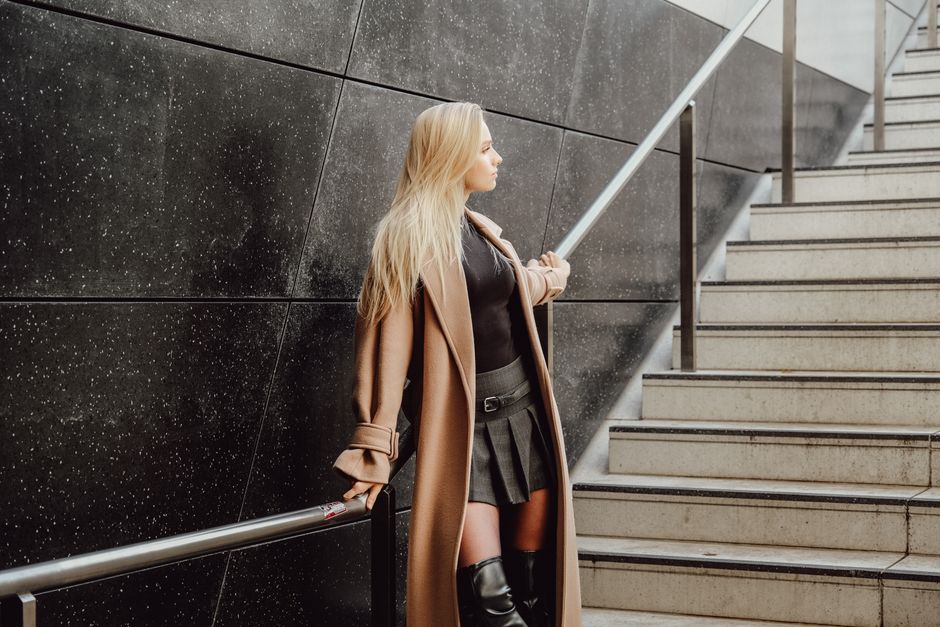
The best skirt for winter starts with fit, fabric weight, and movement. A beautiful shape that restricts your stride will stay in the wardrobe.
- Check the waist after sitting. Sit down for five minutes, then stand and walk. The waistband should stay secure without pressing into your stomach. A fixed waistband gives a sharper look, while a small amount of stretch improves comfort during commuting.
- Measure the hem against your boots. Try the skirt with the footwear you wear most. A hem that lands at the widest part of the calf can make the leg look shorter, especially with a flat shoe. A slightly higher or lower hem usually creates a cleaner line.
- Look for enough fabric to walk. A straight skirt needs a back vent, side slit, or enough ease through the hips. Take ten normal steps. If you shorten your stride, the shape is too narrow for daily use.
- Choose weight based on your climate. A dense, lined wool skirt suits windy conditions and outdoor commuting. A lighter wool blend works better in mild winters or heated offices. Very thick fabric can become uncomfortable when you spend much of the day indoors.
- Test the lining. The lining should slide over tights without clinging. If it grabs at the knee, the outfit will pull out of shape as you walk. A smooth lining also reduces static and makes it easier to add a base layer.
- Read the care label before committing. Wool needs less frequent washing than many fabrics, but it does need careful storage and spot cleaning. If the maintenance routine feels unrealistic, choose a blend that tolerates regular wear more easily.
The strongest all-purpose choice is a medium-weight skirt with a clean waistband, a slight A-line or straight shape, and enough room for tights. That combination looks neat with fitted layers and still leaves space for a coat without creating a stiff outline.
Match volume before matching color
Color coordination helps, but volume controls the silhouette first. A full skirt needs a more fitted top, a straight skirt can handle a relaxed sweater, and a narrow skirt benefits from a shorter jacket that stops near the hip. Once the shape works, use color to connect two pieces. A scarf that repeats the tone of the boots can make a mixed-color outfit feel intentional.
Use the coat as part of the outfit
A long coat creates a column over the skirt and looks refined when the hems sit close together. A shorter coat shows more of the skirt and feels more casual. Avoid a coat that ends exactly at the widest part of the skirt unless the rest of the outfit has a clear waistline. The coat should either frame the skirt or cover it; an awkward middle point makes the layers look accidental.
Three outfit formulas that actually keep you warm

The best winter styling rule is simple: keep the base close, the middle useful, and the outer layer decisive. These three formulas cover most daily situations without requiring a large wardrobe.
-
The clean office column
Wear a fine-gauge sweater tucked or half-tucked into a straight wool midi skirt. Add opaque tights, slim ankle boots, and a long coat that reaches close to the skirt hem. Keep the scarf narrow and let one small accessory provide contrast. This outfit works because the vertical lines make several warm layers look like one shape.
-
The relaxed weekend balance
Choose an A-line skirt with a slightly loose sweater and a cropped jacket. The jacket should finish near the natural waist or upper hip, not at mid-thigh. Add sturdy boots with a visible sole and a soft scarf worn close to the neck. The skirt keeps the outfit feminine, while the heavier footwear prevents it from looking delicate or impractical.
-
The evening texture mix
Start with a fitted long-sleeve top, then add a wool skirt, semi-opaque tights, and a heeled boot. Finish with a structured coat and one smooth accessory. Avoid adding both a large knit and a large scarf; the skirt already supplies texture. This formula feels dressed up because the top is close to the body and the shoe adds height, but it still protects the legs and torso from winter air.
For maximum warmth, place insulation where heat escapes first: around the neck, wrists, and ankles. A thin base layer often performs better than one oversized top because it traps air while keeping the outfit mobile.
When a wool midi skirt is the wrong winter choice
Choose trousers for long outdoor exposure
If your day includes hours outside, strong wind, wet snow, cycling, or frequent movement across uneven ground, trousers may protect you better and require less adjustment; the skirt becomes the wrong choice when the practical demands of the day matter more than its shape, especially if you would need several uncomfortable layers to make it warm enough.
Choose a different skirt shape for active movement
If you dislike tights, need a wide stride, or spend the day moving between sitting, walking, and bending, a shorter skirt with built-in ease or a looser wrap shape may serve you better; a wool midi skirt earns its place when its warmth, structure, and length make your winter routine easier, not when the outfit only looks good while standing still.
The single most important takeaway is this: style a wool midi skirt with one close layer, one useful insulating layer, and one decisive coat or shoe so the outfit stays warm without losing its shape.
