
Most people on a $100 monthly clothing budget stay broke and badly dressed for the same reason: they buy six $16 items instead of one $96 item. The math feels smart. It isn’t. A closet full of polyester fast fashion reads as cheap from across the room. One well-cut cotton oxford reads as intentional.
Curating a stylish wardrobe on $100 a month isn’t about spending less. It’s about buying fewer, better things with a system. Here’s the system.
Why Most Budget Wardrobes Fail
The core problem: people treat a budget as permission to buy constantly. They hit $100 and think “I have $100 to spend this month.” That’s backwards. The budget is a cap, not a target. The best-dressed people on a budget often spend $0 in a given month.
Fast fashion has trained us to expect newness weekly. But style is repetition. A great wardrobe is 25-35 pieces that all work together. You don’t need more stuff. You need better stuff that lasts longer and fits correctly.
What actually makes clothes look expensive:
- Fabric: natural fibers (cotton, wool, linen, silk) drape differently than polyester. They also photograph better.
- Fit: a $20 shirt tailored for $15 looks better than a $100 shirt off the rack.
- Color discipline: neutrals + one accent color beats a rainbow of random purchases.
- Condition: pilling, fading, and stretched-out collars scream cheap. A fabric shaver costs $12.
The $100 Monthly Allocation That Actually Works
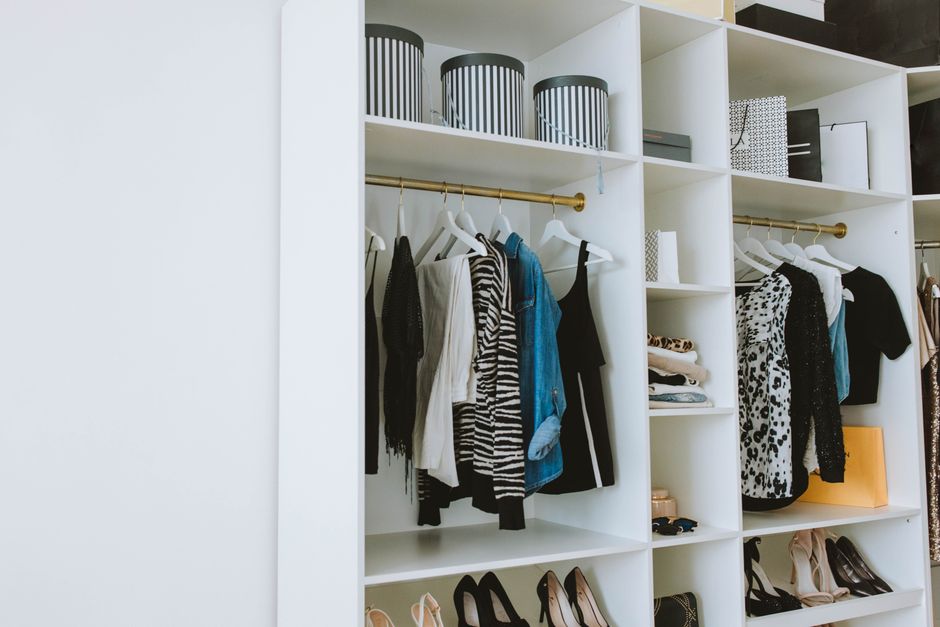
Stop thinking monthly. Think quarterly. Three months = $300. That’s enough for one genuinely good piece — a pair of jeans that fits, a wool sweater, leather boots on sale. Or it’s enough for two mid-tier basics plus a tailoring session.
Here’s the breakdown I recommend:
| Month | Spend | What You’re Buying | Why |
|---|---|---|---|
| January | $0 | Nothing | Inventory your closet. Identify gaps. |
| February | $95 | One pair of rigid denim (Levi’s 501 or Uniqlo Selvedge) | Denim is the backbone. Buy once, wear 200 times. |
| March | $15 | Tailoring on a thrifted blazer | Fit transforms a $20 thrift find into a $200 look. |
| April | $0 | Nothing | Wait for end-of-season sales. |
| May | $100 | One cotton-linen blend shirt (Everlane or Madewell on sale) | Summer layering piece that breathes. |
| June | $0 | Nothing | Wear what you have. Style gaps appear through repetition. |
This cadence — buy, wait, buy, wait — is the entire game. It forces you to sit with your choices. No impulse buys. No “it was only $12” math. The $0 months are active decisions, not failures.
Where to Actually Buy Clothes on $100 a Month
If you’re buying new at this budget, you have three realistic options: Uniqlo, Everlane’s sale section, and Madewell’s clearance rack. That’s mostly it. Gap and J.Crew occasionally have good cotton basics under $40, but you have to wait for the 40% off sales that happen every six weeks.
The better play is resale. Poshmark, Depop, and eBay are where $100 becomes $300 worth of clothes. I’ve bought an Eileen Fisher silk shell for $22 on Poshmark. Retail: $168. The trick is searching by fabric and brand, not by item. Search “Eileen Fisher silk” not “nice shirt.”
Thrift stores in wealthy neighborhoods are another goldmine. The donations come from people who buy quality and wear it twice. You’ll find Brooks Brothers oxfords, Theory blazers, and cashmere sweaters for $8-15.
What you should NOT do: buy from fast fashion brands like Shein, H&M, or Zara at this budget. The clothes die in 10 washes. You’ll rebuy constantly. That’s not a budget strategy; it’s a subscription to looking bad.
The Fabric Rule That Saves You Money
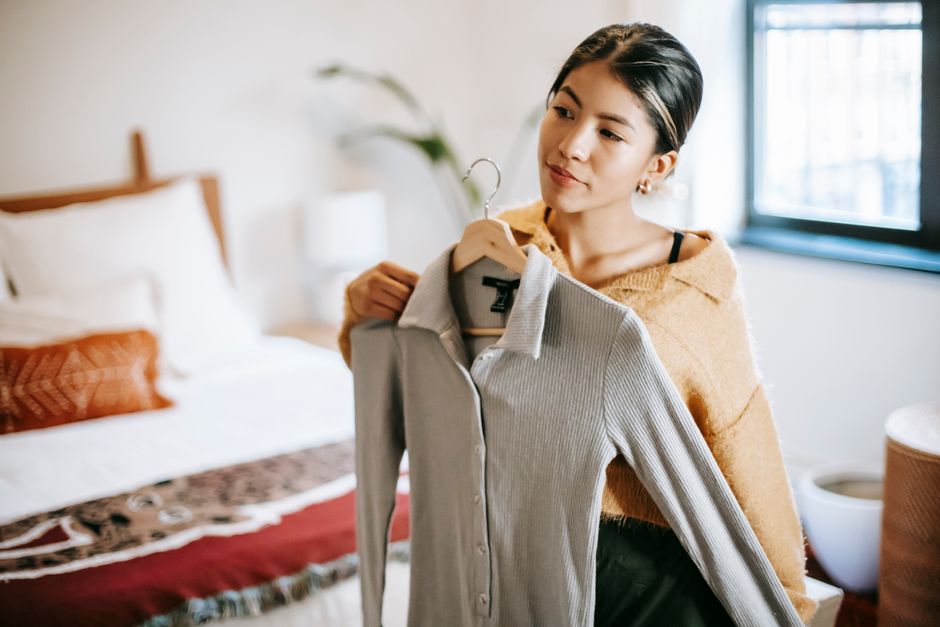
Here’s a hard rule: check the fabric content before you check the price. If it’s more than 30% polyester and it’s not athletic wear, put it back.
Polyester pills, holds odor, and looks shiny in daylight. It’s the #1 reason budget clothes look budget. Natural fibers age better and can be repaired. A wool sweater can last 10 years. A polyester sweater looks dead after one season.
What to look for at the $100/month tier:
- Cotton: 100% cotton or cotton-linen blends. Look for “long-staple” or “Pima” cotton on labels. Uniqlo’s Supima cotton t-shirts ($19.90) are the best budget tee on the market.
- Wool: merino wool for layering. You can find merino sweaters on Poshmark for $30-40. They regulate temperature and don’t stink after one wear.
- Linen: wrinkles, but that’s the point. A linen shirt looks intentional wrinkled. Polyester trying to look like linen looks like a mistake.
- Silk: thrift it. New silk is out of budget. Used silk is everywhere and cheap because people don’t know how to wash it. Hand wash with cold water and a drop of baby shampoo. Done.
Tailoring Is Not Optional
The single highest-ROI move in budget fashion: spend $15-25 to tailor a thrifted or sale item. A $20 blazer with $20 of tailoring looks better than a $200 blazer off the rack. Period.
What to tailor:
- Blazers: take in the waist, shorten sleeves. $25-40.
- Pants: hem to the right length, taper if needed. $15-25.
- Button-up shirts: shorten sleeves or take in the sides. $15-20.
What to skip: tailoring anything with stretch fabric, anything with complicated lining, or anything that doesn’t fit in the shoulders. Shoulder alterations are expensive and rarely look right.
Find a local tailor, not a dry cleaner. Dry cleaners do quick hems. A real tailor does fit. Ask them how long they’ve been working and whether they’ve done alterations on blazers. If they hesitate, leave.
When NOT to Spend Your Monthly Budget

Some months, the right move is spending zero. Here’s when:
- You don’t know what’s missing. If you can’t name the specific gap in your wardrobe, don’t buy anything. Browse, don’t purchase.
- You’re buying for a fantasy version of yourself. The silk slip dress for a gala you’ll never attend. The leather pants for a concert that already happened. Buy for your actual life.
- It’s not on sale and it’s never on sale. Some brands (Everlane, Uniqlo) rarely discount. Others (Madewell, J.Crew, Gap) discount constantly. Never pay full price at the constant-discount brands.
- You’re emotional. Bad day? Bored? Lonely? Shopping won’t fix it. It’ll just add clutter and guilt.
The discipline to skip a month is worth more than any single purchase. It builds the muscle that separates a curated wardrobe from a hoard.
The Verdict: What $100 a Month Gets You
If you follow this system for 12 months, you’ll spend roughly $700-800 total (some months you skip, some you spend $100). That buys:
| Item | Source | Approx. Cost | Wears Per Year |
|---|---|---|---|
| Rigid denim (Levi’s 501) | eBay/Poshmark | $40 | 150 |
| Merino wool sweater | Poshmark | $35 | 80 |
| Cotton-linen shirt | Everlane sale | $48 | 60 |
| Thrifted blazer + tailoring | Thrift store + local tailor | $65 | 50 |
| Supima cotton tees (x3) | Uniqlo | $60 | 90 each |
| Leather belt | Thrift store | $10 | 200 |
That’s a functional, stylish wardrobe. Not a huge one. But huge wardrobes are overrated. A small wardrobe where everything fits and nothing is polyester beats a closet full of regrets.
For most people starting from scratch, the best first purchase is one pair of rigid denim that fits well through the thigh. Everything else builds around it. If you’re starting with a decent denim base, the best next purchase is a merino wool sweater in a neutral color — charcoal, navy, or cream. It layers over everything and reads as expensive even when it cost $35 on Poshmark.
Stop buying six cheap things. Start buying one good thing. That’s the whole strategy.
