
Most men assume business casual means a button-down shirt and khakis. That is a misconception. In a creative office—design studio, ad agency, architecture firm, music label—that same outfit reads as ‘bank teller on casual Friday.’ The rules are different here. You are not dressing to disappear into a corporate hierarchy. You are dressing to signal taste, awareness, and a point of view. The challenge is doing that without looking like you tried too hard.
This guide covers the specific pieces and fit rules that work in creative workplaces in 2026. Nothing here requires a suit. Nothing here will get you side-eyed by a creative director.
The Foundation: Fit Over Formality
Before buying anything, understand the core principle. In a traditional office, formality creates authority. In a creative office, fit creates credibility. A perfectly fitted plain t-shirt under an unstructured blazer reads more professional than an ill-fitting dress shirt. The garment type matters less than how it sits on your body.
This means you can ignore most old-school business casual advice. You do not need ironed creases. You do not need a belt that matches your shoes exactly. You need clothes that look intentional. That starts with shoulder seams that hit at the shoulder bone, not halfway down your arm. It means trouser hems that break once, not pool at the ankle. It means a collar that sits flat against your neck without gaping.
If you are unsure about fit, take one item to a tailor. A $20 taper on a $60 pair of chinos does more than a $200 pair of pants off the rack. This is the highest-return move in menswear.
The Seven-Piece Creative Office Wardrobe
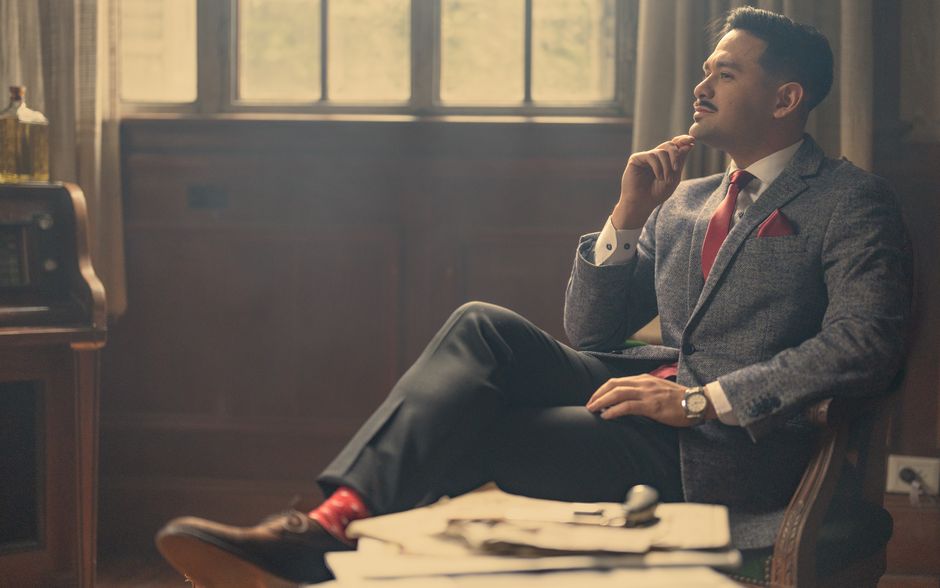
You do not need a large wardrobe. Seven core pieces, mixed properly, cover a full week. Here is the list, with specific product names and price anchors as of 2026.
- Unstructured blazer: The single most important piece. Look for soft shoulders, no padding, and a slightly cropped length. The COS Relaxed Blazer ($175) and Arket’s Oversized Twill Blazer ($190) both work. Avoid anything with shiny buttons or a structured chest.
- Knit polo: Replaces the dress shirt. The Reiss Merino Knit Polo ($95) and Uniqlo’s Extra Fine Merino Polo ($49) are both solid. Knit texture reads intentional; woven cotton reads corporate.
- Wide-leg trouser: Not a chino. Look for a pleated front and a straight or slightly wide leg. The COS Wide Wool Trousers ($135) and Weekday’s Astro Trousers ($80) are the current standard.
- Clean sneaker: Leather, minimal branding, low-top. The Adidas Samba OG ($100) still works but is oversaturated. Better: the Axel Arigato Clean 90 ($245) or Veja V-10 ($165). White or off-white only.
- Boxy t-shirt: Heavyweight cotton, slightly dropped shoulder, no logos. The Uniqlo U Crew Neck ($19) and Asket’s The T-Shirt ($45) are both excellent. Buy three.
- Chunky loafer or derby: For days when sneakers feel too casual. The Dr. Martens Adrian Loafer ($140) or Paraboot Michaels ($520) if you want to invest.
- Overshirt: Worn open over a t-shirt, replaces both jacket and shirt. The Carhartt WIP Detroit Jacket ($160) and Arket’s Wool Overshirt ($150) are the two best options.
That is it. Seven pieces, roughly $800–$1,200 total if you buy everything new. Mix them and you have 15–20 distinct outfits.
What Actually Looks Stuffy (And What Does Not)
The line between sharp and stuffy is thinner than most people think. It usually comes down to three details.
First, shirt collars. A stiff, starched point collar reads corporate. A soft, unstructured collar—knit polo, band collar, or oxford with a rolled collar—reads creative. If your collar could hold a tie perfectly, it is too formal.
Second, shoe shine. Polished black oxfords are the quickest way to look out of place in a creative office. Matte leather, suede, or clean canvas all work better. The goal is shoes that look cared for, not shoes that look polished.
Third, trouser crease. A sharp center crease signals ‘dry clean only’ and ‘corporate uniform.’ Flat-front or single-pleat trousers with a soft drape read modern. If your pants could stand up on their own, they are too stiff.
Here is a quick reference table for the main pieces.
| Item | Stuffy Version | Creative Version |
|---|---|---|
| Shirt | Starched point-collar dress shirt | Knit polo, band collar, or heavyweight tee |
| Trousers | Pressed khakis with sharp crease | Pleated wide-leg trousers, soft drape |
| Shoes | Polished black oxfords | Matte leather loafers or clean sneakers |
| Jacket | Structured navy blazer | Unstructured overshirt or soft blazer |
| Color | Navy, white, grey only | Earth tones, olive, cream, faded black |
The Color Rule Most Men Ignore

Corporate business casual runs on a palette of navy, white, light blue, and grey. Creative offices reward a different palette. Earth tones—olive, sand, rust, chocolate brown, cream—signal taste without formality. Faded black works. Washed-out indigo works. The goal is colors that look like they have lived a little.
Avoid bright, saturated colors. A bright red polo reads ‘golf outing.’ A bright blue dress shirt reads ‘software sales.’ Instead, think muted. Olive chinos instead of khaki. A rust-colored knit instead of a light blue oxford. Cream instead of white.
One practical rule: if a color would look out of place in a nature documentary, it probably looks out of place in a creative office.
Common Mistakes That Ruin the Look
Most men fail at creative business casual not because they dress too casually, but because they mix the wrong formalities. The most common failure mode: wearing a dress shirt untucked with jeans. This reads as ‘I do not know what I am doing.’ Either tuck the shirt into proper trousers, or wear a t-shirt or knit polo instead.
Another common mistake: wearing a tie without a jacket. In a creative office, a tie is almost never necessary. If you wear one, it should be knit or textured, never silk, and never with a button-down collar. But honestly, skip it.
The third mistake: wearing technical fabrics in the office. Performance polos, stretch dress shirts, anything that wicks moisture—these read as ‘I came from the gym’ or ‘I work in IT support.’ Stick to natural fibers: cotton, merino wool, linen, and blends with at least 70% natural content.
Finally, do not wear a full suit without a tie and call it business casual. It is not. It is a suit without a tie. If you want to wear a suit jacket, pair it with trousers in a different color or texture.
When Not to Dress Down

There are days when creative business casual should skew more formal. Client presentations, board meetings, investor pitches—these are not the days for a boxy t-shirt and sneakers. The rule is simple: when the audience is external and the stakes are financial, dress one notch up.
That does not mean wearing a suit. It means swapping the t-shirt for a knit polo, the sneakers for loafers, and the overshirt for an unstructured blazer. You keep the creative silhouettes but add polish. The goal is to look like the most put-together person in the room, not the most formal.
If you work in a more traditional creative field—architecture, interior design, or a large agency with corporate clients—you may need this elevated version more often. If you work in a small studio or a music-adjacent field, the baseline version will carry you through most days.
Building the Wardrobe on a Budget
You can build this entire wardrobe for under $700 if you shop strategically. Start with Uniqlo U for t-shirts and merino polos. Add Weekday or COS for trousers. Buy one good unstructured blazer secondhand—eBay and Grailed are full of COS and Arket blazers for half retail. Spend real money on shoes; cheap shoes ruin the whole silhouette.
The order of purchase matters. Buy in this sequence: trousers first, then t-shirts, then shoes, then a knit polo, then a blazer or overshirt. Trousers and shoes do the most work in making an outfit look intentional. A $19 t-shirt looks expensive with good trousers and clean shoes. A $100 shirt looks cheap with bad pants and scuffed sneakers.
This is not legal advice. It is not even fashion advice you must follow. It is a framework. If your office culture is different, adjust. But the core principle holds: in a creative industry, fit and texture matter more than formality. Master those two things and you will never look stuffy again.
